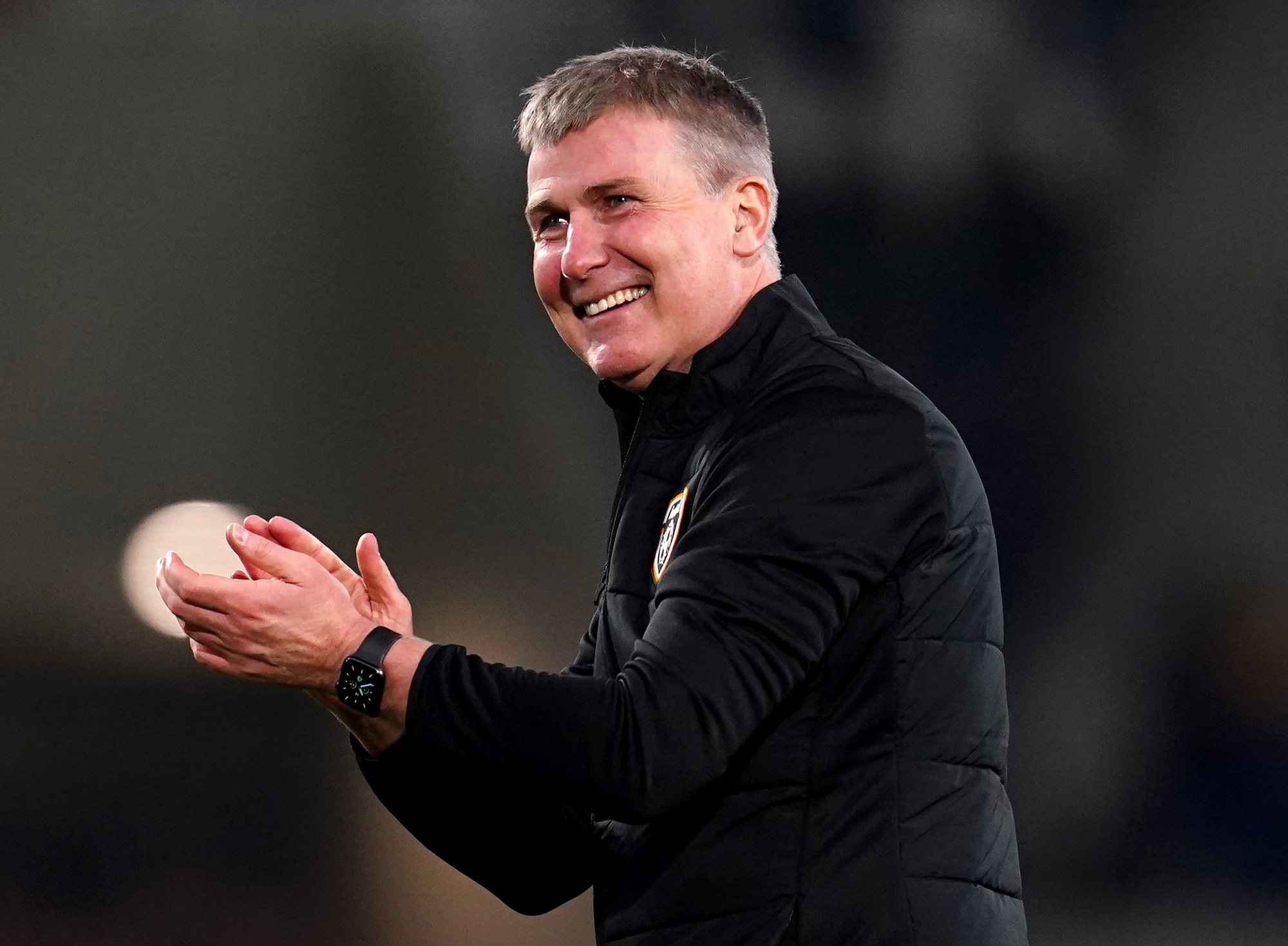
FAI chief executive Jonathan Hill has confirmed he’s been mandated by his board to discuss with Stephen Kenny about “hopefully taking him forward in relation to the Euro 2024 qualification”.
The Ireland manager’s future has garnered much debate, especially since his initial contract expires in the middle of the Uefa Nations League campaign next July.
Kenny will discover Ireland’s opposition for that four-team group on Thursday when the draw is conducted at Uefa’s headquarters in Nyon.
A contract extension was always likely once Kenny brought a disappointing World Cup campaign to a respectable conclusion last month by edging Luxembourg to third place on goal difference.
The deal’s duration, however, was the unknown element, with concerns surfacing among board members about the financial risk of dishing out a contract until Ireland’s participation in the Euro 2024 campaign ends. Those qualifiers won’t kick off until March 2023.
Addressing 100 members of the FAI’s national assembly tonight on a virtual call, Hill initially confirmed he was delegated by his board to open talks with the Ireland boss, a position decided by the 12-person board a fortnight ago.
“The board has now given me a mandate to negotiate with Stephen Kenny and that will be key to our overall messaging,” he said.
That line had been delivered during a lengthy report encompassing all elements of Hill’s workload since he started as the first permanent successor to the deposed John Delaney 13 months ago.
When questions were invited at the conclusion of his address, the first came from Joey Malone, the former Dundalk double winner and now assistant manager of women’s national league title holders Shelbourne. It centred on Kenny’s admission midway through the World Cup campaign in September that his real objective was reaching the next Euros. This assertion was interpreted by Malone as tantamount to treating the team as a “development squad”, whereas qualification for major tournaments, and the financial rewards necessary for an association such as the FAI carrying €62m of debt, should be prioritised.
“I think everybody will agree with you,” replied Hill. “Every international team, be it the seniors or underage sides, both boys and girls, want to win the games that they play in. Stephen is no different to any other international manager.
“I understand the thrust of your question. Stephen has brought in 15 players from the U21 set-up and therefore he’s finding the right balance between youth and experience.
“He had more success in that towards the back end of the World Cup qualification campaign. Sadly, we didn’t qualify for the World Cup. I’m working with, and talking to, Stephen about hopefully taking him forward in relation to the Euro 2024 qualification.”
Hill confirmed the FAI were still trying to attract a high-profile opponent to the Aviva Stadium before the Centenary year ends next June, perhaps explaining why the two potential friendlies available in the March international window have yet to be announced.
Whichever teams come to Dublin in 2022, achieving full houses like they did for the visit of Cristiano Ronaldo’s Portugal is vital. So too is attracting a flagship sponsor for the senior team, a package vacant since Three ended their decade-long association almost two years ago. Hill stated a number of conversations were “ongoing” and he’s “very hopeful” of having a new marquee partner in place by the March double-header.
Confirming a new dedicated commercial division led by a yet-to-be appointed commercial director, Hill added: “We still sit with a debt of nearly €62m and that has to be serviced and decreased. We will do it by generating incremental revenue as well as managing our cost-base.
“Ticketing remains a critical part of our revenue portfolio. We must keep the momentum going from the Portugal game and we are looking closely at the senior games we’re putting in place for 2022. We will take our season ticket products to the market in the first quarter of the year.”
Hill welcomed the €19m allocation from the Government’s Covid-19 resilience fund, a 45% increase on last year’s payout to offset losses caused primarily from closed or partially closed stadia for international matches.
“We’re absolutely thankful for Government support which is pretty unique across Europe. That amount reflects the real loss we incurred because of ticketing, sponsorship or other areas.”

Cancel anytime
CONNECT WITH US TODAY
Be the first to know the latest news and updates