Uefa will not investigate the FAI’s 2019 financial scandal
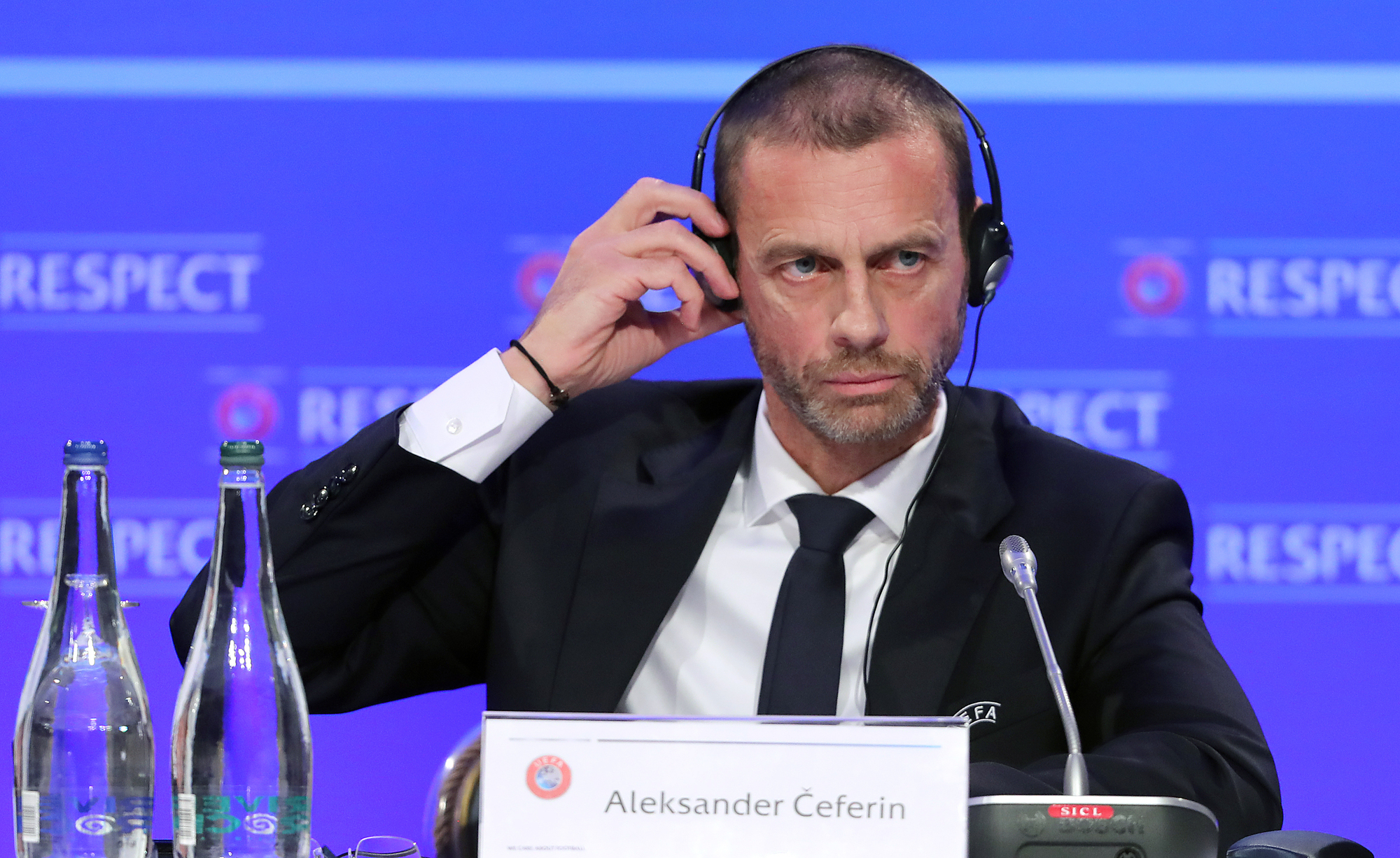
Aleksander Ceferin: ‘We had discussions with the Irish FA. There was an investigation and it would have been premature to decide before. Now things are clear.’
Uefa will not be opening an investigation into the behaviours and practices which facilitated the FAI’s 2019 financial scandal, senior sources in Nyon have confirmed.
One key insider claimed that European football’s governing body is unwilling to investigate how the association was able to repeatedly misreport ‘profits’, liabilities and debts given “those responsible have left the organisation”.
A second source in Switzerland said: “Uefa is anxious about highlighting its own lack of oversight, particularly when many here had suspicions about the FAI going back long before December 2019.”
The yesterday revealed that Uefa has now taken steps to ensure against “something like Ireland” happening again through the introduction of stringent new financial reporting mechanisms.
Uefa is satisfied the new reporting and benchmarking system which supports the ‘Financial Management Programme’ is sufficient to end such behaviours at the organisation’s “small number of outlier nations” where it still exists.
The FAI has confirmed that its board directors have attended a re-education programme in ‘Finance Essentials’ as part of the new programme’s implementations established by Uefa.
While none on the current board bears any responsibility for the previous regime’s actions, sources said the FAI had been “extremely proactive and enthusiastic” in attendance and completion of the first two modules of the programme.
As part of the back-to-basics training, all national associations are encouraged to enrol CEOs/secretary generals, board members and finance directors to the ‘Finance Essential’ short-courses.
An FAI spokesman said this week: “I can confirm that FAI directors have undertaken the Uefa financial courses.”
Uefa’s Financial Management Programme was co-developed by current FAI vice-president Paul Cooke after he discovered the true extent of the mismanagement which occurred at the association.
Two years ago this week Cooke revealed he was shocked at the weight of misreporting, where in one instance (for 2017) liabilities had been listed as €21.1m, when the actual figure was revised to a loss of €57m.
There are some in Uefa who had expected a thorough investigation into the FAI, and into the activities and cultures which facilitated the behaviours at the association.
A senior Uefa source with deep knowledge of the FAI told the : “Uefa doesn’t want to start an investigation given that those responsible are gone, and any probe would hinder the work by those who are now trying to rebuild the organisation.”
He added: “It would be difficult for Uefa to open an investigation into one of its members, particularly when those now running the association were there at the time.”
The second fear coming from Uefa is the closeness of its relationship with John Delaney — who was, at the time, a member of the federation’s powerful executive committee.
“The Delaney issue hurt Uefa’s top executives badly and you can see that in the fulsome praise that was delivered in the statement announcing Delaney’s resignation in which there was an extreme duty of care to protect one of its own. The press release is still referenced here as something that was completely inappropriate.”
The Uefa statement announcing Delaney’s January 2020 resignation read: “During his time on the executive committee, John Delaney played a leading role in helping Uefa achieve many things.
“He was instrumental in the expansion of the Euro to 24 teams, which proved such a success in 2016.
“Several teams that may not otherwise have qualified proved that they have a contribution to make on the biggest stage, with Wales’ run to the semi-finals and Iceland’s elimination of England standing out as examples of this.
“He was an important figure in the move to centralise the TV rights across national team competitions — something which has benefitted all Uefa member associations and which was rolled out into the new Uefa Nations League tournament. Uefa wishes him well in the future.”
Uefa president Aleksander Ceferin, who was particularly close to Delaney before the scandal, was asked about the departure of his colleague that March — two months after the resignation statement — and said: “I don’t want to reply to that. It’s over.”
He added: “We had discussions with the Irish FA. There was an investigation going on and it would have been premature to decide before. Now things are clear.
Let me say it was quite bad, quite bad.”
Uefa failed to respond when asked by the why it had decided not to fully investigate the FAI for the “behaviours and practices” which led to the 2019 scandal.


CONNECT WITH US TODAY



Be the first to know the latest news and updates