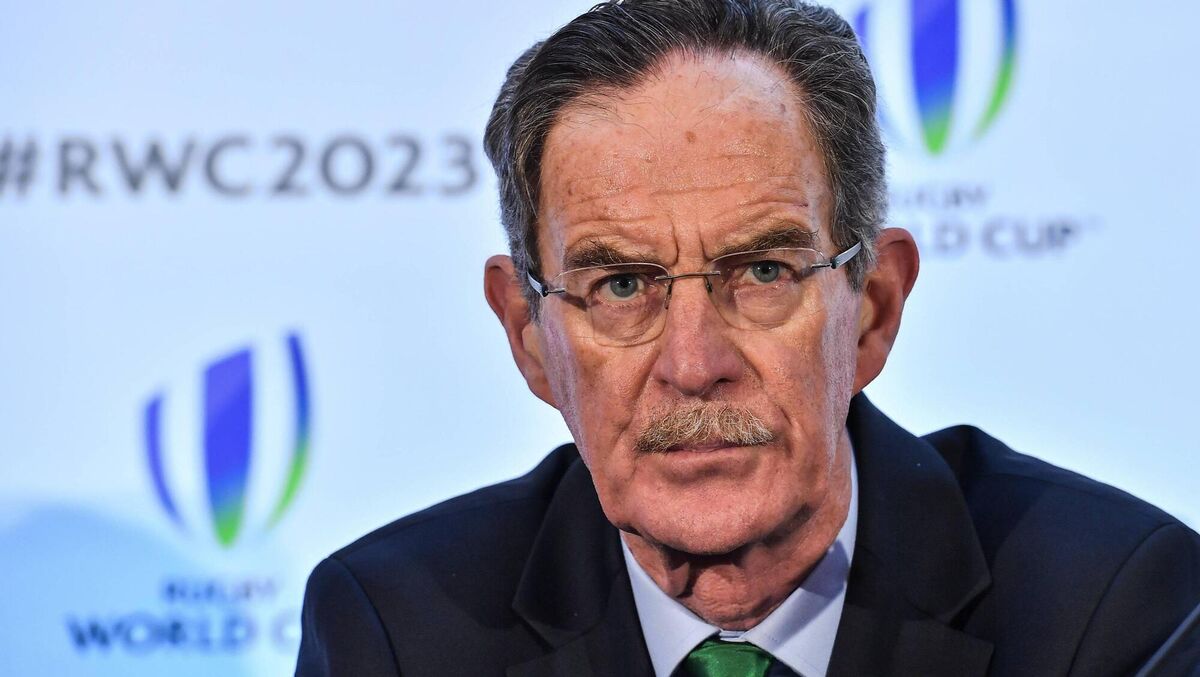
The man who led attempts to bring Rugby World Cup 2023 to Ireland says a FIFA World Cup 2030 bid will bring value to the country – even if it ultimately fails.
Dick Spring, the former Tánaiste and Chairman of Ireland 2023 Oversight Group, told the Irish Examiner that bidding campaigns are essential to demonstrate our capabilities on the international stage.
Ireland, Northern Ireland, Scotland and Wales are currently conducting a feasibility study into hosting the 2030 competition, which is being led by the English FA – before formal applications are invited by FIFA next year.
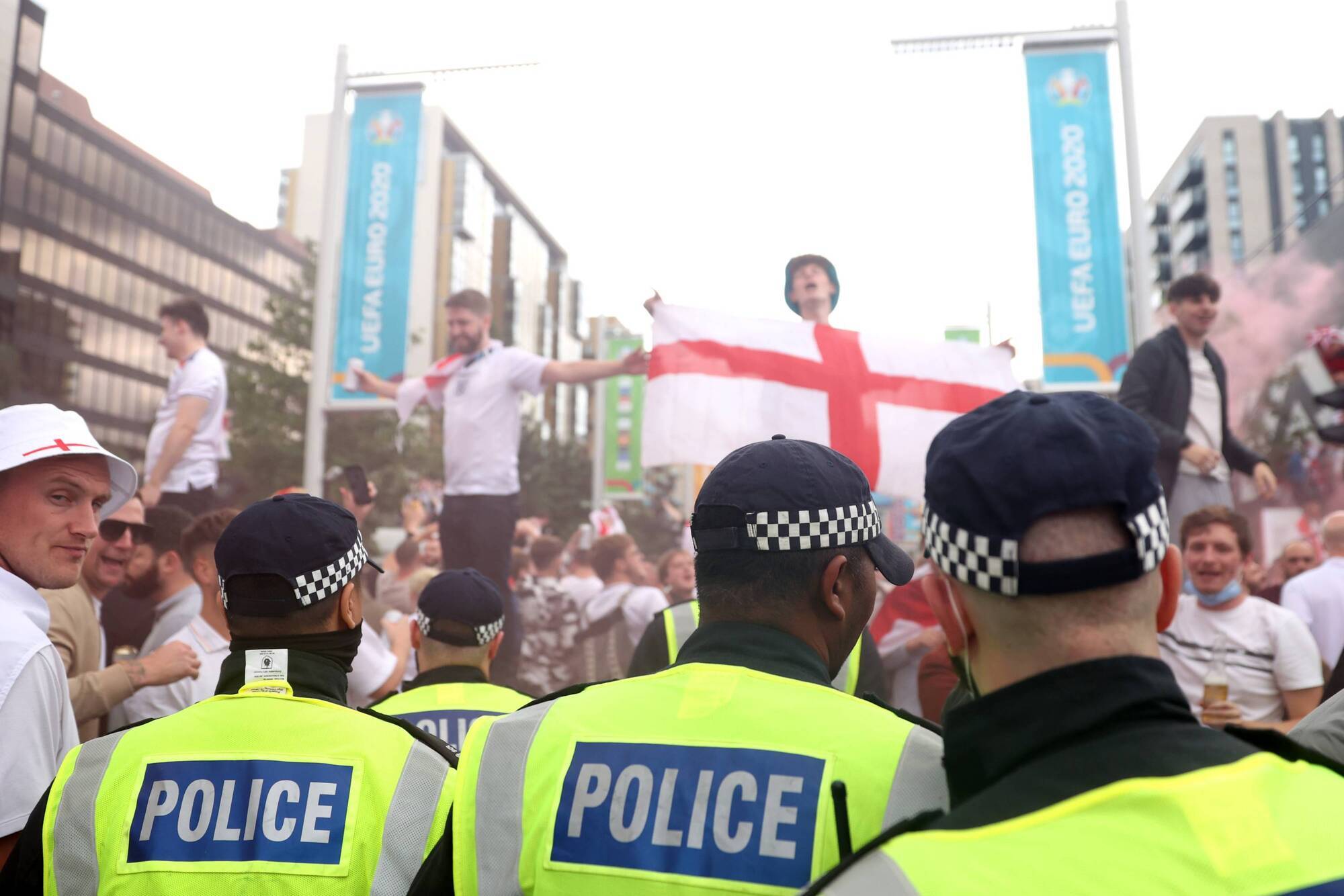
In his contribution to this analysis, Sports Minister Jack Chambers said a successful football World Cup bid would be an “incredible opportunity” for Ireland, while the FAI recently redoubled its commitment to the project, despite shambolic scenes around Wembley for the Euro 2020 final.
But not everyone agrees a World Cup bid is a good thing.
Dr Siobhan Doyle, Cultural Historian and Tutor at Technological University Dublin, believes Wembley “further emphasises what a bad idea the joint World Cup bid is”.
She explained: “Football has been used as a shroud over political turmoil in the UK. and as a device that creates a sort of amnesia over the struggles of the past few months or years (with) Brexit and NI protocol.
“Football and sport in general can foster a sense of unity, a common sense of positive purpose, that a government can only dream of achieving.
“This is perhaps why we see politicians spearheading this needless World Cup bid when there are much bigger concerns at hand for governments and football associations on both sides of the Irish Sea.”
What about the upsides?
Mr Spring believes that apart from trying to land the event itself, bidding competitions allow Ireland to showcase its capabilities “on the world stage”.
“Obviously you’d prefer to go for these things if you knew you were going to get the job done beforehand – but of course that’s not the way it goes,” explained the former Labour Party leader.
I do believe there is a value in bidding for major international competitions, even if the bidding process ends without the desired outcome.
“For a bid to succeed we need to demonstrate that Ireland is well capable of hosting a world tournament – we proved that with hosting the Women’s Rugby World Cup (2017) and Special Olympics (2003).
“In the case of a football World Cup bid we have two world class stadia in Croke Park and Lansdowne Road (Aviva Stadium) and the capability to host large events, so that provides a very strong foundation.
“Entering a bidding process for a major tournament also puts you on the world stage and of course the learning curve (for future bids) that goes with that.”
Spring and his Rugby World Cup bid team weren’t helped by politics or international relations, an enormous factor that the FAI along with the UK federations will have to master, if they’re to win UEFA’s initial approval, and ultimately a majority of FIFA’s 211 members.
So it all comes down to politics in the end?
Yes, national and international politics will dictate if a bid campaign is successful – in the case of the Irish Rugby World Cup bid, gaping political and relationship failures within Irish rugby failed to secure the key votes of Wales and Scotland.
With a FIFA 2030 bid, Ireland and its UK partners will already have five votes squared away, but will depend on the political favour of UEFA voters first to overcome Spain-Portugal, and then FIFA’s constituents to outgun a South American and expected Chinese bid.
The UK-Ireland campaign will soon be joined by new FA Wales CEO and ex-UEFA executive Noel Mooney, with the Irishman’s extensive network across UEFA and FIFA set to be a significant factor.
Mooney is an assured political operator and former head of strategy with UEFA, and his understanding and management of international relations will be critical.
Enough about the politics - isn’t the FAI anxious about the Wembley shambles?
In a word ‘no’, and in three words: “Nothing has changed.”
FAI Chairman Roy Barrett explained: “Some of the scenes and the events that happened (at Wembley) were not good, certainly nothing that anybody likes to see.
“What we’ve committed to (now) and what we had committed to prior to the Euros was really to engage in a feasibility study to see collectively as a group of five ‘could we succeed in a bid for 2030.
“So has anything really changed in that, at this point? ‘No’ is the answer.” What will be essential to win out, added Barrett, is for “a successful bid that will be compelling for FIFA”.
Ok, so we’re back to politics then?
We are. Barrett and the FAI wouldn’t have a hope if the Government weren’t with them.
Taoiseach Micheal Martin said the hijacking of the Euro final by thousands of ticketless thugs “doesn’t help”, but added that London’s success in hosting the Olympics in 2012 does.
Tánaiste Leo Varadkar is: “100% behind that bid. I’m really encouraged by it and very keen that Ireland should be part of that.”
Minister for Sport Jack Chambers told the Irish Examiner that he believes a World Cup would deliver real benefit to Ireland.
“(Currently) officials from my Department along with the football associations and government partners of the UK and Ireland continue to undertake feasibility work to assess the viability of a bid, before FIFA formally open the bidding process in 2022,” he said.
“A wide range of factors will be examined during this feasibility study prior to any final decision to bid.
“If a decision is taken to bid, the opportunity to stage a FIFA World Cup would provide an incredible opportunity to deliver tangible benefits for our countries.”
It must be mentioned that Chambers was also in charge when the Irish government gave back the glittering prize of Euro 2020 to UEFA last April — however, that ball was dropped much higher up the pitch.
OK, so how is this going to play out?
As the technical study into the project continues by the five nations involved, its assessment will highlight ‘Reasons For Bidding’ and ‘Reasons Against Bidding’.
Reasons For: 1) International Profiling – each nation’s reputation as ‘grown ups’ on the world stage. 2) Political – the value of a co-UK bid is attractive to the FAI now, particularly as Boris Johnson is beloved by UEFA after effectively killing the European Super League. 3) Footballing – the evidence for growth of the game in host countries after World Cup competitions is extraordinary.
Reasons Against: 1) Cost – a bid by Ireland will cost €2-3m (with England set to soak up most of the €25m (approximate) costs. 2) Competition – initially from within UEFA through Spain-Portugal and a south-east Europe bid, as well as a bizarre but highly speculated Italy-Saudi Arabia attempt. If UK-Ireland gets the European nod, expect sterner tests within FIFA from a Uruguay-led co-bid as well as China. 3) Political – the complexities of securing votes, particularly in FIFA where all 211 members have one vote each.
In the end, won’t this boil down to what the world thinks of England?
Yes, all depends on how England and an English-led bid is received globally.
Such perceptions will demand that England creates a brand strategy to reveal a newfound humility, in the wake of Brexit and Wembley — it must also show evidence of new security protocols following the chaos of July 11.
Throughout international federations, the self-styled ‘Football Coming Home’ image is perceived as obnoxious — even before it manifested itself at Euro 2020 as a grotesque caricature of thuggery and racism.
Internationally — and out of the control of The FA — there is also extreme discomfort with the ultra-jingoistic behaviours of frenzied politicians and media organisations.
Some ‘quality’ media brands abandoned a basic supposition of objectivity as England’s self-styled ‘Lionhearts’ progressed to the final, with standards and impartiality dropped entirely by the time England saw off Denmark in the semi-final.
UEFA and FIFA’s UK broadcast rights holders — BBC and ITV — were alarming in their behaviours of constant harrumphing and chest-thumping, packaged with footage of an almost nightly hootenanny of household-named analysts behaving like mad uncles at Christmas.
All the while Boris Johnson gifted the masses their days in the sun, allowing a ‘give them bread and circuses’ free-for-all, while ignoring racist abuse of black players, coupled with a gruesome image of Home Secretary Priti Patel furiously attacking men of colour for “gesture politics” by taking the knee.
These levels of madness are certainly a turn-off for the rest of the world, which already made its views of England known in the bidding process for the 2018 World Cup when it won just two out of 22 votes under the previous and highly questionable FIFA Executive voting system.
Now it has over 200 voters to impress, and it will take a seismic rebranding by The FA to present England as warmer and relatable, if not for the bid itself, but for the reputations and sake of its neighbours.
Expected bids for FIFA World Cup 2030 by the time bidding competition is launched next year: ‘Spain-Portugal’, ‘Bulgaria–Greece–Romania–Serbia’, ‘China’, ‘England-Ireland-Scotland-Northern Ireland-Wales’, ‘Uruguay–Argentina–Chile–Paraguay’, ‘Italy-Saudi Arabia’.

CONNECT WITH US TODAY



Be the first to know the latest news and updates