Tadhg Coakley: Liverpool and Manchester - A Tale of Two Cities, Rivalry and Loss
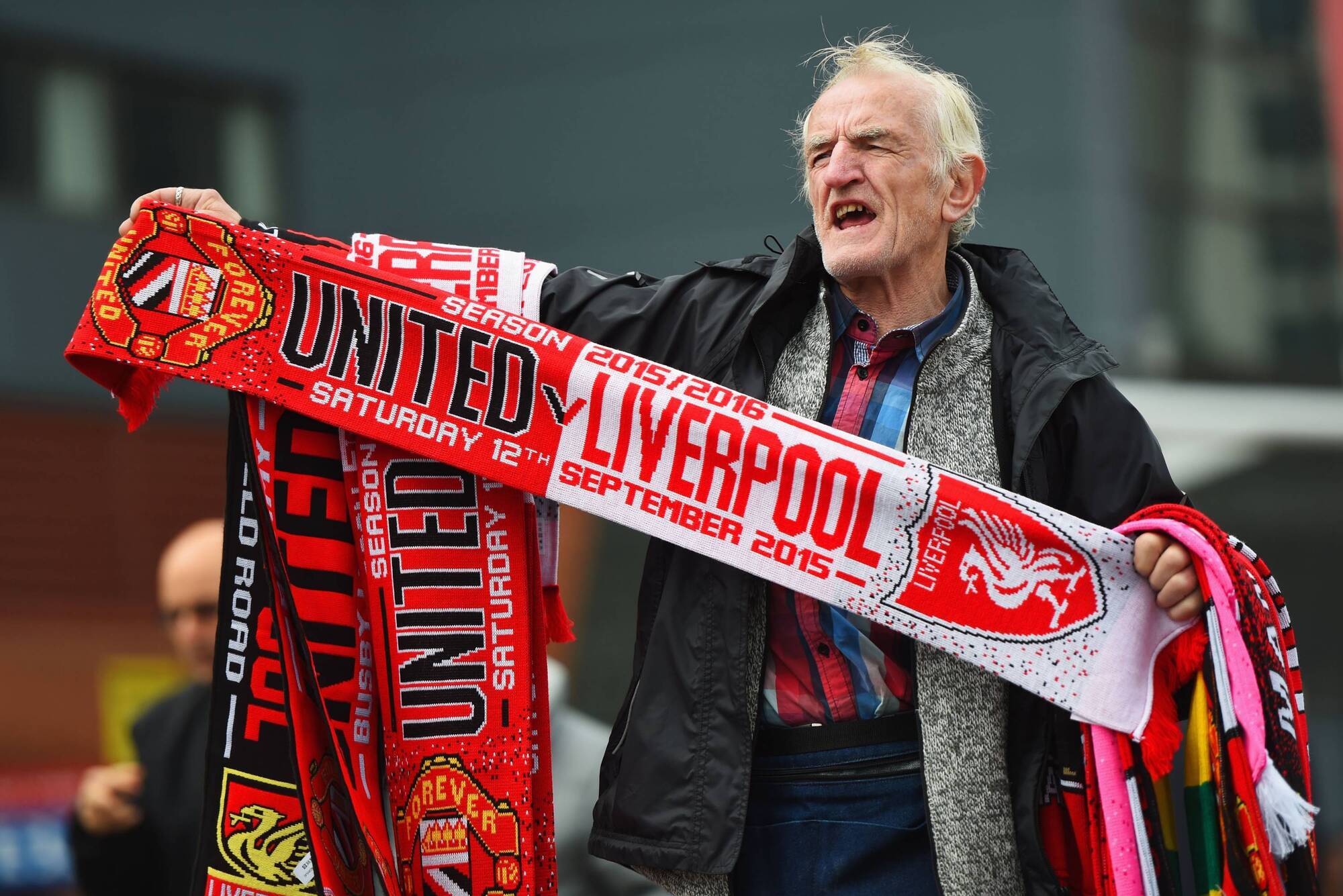
Fair dues to Liverpool for their league win last season, writes our columnist, a Manchester United supporter. ‘What a famous win. Sadly, I couldn’t muster any of the begrudgery that Liverpool had earned.' Picture: Laurence Griffiths/Getty Images
John McGahern writes in his memoir about spending time as a child with a local man, Eddie McIniff, with whom he used to pick potatoes. He uses his name (but not his character, I hope) in the short story ‘Eddie Mac’, one of the great pieces of Irish sports writing.
Eddie, who played on the Ballinamore Gaelic football team, gave McGahern lessons in how to take frees by practising kicking potatoes through a gap in a ditch – until they were caught at it by McGahern’s father. When Ballinamore beat McGahern’s local team, Aughawillan, the young McGahern waited afterwards to congratulate Eddie, who had starred in the game. Eddie lifted him in the air and said ‘Shawneen boy!’. McGahern, who was delighted and in tears, said ‘You played great, Eddie,’ and he felt proud and happy and absolved.
I watched United’s comeback miracle in Crowley’s Bar on Bridge Street Cork with my brother Padraig and some friends. It was a big night for me: a United fan of over 30 rollercoaster years. After the final whistle’s ecstatic incredulity had subsided and the elation was just beginning to bubble up, I went to the gents. A man barged in, his face set in rage.
‘Worst team ever to win the European Cup,’ he growled.
‘Are you a Liverpool supporter?’ I asked happily.
‘How do you know that?’ he replied.
I didn’t answer. All I knew was that my joy was complete.
I watched Liverpool’s miracle comeback in a bar in Graz, Austria – a packed cavernous room. At half-time, like most United supporters, I was happy out. I always had a soft spot for Milan. Then that stunning second-half comeback, when Steven Gerrard forced the world to spin on a different axis.
I must admit to a feeling of delight when that happened. To have witnessed such greatness was a privilege I had never expected and the joy of the locals was infectious. I texted congratulations to my Liverpool friends.
Sally Rooney says that watching Mohamed Salah play football is not unlike staring up at the stars and contemplating the vastness of the universe. She says it makes her own life seem nice and small. Watching Steven Gerrard on that May day in 2005 made me feel like I was one of those stars among billions of other gigantic balls of burning helium and hydrogen, pulsing light and life out across the universe forever.
I don’t remember if I watched the game of Steven Gerrard’s famous slip live, I suspect I didn’t in case Liverpool would win. I do remember my delight that Liverpool had been so cruelly denied their Premier League title that year.
That all my Liverpool friends – some of the people I love most in the world – had been denied such joy. I still smile thinking about it, nearly seven years later. I still enjoy seeing video clips of the stumble.
We can all agree that rivalry is a good thing in sport. But I was taken aback when Roy Keane and Jimmy Floyd Hasselbaink were recently extolling the hatred – hatred – between Leeds United and Manchester United fans as casually as though they were discussing the importance of adding a few spoons of Worcestershire Sauce into a stew.
In reality, I think it’s understood that the hatred implicit in rivalry is at the same time true and not true, real and not real. Just as when Ronan O’Gara said that he didn’t want Ireland to beat the All Blacks without him in the team, at the same time, had Ireland won, he’d have been crying with joy. Sifting through the emotional realities/unrealities of sport is what makes it so endlessly fascinating. But some emotions in sport are sadly all too real.
I didn’t watch much football in 2020. Partly because of the virus, partly for other reasons, but mostly because I missed my friend Tom Abernethy too much.
We lost Tom on a hateful day last March and he had been my friend since I was 12. We went to Old Trafford together as boys in 1978, to watch West Brom beat United 5-3.
The first of many times for Tom, he was a real United fan – red to the core – whereas I drift in and out. In many ways Tom was United for me. Whenever I’d look at games we’d text each other and give out or give praise. In the last few years, it was mostly giving out but it used to be an essential and joyful part of my football ritual.
On July 19 I was ironing in the kitchen and I turned on the United v Chelsea FA Cup game commentary on my phone. After a few minutes I looked up Tom’s name on the top of my Contacts List and I started to cry and I turned off the App. I finished the ironing in silence and then I went out for a walk.
I thought Paul Rouse picked a great word in this paper lately when he described 2020 as a ‘putrid’ year. The perfect word – Con Houlihan would have approved. Nothing putrid about Liverpool’s 2020 league title, though, bridging a wide river of longing. Fair dues to them, what a famous win. Sadly, I couldn’t muster any of the begrudgery that Liverpool had earned.
Tom would not have approved.
But sport draws you back in and I bought a new subscription before Christmas. I find myself looking at games again, to while away the long lockdown nights.
Nothing to do with United being near the top of the league, of course.
I enjoy the games being held in empty stadiums. I can appreciate the football more without the sense of occasion, what ethnographers call ‘the event’.
Now there’s only the match, the 22 players, and I turn down the volume on the fake cheering. Without the fans, the play seems clearer. Are they doing it differently? Better? I’m not sure. A Stratford (not Stretford) lad once said ‘the play’s the thing’ and I’m inclined to agree. Joyce Carol Oates talked about the ‘mysterious will’ of the audience in sport but do we really need that to enjoy a game of football? Do we need ‘the crude paraphernalia of the setting’ (again her words) in order to be moved?
The footballers’ skill is otherworldly, what they can do with their genius bodies and the ball. It’s hard to fathom the depth of their intellectual capacities.
I enjoyed Southampton’s win over Liverpool last Monday, as you do. I’ve always had a soft spot for The Saints.
I fully expected Liverpool to equalise at any moment and go on to win and it was nice to have my pessimism proven wrong for a change. I especially enjoyed the response of the two managers afterwards. Hasenhüttl exiting right overcome by emotion; Klopp (whom I admire) exiting left pursued by a flea in his ear.
An engaging game the other night, both teams fluid and innovative going forward. City deserved their win, their defence was rock solid. Another season, another semi-final loss for United.
Still, another opportunity to watch and think about Marcus Rashford. The main thing about Marcus that he is United, not Liverpool. It’s simply the most important thing.
Watching him is like texting Tom again. And Tom texting me back.
Watching him is like being a child again, lifted up, in tears, feeling proud and happy and absolved.
CONNECT WITH US TODAY



Be the first to know the latest news and updates