David Sneyd: Dundalk’s dogs of war win FAI Cup battle of wills
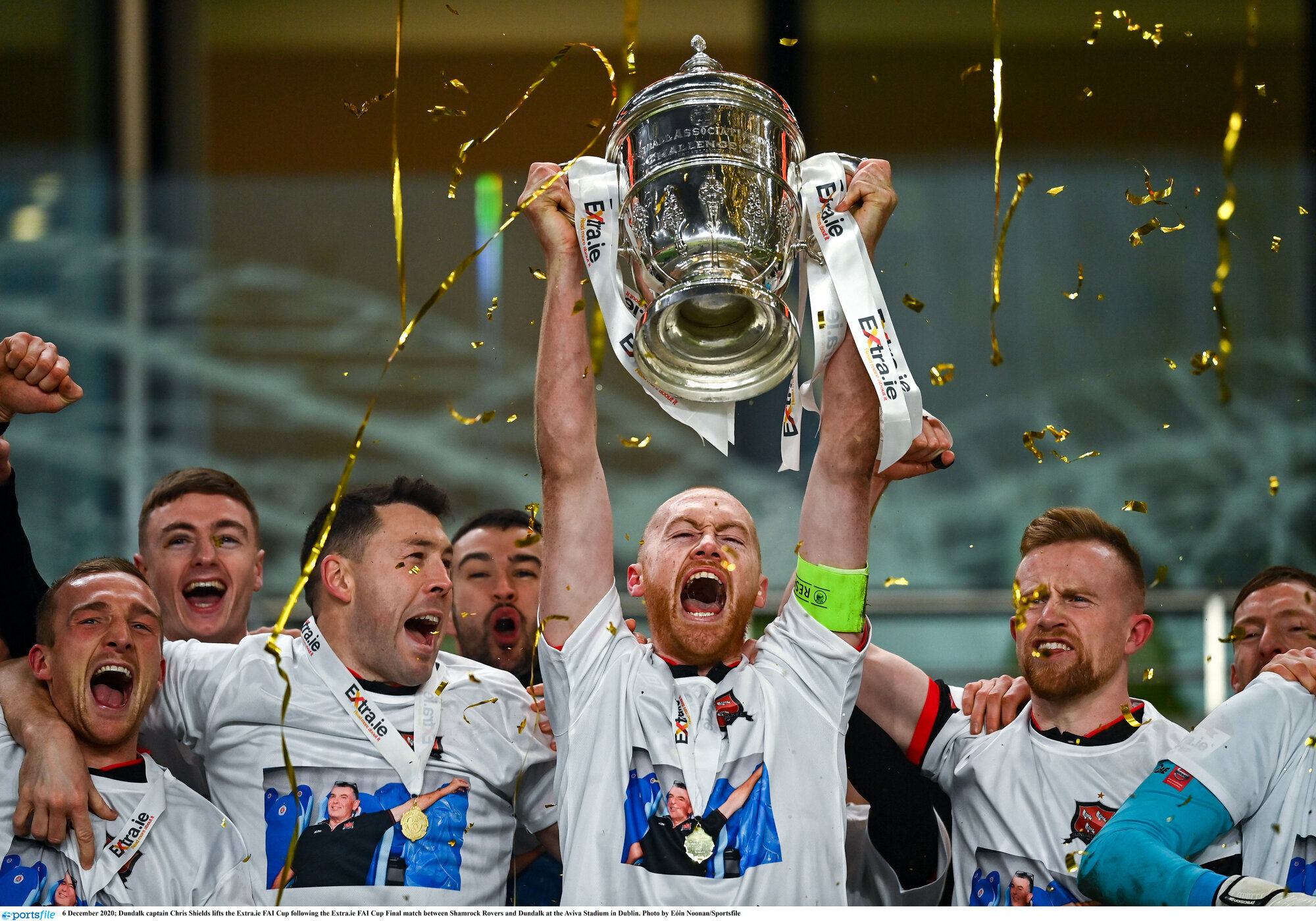
Dundalk captain Chris Shields lifts the FAI Cup. Photo by Eóin Noonan/Sportsfile
No history for Shamrock Rovers.
No league and cup double.
No unbeaten season.
For all the talent and technical ability on show, it was good old-fashioned grit and determination that won the day for Dundalk.
Not to mention steely nerve just when it looked as if this see-saw FAI Cup final was tilting towards another agonising penalty shootout between these sides.
That was how the 2019 edition was settled, but it wasn’t required here.
David McMillan was the hat-trick hero, scoring the goals that have helped salvage a season of pure frustration on the domestic front.
Sean Hoare was the match-winner, as it will be remembered in the record books, firing an effort through a sea of bodies, but this was ‘The McMillan Final’ as took the man-of-the-match plaudits on a night when he became just the third player in history to net a treble in the showpiece of the Irish game.
But it was Chris Shields who epitomised Dundalk’s dogs of war attitude. He provided as much protection as possible to the back three but also led by example in ensuring their opponents, who were superior for large spells when in possession, didn’t turn their control into a free-scoring romp.
And even through the biting cold and slowly drifting fog, it was impossible not to feel buoyed by the sheer joy Shields took in his role as the destroyer. But he was more than just that. His presence is like a comfort blanket for teammates who know he will make the right decisions and the right time.
Off the pitch Shields is a joker, on it, he is becoming Dundalk’s king.
When Hoare scored and sprinted to the corner flag to celebrate, every one of his outfield teammates joined in. Except Shields. He ran to the touchline, took in a word of advice from head coach Filippo Giovagnoli and nodded sagely.
Back in position.
Back in for battle.
He did allow himself a more vigorous celebration when McMillan raced through on goal and made the outcome safe at the end of extra-time.
The Dubliner sprinted towards the bench once again, slid on his knees and punched the turf with both fists 12 times. Then he got up and jogged casually to the corner and hugged McMillan.
Shields was the last to get back in position but switched back on to see the job through.
He is battled-hardened as Dundalk’s longest-serving player – alongside John Mountney. He has been at Oriel Park through all these glory days but on this night he relied on the qualities learned during his first season at the club when they survived a relegation play-off in 2012.
Shields has seen struggle and success and when the final whistle blew he dropped to his knees again, burying his head beneath his arms before being dragged to his feet by teammates and staff.
It was a stunning way for the night to end. Six goals, 4-2 to Dundalk. The Cup back in Louth for the 12th time.
And yet, for about 20 second-half minutes it looked as if one goal would be enough to decide this. Aaron Greene’s deft header under the leaping Gary Rogers gave Rovers a lead just four minutes after the restart.
It was delightfully done by the Hoops, absolutely dreadful defending from the Lilywhites.
Their preference for zonal marking at set-pieces has been ruthlessly exposed in the Europa League and here, the new domestic league champions continued that trend.
Jack Byrne’s delivery was pin-point, substitute Lee Grace towered highest in the box, and Greene, with all the space in the world at the back post, didn’t waste a moment as the ball dropped invitingly for him.
His roar of celebration could be heard from the rafters of the Aviva and then, suddenly, things went quiet. Save for the occasional foghorn blaring from the ships at nearby Dublin Bay.
This game looked as if it would settle into a familiar pattern.
Rovers were the better side, sharper around the pitch and crisper with their passing. They were far from their searing best, but they were comfortable.
Alan Mannus might have been forgiven for thinking the only thing he would need to get this hands on was the cup.
Dundalk, after arriving back from Norway on Friday morning following their defeat to Molde, weren’t able to muster a decent shooting opportunity.
Then, in 300 seconds of chaotic, rip-roaring action from the 69th minute, everything was thrown into disarray with three goals to set the pulses racing.
First McMillan equalised with a fierce shot off the post, then he converted a debatable penalty after Liam Scales was adjudged to have dragged Daniel Cleary to the ground in the box.
Rovers head coach Stephen Bradley, watching from an area about 50 or so yards back from a balcony in one of the executive boxes while serving a touchline ban, looked disgusted.
But Roberto Lopes had him punching the air with delight moments later when he rose highest in the box to meet a Byrne corner with a header of perfect power and precision.
After that Rovers continued to probe but Shields, the captain, stood firm.
And it was the Dundalk skipper who stood tallest as he lifted the Cup.

CONNECT WITH US TODAY



Be the first to know the latest news and updates