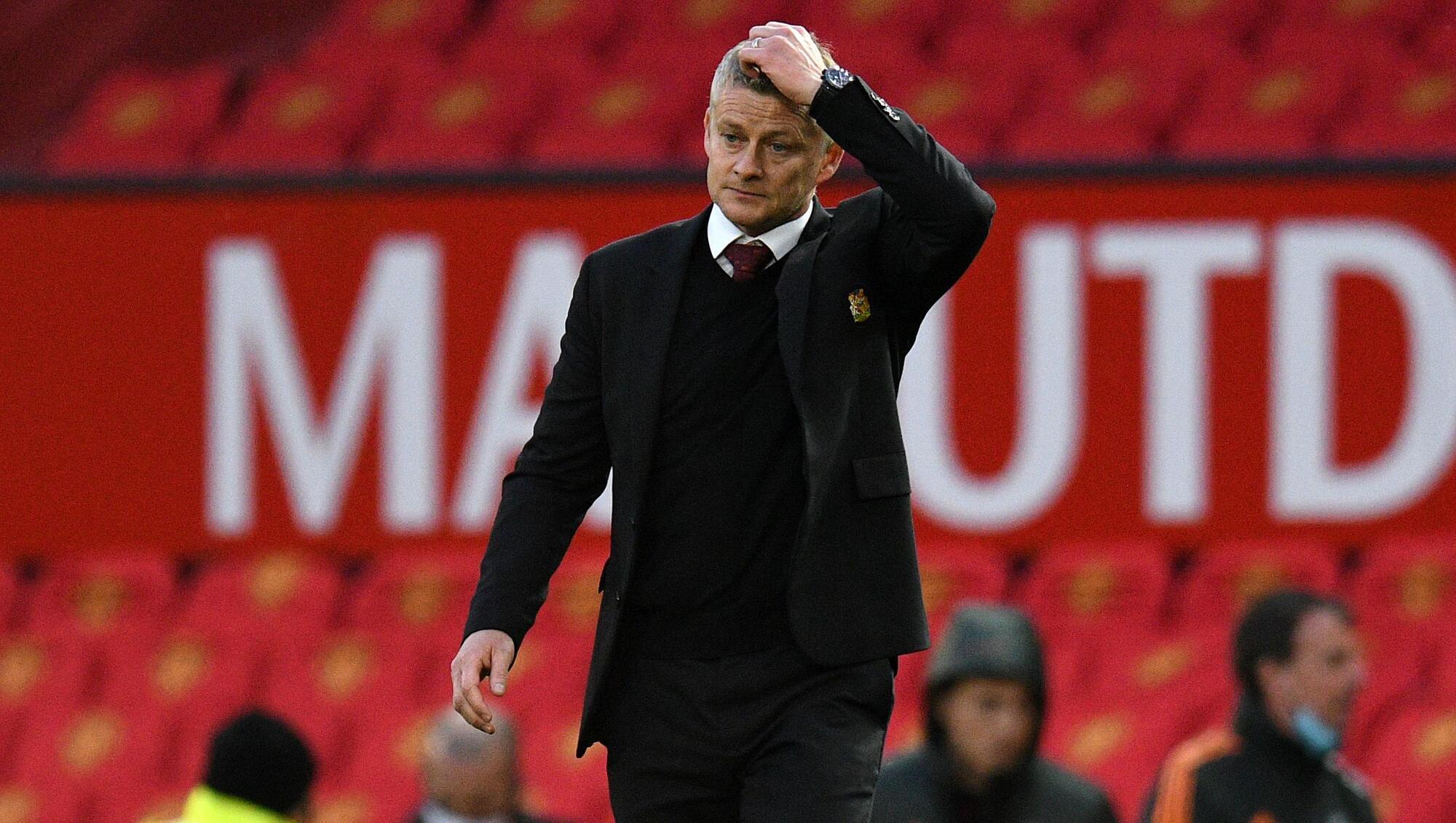
Ole Gunnar Solskjaer is one of life’s optimists. There are times when he seems to exist in an idealised version of Manchester United, where Old Trafford serves as a new Camelot, and when his sunny disposition can shield him to some of the negativity that often surrounds his beloved club.
But there are others when reality makes an unwanted intervention and Solskjaer abandoned his usual quest for positives in favour of downbeat realism on Sunday.
“My worst ever day,” he said after Tottenham won 6-1.
Solskjaer can seem a one-man nostalgia project, an instant reminder of 1999 and Alex Ferguson’s capacity to script improbable triumphs, but he emulated his mentor in an unwanted manner. The only other United manager in the last 90 years to lose 6-1 is Ferguson.
Inevitably, he generated a response, with five wins, each with a clean sheet, following 2011’s historic thrashing by Manchester City. Now Solskjaer is charged with doing something similar and, if it is premature to say it is required to save their season and his job, it is nonetheless notable that the tone of former team-mates like Roy Keane and Patrice Evra has changed. They seem less forgiving.
Yet with Solskjaer still partly protected by his past, a febrile fanbase are more upset with the board. But as the Norwegian said: “I’m responsible for this.”
Perhaps it is the relatively slender CV, the relegation with Cardiff and the fact his only trophies in management came in his native Norway, whose league ranks 22nd in Uefa’s coefficients, but it is easy to underestimate Solskjaer.
The darkest day can be before the dawn and arguably the previous lowest point of his reign was January’s 2-0 home defeat to Burnley. If Solskjaer’s obituary was being written then, United did not lose another league game until September. That spoke to Bruno Fernandes’ catalytic impact, but also to the enigmatic nature of his United, who have had two outstanding runs but plenty of awful performances in between and after.
Yet Sunday’s setback was damning and worrying in equal measure. Solskjaer’s initial schtick was that he was the upbeat antidote to Jose Mourinho’s toxic negativity, a man who understood United and promoted their own.
Spurs’ demolition job was the revenge of the slighted serial winner. The Portuguese is in decline but he was one of the world’s great managers. The same may be said for Carlo Ancelotti, who has steered Everton to the top of the nascent table.
Comparisons do not flatter Solskjaer. Freak scorelines abound now but it is easier to assume Liverpool’s demolition at Villa Park was not an indication of wider problems.
Because Solskjaer’s season has been dreadful so far, and not merely because he has been outmanoeuvred by Mourinho and Roy Hodgson.
His decision-making has felt dodgy. Paul Pogba remains a project player for his former reserve-team manager but the Frenchman’s performances have been poor, culminating in the needless lunge on Ben Davies to concede the penalty for Spurs’ sixth goal. He looked off the pace against Crystal Palace, which was understandable as coronavirus meant he was late to return to training, but why, then, was he selected ahead of Fred or Donny van de Beek?
Benching the Dutchman brought criticism from his mentor, Sjaak Swaat, but how and where can Solskjaer fit Pogba, Fernandes and Van de Beek into the same team? Starting Daniel James against Palace was a mistake. Persevering with Nemanja Matic feels another.
Solskjaer was not responsible for Harry Maguire’s summer troubles in Greece and it was part of his inherent loyalty to let the centre-back keep the captaincy, but the Englishman has produced the worst form of his United career this season.
With the cornerstone of his defence struggling, it is crumbling. Aaron Wan-Bissaka’s best form came under Hodgson, Eric Bailly’s under Mourinho, Luke Shaw’s for Mauricio Pochettino.
The lack of structure is apparent in the way United can be counter-attacked. Only Leeds have conceded more shots per game and they have at least compensated with thrilling attacking. United emulated West Bromwich Albion, who last week became the first team since 1963-64 to concede 11 goals in the first three games of a top-flight season.
Had the luckless Leandro Trossard, who hit the woodwork three times for Brighton, been slightly more accurate, United would have begun with three consecutive defeats. Solskjaer is fortunate United’s plight is not worse.
It seemed dire at times last season. He confounded expectations then to overhaul a 14-point deficit to Leicester and finish third. It was a feat for one who has never seemed a managerial genius as much as a man with his heart in the right place. All of which has led United to overlook the better-qualified Pochettino. But this season revives questions if Solskjaer’s best intentions are good enough.
CONNECT WITH US TODAY
Be the first to know the latest news and updates