Science tells Liverpool to enjoy the pressure points
There’s a theory the very best football managers, often without acknowledging it and sometimes without having studied it, are instinctively some of the greatest psychologists on the planet.
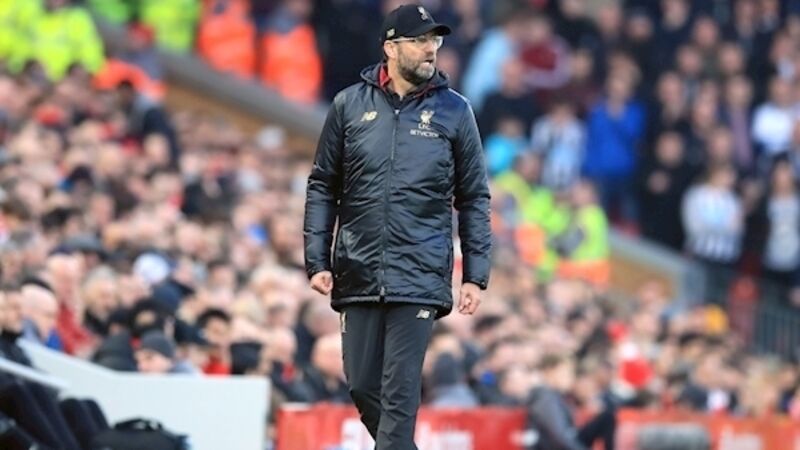
If so, Liverpool, as they attempt to cope with the ever-increasing pressure as they attempt to win a first league title since 1990, will be hoping that Jurgen Klopp can guide his players through the next three months, not just with on-field tactics but with carefully-chosen words too.
It’s a topic which is increasingly under discussion after Liverpool relinquished their lead at the top of the Premier League thanks to two draws in a row and, of course, a defeat at the Etihad against title rivals Manchester City early in the new year.
Klopp, however, feels it is lazy journalism to suggest his team are struggling with nerves whenever they drop points or that they are burdened by expectation whenever they can’t find the net.
“If we drop three points, you are the first to say: ‘They are nervous.’ It’s an easy job,” he told reporters in December. “I would love to be in your situation, still earning the money I earn,” he laughed.
“We cannot play that game. And we don’t do it.”
Even so, you don’t need to be an expert in psychology or sports science to spot the signs of pressure on a team’s performance; and Liverpool showed classic symptoms in their 1-1 home draw against Leicester and when drawing at West Ham on Monday.
Whether it was Divock Origi’s snatched chance in the final minute at the London Stadium, uncharacteristically slow build-up play, a lack of concentration at set pieces, misplaced passes, hurried shooting or simply the energy-sapping impact of frustration pouring down from the stands, Liverpool weren’t themselves in either game.
The tension against Leicester was particularly palpable because the game came 24 hours after Manchester City had surprisingly lost to Newcastle, opening up an opportunity to go seven points clear at the top of the table.
Perhaps the extra pressure against West Ham, too, came with the knowledge City could be top again by the weekend if Liverpool messed up, a scenario which has since come to pass.
So, how can Liverpool, who face Bournemouth at Anfield today, cope better with the pressure in what is certain to be a tight and constantly-changing title run-in?
A study published last year on the academic blog site Frontiers Science News looked at the impact of pressure on performance and came up with some new theories.
Dr Yair Galily, of the Interdisciplinary Center in Israel, wanted to test predictions that teams would perform better and exert the most effort when the possible returns for their success — or the consequences of their failure — were highest; and he did so by looking at stats from play-off games in basketball’s NBA.
“We analysed 1,930 play-off games to test this prediction,” Galily said. “We calculated the probability that a team would win, if losing meant that they faced elimination from the play-offs.”
The researchers included the relative strength of the teams in their calculations. But they still found the threat of elimination made teams more likely to lose, particularly at home. If a home team had a 65% general win probability during the play-offs, this was reduced to 55% in games that were critical for the home team, but not the visiting team.
However, if the game was critical for the visiting team, and not the home team, the home team’s win probability increased to almost 74%.
“The results from our analysis are relevant to the workforce and many other domains,” said Galily.
“We suggest that leaders and managers should refrain from deliberately building high-pressure environments to try to enhance performance in their subordinates. They should adopt the ‘just do it and enjoy’ path.”
Could that be the key to Liverpool’s success this season?
To identify the ‘pressure points’ in advance and think about enjoying them? If so, then Klopp may be ahead of the game, judging by his post-match quotes after the draw at West Ham.
“We just didn’t enjoy the game enough,” he said. “It’s not about pressure, it’s about enjoying the situation you are in. We have 62 points, have lost one game in the whole season so far, which is very positive.”
In December, too, Klopp’s message to his players and to the Kop (after all, supporters need to cope with the pressure just as much as their idols) was: “Let’s enjoy the moment, let’s enjoy the ride, as much as possible and let’s go for everything.”
So, there you go. Relax, Liverpool fans. There may be some big games ahead — including derbies against Manchester United and Everton — but it looks like, psychologically speaking at least, your season is in safe hands.
Page 36: Larry Ryan on
Liverpool facing their fears


CONNECT WITH US TODAY



Be the first to know the latest news and updates