Tragedies that echo beyond football
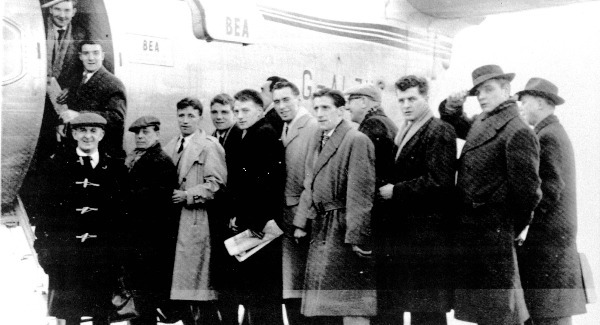
The news from Munich arrived painfully quickly. People barely had time to celebrate the result in Belgrade that put Manchester United into the European Cup semi-finals before any sense of joy, or thoughts of football, were banished from their minds.
“United Disaster” was the message on the newspaper advertising boards in stark black letters, six inches high. “United Cup XI Crash” read the front page of the Manchester Evening News, “28 Die”.
Mercifully the eventual death toll was slightly lower: 20 died on the tarmac at Riem airport, a further three in hospital. But the sense of shock and loss if anything grew more intense in the following days.
When the bodies were flown back from Germany more than 100,000 people lined the route from the airport to Old Trafford.
Looking back at the television coverage is poignant, and especially the cinema newsreels preserved on YouTube. Newsreels were still the way many people saw the news back then, and British Pathé provided a moving tribute to the Busby Babes.
Unlike the stuffy BBC, which only referred to the players by their surnames, the newsreels captured the public affection for Tommy Taylor, Duncan Edwards, Roger Byrne and their teammates: “In that plane were a group of young men who were almost the personal friends of millions… They were on top of the world, now those hopes are snuffed out.”
Munich is rightly seen as a tragedy for English football in the run-up to the 1958 World Cup, as well as United, who made a valiant effort to beat Milan in the European Cup semi-final, winning the first leg 2-1 before going down 4-0 in Italy.
It was also a tragedy for Ireland, who lost Liam ‘Billy’ Whelan, already one of the country’s finest-ever forwards at the age of 22.
The Dublin striker had spent four years at United and was just emerging as a key member of the team, having scored 33 goals in 53 games in their title-winning 1956-57 season. He was also a gifted player with the ball at his feet, known as The Nutmegger at Old Trafford.
There is not much film of football available from those days, but fortunately a newsreel captured his wonderful individual goal scored against Athletic Bilbao, which can be seen on YouTube in a documentary with the Whelan family.
Unlike some of his teammates, who were happily throwing snowballs while their plane was being refuelled at Munich, he seemed to have a premonition of disaster. Harry Gregg, who miraculously survived the crash, told Liam’s mother that shortly before the plane’s third take-off attempt he heard him say: “Well, if this is the time then I’m ready.”

Munich is a tragedy that finds an echo right across the world of football not because it was unique but because it relates to similar tragedies in other places both before and since.
On the day of the crash itself, England manager Walter Winterbottom recalled the Superga air crash nine years earlier which wiped out the whole Torino team and devastated Italian football.
As with Munich, the Superga disaster occurred on the way back from a match, in this case a friendly against Benfica, towards the end of a season when Torino had dominated the game in Italy for the fourth year in a row. They were known as Il Grande Torino, the Great Torino, with good reason. The national team regularly included seven Torino players, and occasionally nine or ten.
As with Munich, the plane had stopped to refuel (in Barcelona) but in this case the bad weather that led to the disaster was at the destination rather than on the way.
Superga is a high hill that overlooks Turin, crowned by an 18th-century basilica, and on the afternoon of May 4, 1949 clouds and rain obscured it so much that visibility was down to 40 metres when the plane slammed into an embankment behind the church. The aircraft was entirely destroyed apart from the tail: all 31 on board were killed.
Munich shocked a country, Superga if anything was even more traumatic. As well as the players, all the management staff were killed, including their Hungarian manager Egri Erbstein and English coach Leslie Lievesley, who as a player was briefly at Old Trafford.

Only one Torino first-team player was left alive. It was decided to award them the title and all their opponents fielded youth teams for the four final league games. On the day of the funerals, a crowd estimated at one million paid their respects in Turin.
The tragedy marked a nation. Italy was only just starting to emerge from the aftermath of war and civil war. Torino, unlike United, were not an especially young side, but they were in their prime. Their players are remembered in the names of stadiums and streets, as well as the memorial and museum at Superga itself.
Both Munich and Superga continue to be commemorated every year. Memories of both events inevitably were reawakened by the air crash in Colombia in November 2016 that killed most of the Chapecoense team on their way to the Copa Sudamericana final against Atletico Nacional.

If those earlier tragedies seem avoidable, at least in retrospect, the crash at Cerro Gordo most certainly was.
The plane flew into a mountaintop because it ran out of fuel as a result of faulty flight planning. The death toll of 71 included 22 players from the Brazilian club, plus 23 coaching and other staff. The disaster is perhaps too recent to be fully commemorated, but the tributes this time went worldwide.
And the extraordinary sight of tens of thousands of Colombians holding candles aloft in memory of the victims was a moving reminder of the way that all these tragedies go beyond a single club or a single country.