Sepp Blatter demise spells bad news for Qatar
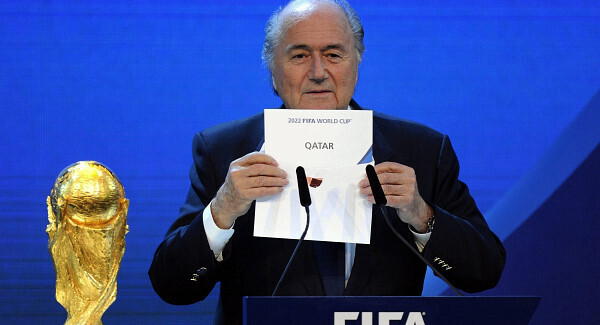
Those were the words of BBC sports editor Dan Roan after Sepp Blatter’s resignation in Zurich — and as the cheers in Europe begin to die down it won’t take long before the focus moves away from the outgoing President and on to the 2022 World Cup.
With the almost unanimous desire for a new, transparent and corruption-free Fifa so strong, even amongst those who wanted Blatter to stay, the very first question now will be: Can Qatar seriously host football’s showpiece tournament in seven years time?
It was Fifa’s shock decision to award the event to a country with so little football history — and with a climate unsuitable for a summer tournament — that began the unravelling of a corruption scandal that has shamed the sport and led to yesterday’s dramatic announcement.
Throughout it all Qatar has strongly denied that it ‘bought’ the World Cup and defended itself against claims of corruption; in fact there is still no serious evidence that it did so. But with the FBI and the Swiss authorities conducting investigations and 14 men charged so far, the swell of public opinion in favour of a re-vote for the 2022 World Cup is going to become increasingly powerful as football desperately tries to cleanse itself.
Blatter’s decision to quit will no doubt be enough to prevent European countries boycotting future finals or even setting up a rival version of the World Cup, as had been suggested in some quarters.
But once the dust settles on the president’s departure the focus will move quickly to the way World Cups are awarded. Simon Johnson, who led England’s 2018 bid, began that drive early as he said: “I want the full facts around the bidding to be known and published. I want there to be openness and transparency.
“If everybody won it because of a fair fight and everything was fair and objective and transparent then good, well done. If it wasn’t, if it was found there was improper behaviour in any way by any of the winning bidders then Fifa must have a look at whether they should re-open the process.
“I think 2018 will go ahead. The preliminary draw for the Russia World Cup is a few weeks away and it’s too late to change that, but 2022 is another matter.”
Inevitably transparency is going to be the by-word of the new Fifa when presidential elections eventually get underway in 2016 and Qatar, which has already spent hundreds of millions in preparation for the tournament, has reason to fear the spotlight.
Quite apart from the bribery and corruption scandal at the heart of the FBI investigation, constant stories about poor conditions for workers building the $260 billion infrastructure for the 2022 World Cup — the stadiums, hotels, apartments, public transport and roads — have been an embarrassment this year. A Daily Mail report this week claimed 1,200 workers have died so far because of unsafe conditions and estimated the total could rise to 4,000 by the time the tournament kicks off. An ABC documentary into conditions on building sites in Qatar included some equally shocking claims while a BBC camera crew was arrested in Doha recently for attempting to film similar footage.
Last year, too, The Sunday Times, carried stories that disgraced Qatari football official Mohammed Bin Hammam had made payments of $5m to football officials in return for their support for the Qatar bid — an accusation strongly denied by Qatari officials who consistently claimed Bin Hammam had no official role in the bid process.
But with such a thirst now for transparency and change, even the hint of a similar story in the coming months could do serious damage to Qatar’s chances of hosting the tournament.
In many ways that would be a huge shame. The Middle East deserves to host a World Cup, just as Africa did in 2010, and it is good for football as a global sport for the wealth and prestige of the world’s greatest sporting event to be shared across many territories. The desire for it to be done so fairly and openly, however, means Qatar 2022 is under serious threat; Especially now Blatter is not there to protect it.

CONNECT WITH US TODAY



Be the first to know the latest news and updates