How to make Lansdowne roar again
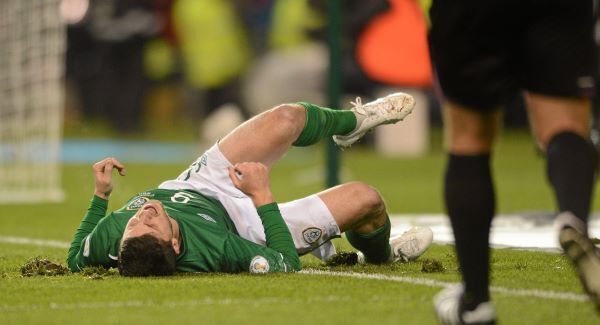
And it will be even more of an event should the Irish team qualify for those finals, guaranteeing they will play two of their games on home soil. In such circumstances, itâs not hard to imagine how electric the atmosphere should be at the new old ground in Ballsbridge.
And not before time. Because, letâs be honest, it hasnât really happened so far.
Back when the prospect of a new ultra-modern home for Irish football was still in the planning stages, I remember I had occasion to interview Damien Duff at Chelseaâs Cobham training ground. Duff, as is well-known, was practically allergic to the concept of engaging with the media, but despite his off-the-field image of being laid back to the point of being horizontal, this was never through any lack of robust opinion of his own.
And on the day I spoke to him, back in 2005, talk of the Irish team temporarily relocating home to Croke Park prompted this typically frank assessment on the part of The Duffer.
âThe likes of Thierry Henry donât like going to Lansdowne Road but heâs gonna like going to Croke Park,â he suggested. âLansdowne Road was our stomping ground. It was a kip and the changing rooms were cold and youâre on the toilet and thereâs a train going by your head, so Croke Park is going to be an awful lot more comfortable and welcoming to the opposition.
âCroke Park is a beautiful stadium and Iâm sure all Irish fans would love to go and watch big games there in front of 80,000 people and, maybe Iâm speaking out of turn, but Iâm just saying that for opposing teams, itâs going to be a nice place for them to play too.â
Insert âAvivaâ for âCrokerâ, and youâd have to concede that, with the inestimable benefit of hindsight, Duff was onto something there. Anyone who attended games in Lansdowne Road on the road to Italia â90, for example, will recall how Jack Charltonâs team thrived and even high-calibre opposition like Spain withered in the teeth of the raw and passionate atmosphere generated by the heaving terraces and stands. From the decaying hulk of the stadium to the long grass on the pitch itself, it all helped to turn the place into the almost mythical Fortress Lansdowne, âa kipâ perhaps but definitively âour kipâ and, as such, a place where visiting opposition feared to tread.
Which is not to say the old Lansdowne Road wasnât long overdue its final date with destiny, even before the toxic destruction crews of Combat 18 began unofficial demolition work in 2005. And we in the dreaded meeja ought to be last to mourn its passing, given how we have since swapped the stifling sardine intimacy of the old press box for the altogether more spacious work room and media tribune facilities of the Aviva. (Not that this stops us complaining, of course: âWhat? One socket between two people?â etc).
Yet, itâs easy to forget that even right on the eve of the bumper years of the Charlton era, the holy ground could already feel like the place time forgot. As a then supporter, I have a vivid memory of the luxurious space afforded me on the terraces when a brilliant Liam Brady goal saw off Brazil in what should have been a high profile friendly game that was actually played in front of a largely empty, echoing stadium, in 1987. Only when competitive success quickly followed did the crowds begin to flock back to the old ground.
All of which is to say that itâs the team which maketh the stadium, and not the other way âround. And if the Aviva, for all of its state-of-the-art attractions, has yet to properly claim our affections, itâs only because the boys in green have given us precious little to cheer about since the new place opened its doors. Even the national sideâs most memorable night there to date â when Giovanni Trapattoniâs team confirmed qualification for Euro 2012 in a 1-1 draw with Estonia â had already been effectively been drained of all its potential drama by the emphatic nature of the 4-0 win in the first leg of that play-off.
So while the FAI and its partners in the Dublin Euro 2020 bid are fully entitled to bask in the satisfaction of a job very well done in securing top quality tournament football for the city in six yearsâ time, the fervent hope must be that, long before then â ideally, indeed, before Euro 2016 â the exploits of the Boys in Green will offer reason enough for the Aviva Stadium to not only take its place among the great modern football stadia of Europe but, more importantly, grow into the role of spiritual heir to Dalyer and Lansdowne of beloved memory, and truly become the home, and soul, of Irish football.