How America has fallen in love with beautiful game
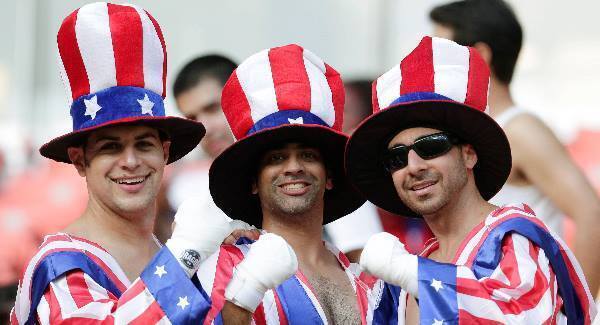
Some were die-hard soccer fans. Others were newcomers, spurred on by the rising tide of support for the national team in the worldâs biggest tournament. They left without what they wanted: a win.
From Texas to Chicago to California, fans watched nervously as the US and Belgium played 90 scoreless minutes before Belgium scored twice in extra-time.
The US responded with a goal but couldnât tie the match to send it to penalties. After 120 minutes, the USAâs World Cup was over. America, in the middle of its World Cup frenzy, got a reminder that soccer can be a cruel, cruel sport.
âIt was heartbreaking,â said Adam Graves, a 39-year-old special needs teacher, who stood among about 2,000 fans sweating in the 95-degree heat in Austin, Texas, at a city watch party at a park near downtown.
âWhat a roller-coaster. Just when you thought we were out of it, we were back in it. Thatâs what I love about soccer,â Graves said.
Others were more distraught.
âI thought we were gonna blow through this. I mean, I knew Belgium was good, but I didnât think we were gonna go out like that,â said Sierra Kaufman, 19, of Redondo Beach, California, her face painted red, white and blue.
Tuesdayâs game was the fourth for the US in Brazil. With every game, the crowds swelled.
Suddenly, America looked like a soccer-crazed country, as people skipped work and gathered in big crowds and watched the game play out on giant screens.
Each game pulled in more fans: The US-Portugal game drew 24.7 million television viewers overall, and the 18.22 million who watched on ESPN were the most the network has ever attracted for an event not involving American football. The Germany game averaged 10.7 million viewers, making it the third-most watched World Cup game ever on the network.
The swelling enthusiasm forced cities to make changes to accommodate crowds. In Chicago, home of the US Soccer federation, officials moved a gamewatch event from a public park to Soldier Field to accommodate an expected crowd of 20,000 or more.
Even in 90-degree temperatures, fans still flocked to watch the big game. In Washington, there were misting stations at the block-long Freedom Plaza to keep fans cool. That wasnât a problem at AT&T Stadium in Arlington, Texas, where thousands watched the match in the air-conditioned home of the Dallas Cowboys.
Crowds sang the national anthem together and it was hard to find a seat at game time at Freedom Plaza. Marie Davenport, 76, set up a folding chair outside of the main crowd but with a good view of the big screen.
âI think after this World Cup, Americans are sold on soccer,â said Davenport, who thought the scene and crowdâs enthusiasm made it a better choice than her living room.
US President Barack Obama left the confines of the White House Oval office and joined about 200 staffers in an Executive Office auditorium to watch the second half of the game.
âI believe!â he exclaimed as he walked in at the front of the hall.!
He was quickly joined by a chorus of âI believe that we will win! I believe that we will win!â As he took a seat in the auditoriumâs front row, he said sheepishly, âI was worried if I walked in and Belgium scored, Iâd get in trouble.â The loss ended the party for the US fans but not before some agonising moments as the USA fought back from two goals down early in extra time.
In Austin, every save by US goal keeper Tim Howard drew a rousing cheer. When Belgium finally scored, a small group of Belgium fans chanted and cheered as hundreds of US fans started leaving, only to come racing back when Julian Greenâs goal pulled the US within 2-1.
When the final whistle blew, Graves, the school teacher wearing a US soccer jersey, shrugged his shoulders and sighed. He marvelled at the turnout of fans in Austin and elsewhere around the country.
âI remember watching games in 1998 at home. There was no point going to a bar because they wouldnât have the game on,â Graves said.
Caitlyn Baldasaro, a 21-year-old student in Austin, said sheâd seen video images of giant World Cup watch parties in places like Paris, Mexico City and Rio. Baldasaro predicted they will only get bigger in the US â if the Americans can eventually find a way to get deeper in the tournament. The US hasnât advanced to the World Cup quarter-finals since 2002, but she predicted the USA will win it in the next 20 years. âWeâre very serious about sports in this country,â Baldasaro said. âIt will happen someday.â