10 reasons why Brazil finals have been compulsive viewing
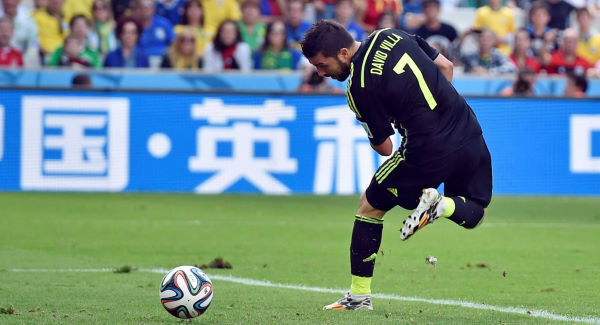
The most basic point to make about the tournament so far is that the football has been absolutely outstanding.
There have been a couple of stinkers — Nigeria-Iran and Belgium-Russia spring to mind — but 136 goals in 48 games is a fine return.
In fact it is a record total, six more than in the 2002 group stages and just one short of the total from the entire competition in 2010.
Teams appear to have decided that defending is an old fad, and all-out attack is the way forward. Nowhere was this better demonstrated than between England and Italy, playing their first game in the heat of Manaus. Most expected a relatively mundane draw as both preserved their energy for other challenges, but nothing could have been further from the truth as they went at it hell-for-leather. It is perhaps not a coincidence that neither side could rouse themselves after such an effort and both exited at the group stage.
On the field at least, it really has been a World Cup to cherish.
Lionel Messi, Neymar, Karim Benzema, Arjen Robben and Robin Van Persie: five genuine superstars and just the 17 goals between them at the end of the group stages.
In a sport and a tournament that lionises its star players the big guns have really stepped up in Brazil.
Players such as Messi and Neymar scoring four each in their first three games draws the casual supporter in and ensures viewing figures remain at their current, remarkably high levels.
The stars themselves appear to have embraced the challenge of being the key man for their teams, with Messi and Neymar in particular carrying their team-mates at times.
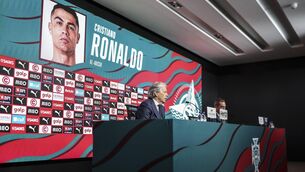
There has been one exception to this rule, but Cristiano Ronaldo may simply have proven he is human after all. A knee injury, one goal and an early exit is the sum of his World Cup. Fortunately, the rest of the stars are here to stay.
There are a few contenders for the best story at the World Cup to date, but Costa Rica get my vote. Thought before the tournament to put the ‘rank’ in ‘rank outsiders’ they shocked the world by topping a group that contained three former champions in England, Italy and Uruguay.
They have done so without any real stars bar perhaps Joel Campbell of Arsenal, with their central defence comprised of two MLS players who struggled in Scandinavia.
They will play Greece, a rather less endearing underdog but an underdog nonetheless, in the last 16.
Algeria sparked scenes of delirium when they drew with Russia (Fabio Capello’s record now reads one win in seven World Cup games, during which time he has earned €13m in salary) to make the knockout stages.
Another highlight was watching Iran frustrate Argentina for 92 minutes in Belo Horizonte; Lionel Messi got them in the end, but it was certainly fun while it lasted.
I have always wanted to be a highlights editor. Not of regular match coverage, but of the montage that closes a tournament, of all the great moments we have watched unfold over the previous month.
Nowhere has that job been easier than here in Brazil. There have already been so many standout moments — think Robin Van Persie’s astonishing header against Spain, Arjen Robben’s second in the same game, Lionel Messi’s various wonder goals, Luis Suarez’s journey from hero to villain — that the knockout stages will have to go some to top what we have already seen. From a personal point of view Van Persie’s header and Chile’s rendition of their national anthem against Holland, when the crowd carried on for 45 seconds after the music stopped, sent shivers down the spine.
Ah, Luis Suarez. We had to get to him in the end.
His tournament is perhaps best summed up by the images of him at the final whistle of the two games he played.
In the first, against England, he was hoisted into the air by his team-mates and held aloft for all to revel in his glory. Scorer of two goals despite being half-fit, it was perhaps the finest individual performance of the tournament to date.
Five days later, after victory over Italy, he stood unsure of himself as a dawning realisation seemed to engulf him. ‘I haven’t, have I?’
Oh yes, Luis, you had. You had bitten someone, again. Fifa have quite rightly thrown the book at him and he now cannot set foot in a football stadium for the next four months.
It is actually quite sad how a player of such staggering ability can fail to control himself, although it could be argued that his on-the-edge personality is what makes him such a great player.
Either way, the descent from the highlight of his career to his current status as a pariah took 116 hours. What a story. What a tournament.
We were warned before the tournament that European sides would struggle to win the World Cup, and that may well be the case.
Seven European sides have already bitten the dust, including four (well, they think so anyway) genuine big guns in Spain, Portugal, Italy and England.
In contrast, eight teams from the Americas have made the last 16, and there is enough evidence to suggest there could be a swing in football’s power base at work here. Certainly teams such as Colombia and Chile have shown enough to demonstrate they could still be serious contenders in 2018 and perhaps 2022, while the likes of England are left to once again look towards the promises of a golden future that never seems to arrive.
Good things come to an end, but it is a personal point of view that what has happened to Spain during this tournament is profoundly sad.
An undeniably great side — certainly the finest international team I can remember —were simply dismantled by the Netherlands and Chile as they became the first country to exit the competition all the way back on June 18.
After three tournament victories in succession we were perhaps all ready for an alternative to tiki-taka, but to see the likes of Xavi and Iker Casillas almost certainly end their international careers in such a manner was cruel.
One thing this tournament has clearly demonstrated is the impact a fine, analytical coach can have on a side.
Take Louis van Gaal, for instance. His Netherlands side have won three difficult games with three distinct tactical approaches, ensuring a perfect record in perhaps the toughest of all the groups.
While Van Gaal is the future at Manchester United a man who was a key part of their past — Carlos Quieroz — gave a commanding lesson in tactical organisation as his Iran side almost grabbed a point against Italy.
Elsewhere, Uruguay manager Oscar Tabarez successfully shut Steven Gerrard down and in so doing stopped England from creating in their game last week. In short, good coaches are worth their weight in gold.
Brazil is a fascinating country, and both sides of its split-personality have been on display.
Firstly, we have the beaches, the football, the glamour, the intoxication of what can be a wonderful, majestic place.
Then we have the flip-side: the poverty, the protests, the yawning chasm between haves and have-nots, the favelas and the worries about the future.
The arguments are that the improvements to infrastructure will leave a legacy for the country, but the sad fact is that most of the people who live in slums, like those that surround the gleaming Arena Corinthians in Sao Paulo, won’t see the benefits.
Brazil is a beautiful place that looks great on TV but sadly has a difficult and unclear future ahead.
If you’re a neutral then we are still on for the dream final — Brazil versus Argentina.
Germany, Holland and the rest will have their cheerleaders, but a final at the Maracana between the two great South American behemoths would be an occasion to relish.
Over 120,000 Argentines were reported to have crossed into Brazil for the game against Nigeria in Porto Alegre, the host venue closest to their border, and they have taken over every stadia they have played in so far.
Brazilians are nervous about the prospect of facing Messi and co, although their last 16 game with Chile is far from a gimme.
But the grudge match to end them all would be a suitably stunning way to conclude what has, to date, been an absolutely compelling World Cup.
CONNECT WITH US TODAY



Be the first to know the latest news and updates