Suarez sale may be way to go
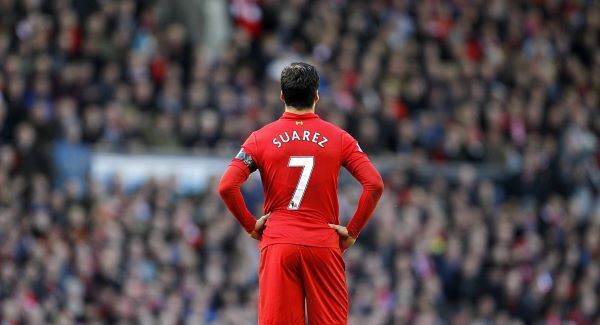
Make no mistake. The perceived press persecution the Uruguayan has put forward as driving him out of England is not the real reason.
As so often with the striker, it is merely a piece of trickery to more quickly get him the result he wants: in this case, a move to a club with a more immediate chance of both Champions League football.
In most cases, that would be completely understandable. Given the way the modern game is going, it can feel a waste for a player of elite talent to spend too much of his career outside the elite level. As with Robin van Persie and so many others, professionals have a greater duty to make the most of their inherent ability rather than to temporary employees.
That, even more than the details of this exit strategy, will be the most depressing aspect for Liverpool. All of the affection and support they understandably gave Suarez is not enough to stave off the reality of their current status.
It need not, however, stay like that in the long term.
The recent history of European football is filled with examples of teams selling their prize players only to still experience progress. In 1987, PSV Eindhoven sold Ruud Gullit to AC Milan only for the Dutch club to immediately win the 1988 European Cup. In 1997, Barca sold Ronaldo to Inter and won the Spanish league they had lacked for three years. Ultimately, teams adapt and often offer greater variety to their game.
As the current Barcelona are also beginning to discover to a certain degree with Leo Messi, a curious complex always arises with players of unique quality. At first, they liven up their sides and lift them to a different dimension. Gradually, though, that dimension comes to so define the team and that single player makes himself so dominant that the side become limited by his individual parameters. For all Suarez’s individual unpredictability, for example, Liverpool’s collective play actually becomes predictable when they generally have to get him the ball.
Most players like Messi and Cristiano Ronaldo, of course, are worth indulging. Their influence generally trumps the attempts to stop them.
We don’t know whether that is yet the case with Suarez, and on a whole number of levels.
As obviously excellent a forward as the Uruguayan is, his input still wasn’t enough to lift Liverpool above their general current level of seventh in the table. That is generally the point of accommodating such stars.
Without Suarez, though, Liverpool actually won three and drew one of their last four games while also scoring 10 goals. Most promisingly, two of Brendan Rodgers’s own signings — Coutinho and Daniel Sturridge — struck up the beginnings of a fine understanding. If the manager can add a few more players of that ilk thanks to any sale, Liverpool may become a team with various dynamic points of attack rather than one dominant one.
The other side of that is it is also a problem that Suarez has unnecessarily forced on Rodgers. The forward has been banned for a total of 18 games in his time at Liverpool — almost half a league season. And, for all the debate about the length and veracity of those punishments, the more important point for the future is that the player has shown no willingness to learn from them and thereby prevent such issues arising again. The bite on Branislav Ivanovic was preceded by a punch in an international game against Chelsea; the statement of the last week reflected an unwillingness to take responsibility.
In between all of that, we’ve seen an unusual level of anger and agitation around Anfield as a consequence of defending Suarez’s stances. If the long-term reputation of a truly dignified club will never be corroded, the short-term has seen so much discord.
On many levels, Liverpool may just be a happier place without Luis Suarez.