No Trap, we’re not Germany but we can compete
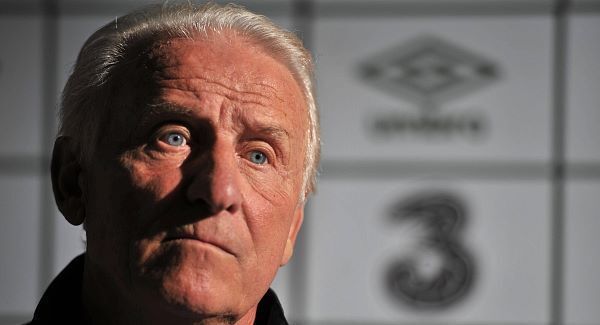
Indeed, it’s amazing how many levels there are to five supposedly simple words.
“You think we are Germany?” the Irish boss said on Tuesday, after being asked by RTÉ’s Tony O’Donoghue if he was considering his position following the 2-2 draw with Austria.
Whether it was the initial question or the answer that was disrespectful depended on your point of view.
On the one hand, the very statement seemed to sum up what Trapattoni has always thought of this job: Ireland are simply a lesser football nation he has deigned to try and lift. If he fails, it will be down to the country’s lack of ability rather than his. He reinforces it with every comment about the paucity of technical quality among the squad or the fact he “has no Leo Messi”.
On the other hand, there’s the view that Trapattoni was only illustrating what is accurate: a country that has qualified for less tournaments than the Germans have won should not be getting too expectant about victories against other mid-ranking teams. And, given the fixtures of the last week, it was a sentiment often accompanied by another suggestion — if you want to imagine life without Trapattoni, look at what’s happened to Scotland and Wales.
One thing in all that, at least, is certain: we are not Germany. Beyond that, though, such comparisons are nowhere near as simple as Trapattoni tried to imply. International football is not just divided into the good and the rest. Ireland may not be Germany but neither are recent qualifiers such as Greece nor Slovenia, and that does not mean a home draw against an Austrian team that has only won once in their last 19 away games is good enough.
Of course, there is the fact that many of this young Austrian squad did not play in those games. There is also a story about the Welsh which further illustrates how complex such comparisons between sides are.
Right now, some Irish fans may see a star as good as Gareth Bale, a player in the Champions League like Aaron Ramsey and then a competent a squad built on Swansea — and then wonder at Wales’ relatively poor position.
Just over a year ago, though, those in the Welsh FA were looking in this direction. Faced with the hugely difficult job of replacing the late Gary Speed, some pondered the idea of following the FAI’s lead and going big on a foreign manager. Ultimately, though, they didn’t have the money or the profile. The reported figures prove it: Trapattoni apparently earns over €1m more than Chris Coleman. The point, here, is that such an outlay demands a certain level of performance — especially when you consider it’s still over half a million euro more than managers of countries such as Greece.
The question of whether the Italian is providing it, relative to the quality of the squad, is even more complex.
One supposed indicator is to measure the number of players a country has in the Champions League or the major divisions.
A few elementary facts and comparisons between countries of broadly similar sizes or aims, though, illustrate the futility of this. Denmark, for example, had seven players in the European Cup this season but almost half at a Nordsjaelland side that repeatedly got routed. What does that prove? Slovenia, meanwhile, have three less players in the major leagues than Scotland but have qualified much more recently.
On that count, Ireland fare rather well. Many of the young players such as Seamus Coleman and Shane Long are getting regular football in one of the strongest leagues in Europe. Those who point to the likes of Bale, meanwhile, might also consider the international careers of Liam Brady and George Best and how success is dependent on a number of elements.
All added up, Ireland may not be Germany. The bare facts in the panel, though, indicate they have the resources to at least be competitive.