Wenger: No other way to play but to go for it
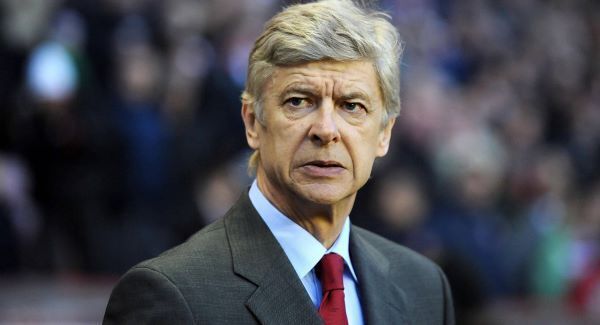
But not to Arsene Wenger. Not when he has made a career out of doing things his own way.
The scoreboard at Old Trafford from last August will loom over the Arsenal manager for years to come, but he doesnât care.
That nadir, the moment when Wengerâs project appeared set to come crashing down around his ears, was avoidable. But to swerve around it would have betrayed the Frenchmanâs principles.
He had fielded a young side with a reliance on players imported to the club at a young age, with a razor-sharp striker up front.
He had myriad players missing through injury, suspension or impending sales. He had supporters clamouring for him to spend.
And amid all the Wenger hallmarks, his side were 3-1 down with just under half-an-hour remaining. The sensible option would have been to accept defeat; after all, the crucial work of the week had already been done in a victorious Champions League qualifier against Udinese in sweltering conditions four days previously.
But that is not the Wenger way. Instead, he took off defensive midfielder Francis Coquelin to give Alex Oxlade-Chamberlain his debut. Four goals and the dismissal of Carl Jenkinson followed.
Wenger reacted again, bringing on Marouane Chamakh, the striker, and Henri Lansbury, an attacking midfielder. Another goal and United retired with just the eight to their name.
Fourteen months on, Arsenal and Wenger return to the scene of the crime today. What has Wenger learnt? Ultimately, never to compromise his beliefs. If Arsenal are in the same position again, expect the same decisions to be made and the outcome to repeat itself.
âWith 25 minutes to go it was 3-1 and I decided to go on the offensive, to try and come back with 10 men when we were already dead,â said Wenger. âMaybe I should have gone âOkay, letâs keep it tightâ and go out with a 3-1 and say âthank you very much, see you next weekâ.
âBut we wanted to give ourselves a chance to come back and maybe we shouldnât have done that.
âWere we a victim of our nature? Yes.
âWould I change my philosophy? I just want to do what gives us the best chance to win games. As well when you make teams you cannot go against nature.
âYou cannot play with Jack Wilshere, Santi Cazorla and Mikel Arteta and say, âlook, we will only defendâ. They would say, âwhat are we doing on the football pitch then?â
âSomewhere your style is dictated by the players you pick. Sometimes you have to learn not to lose before you can win a game.
âSo you give a bit more security to the team and I have done that as well. But still our basic philosophy is to go forward and attack.
Yet it was, as Wenger admits, âhumiliatingâ. What followed was an uncharacteristic trolley-dash that brought in the likes of Arteta, Per Mertesacker and Andre Santos and eventually led to a creditable third-placed finish.
But despite that success, Robin van Persie left for Old Trafford, his departure cutting deeper than those of Cesc Fabregas, Samir Nasri, Gael Clichy, Emmanuel Adebayor and Ashley Cole that had gone before.
Mertesacker and Thomas Vermaelen know the Dutchman well, but as Wenger acknowledges that doesnât mean they will be able to stop the 29-year-old from adding to the nine goals he currently has for his new employer.
âKnowing him that well will help us a little bit,â added Wenger. âRobin has a great quality in the fraction of a second that he understands where to go.
âAnd you can talk and talk and talk but defenders have to read that at the same time.
âHis speed of analysing those little pockets around the box is absolutely exceptional.
âThey know him as well because they have played against him in training. In the game itâs a question of timing, how quickly will they read it as well as he reads it?
âDo we have enough options up front without him?
If Gervinho is injured, we are a bit short, with just Olivier Giroud, Chamakh, who is now coming back, and Theo Walcott, who can play through the middle. We are a bit short.â
The deficiencies in Wengerâs modus operandi were badly exposed last August. Now, cutting a far more relaxed figure than the one who stormed down the Old Trafford touchline, Wenger still believes. It may be blind faith, but it is important.
âI am still always optimistic,â he laughs. âThey say a pessimist is a well-informed optimist. On the day I was badly informed. I always had hope. I always hope that my team will create something special â even on the day.â
Now to see whether that faith is justified.