Welcome to Real world, Pellegrini
It didn’t sound that way to anyone in the vicinity of Camp Nou, where the fans were already letting off fireworks 31 minutes into the decider against Valladolid.
But down south in Malaga, the only noise came from the local boys, as Real Madrid limped feebly to a draw and the home team saved themselves from relegation by the narrowest of margins.
As the sun set on Madrid’s forlorn dreams of the title, the TV cameras homed in on Cristiano Ronaldo, the man from Madeira rather than La Mancha, but like Don Quixote wearing the slightly puzzled look of someone fighting phantoms.
A weary shake of the head and that was it: the most expensive football team in history had ended up without a trophy.
Heads are about to roll.
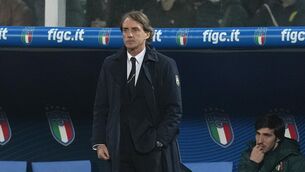
“Pellegrini’s hours are numbered” announced Madrid’s sports paper Marca yesterday, and in reality the manager has been waiting patiently by the scaffold since they were knocked out of the Champions League by Lyon.
On the touchline at Malaga’s La Rosaleda stadium, he too wore a puzzled frown, and like Ronaldo with some justification.
Madrid failed to win the title despite scoring more than 100 goals and despite the highest points total in even their illustrious history.
For Marca, and for most Madrid fans, the season came down simply to two defeats.
The first match in Barcelona last November could quite easily have gone the other way: only the defensive heroics of Barca’s captain Carles Puyol stopped Madrid from scoring on two occasions.
But the second was both decisive and demoralising. Madrid’s diamond midfield was simply overrun by Barca’s fluid 4-3-3. Pellegrini was tested tactically, and came up short.
Head-to-heads are often decisive in Spain and so it proved, yet that’s not the whole story.
Barcelona did slip up in Madrid – but against Atletico – and were also held by their local rivals, Espanyol. And Real also slipped up, at two of their least favourite venues, in Bilbao and in Pamplona against Osasuna.
Remarkably those two sides from the Basque Country restricted the Big Two to just three points between them from their four visits.
Athletic Bilbao have always rejoiced in defying their odds, and in recent years Osasuna have followed suit.
In a league now so dominated by TV and sponsorship, it’s pleasing to see traditions maintained. Bilbao still you have local roots to play for the club.
Bilbao rely on a consistent approach, as do Barcelona, although they cast their net a lot wider than Catalonia.
Madrid’s problem, says Marca writer Santiago Sergurola, is precisely that they don’t.
“There is a lack of perspective, of convictions and even a lack of style.. The fans are fed up with such contradictions, with the superficial approach and with all the racket.”
The standing joke about Real Madrid is that they’ll change the manager no matter what the results, but the astonishing thing is how many top players they have allowed to leave.
Next Saturday’s Champions League final will be a reminder of just some of the names as Madrid’s old boys come back to haunt the Bernabeu. There are likely to be no fewer than five former Madrid players in the starting line-ups: Arjen Robben for Bayern, and Samuel Eto’o, Esteban Cambiasso, Wesley Sneijder and Walter Samuel for Inter.
It is nothing like the final that was anticipated when three Spanish clubs came through to the last 16, and in the year when Spain are one of the big favourites to win the World Cup, that has not been good for national pride.
Nor is the suggestion that they might be in cahoots with Russia to bribe referees. In a season of wacky football stories, Lord Triesman’s seem just about the wackiest.
But given that their man Jose Maria Garcia Aranda is FIFA’s head of referees, and the President of the Spanish Football Federation Miguel Angel Villar Llona is chairman of the referees’ committee, you wouldn’t have thought that would be a very difficult task.
CONNECT WITH US TODAY



Be the first to know the latest news and updates