How apartheid stopped the British and Irish Lions in 1986 and shaped Nigel Carr’s career
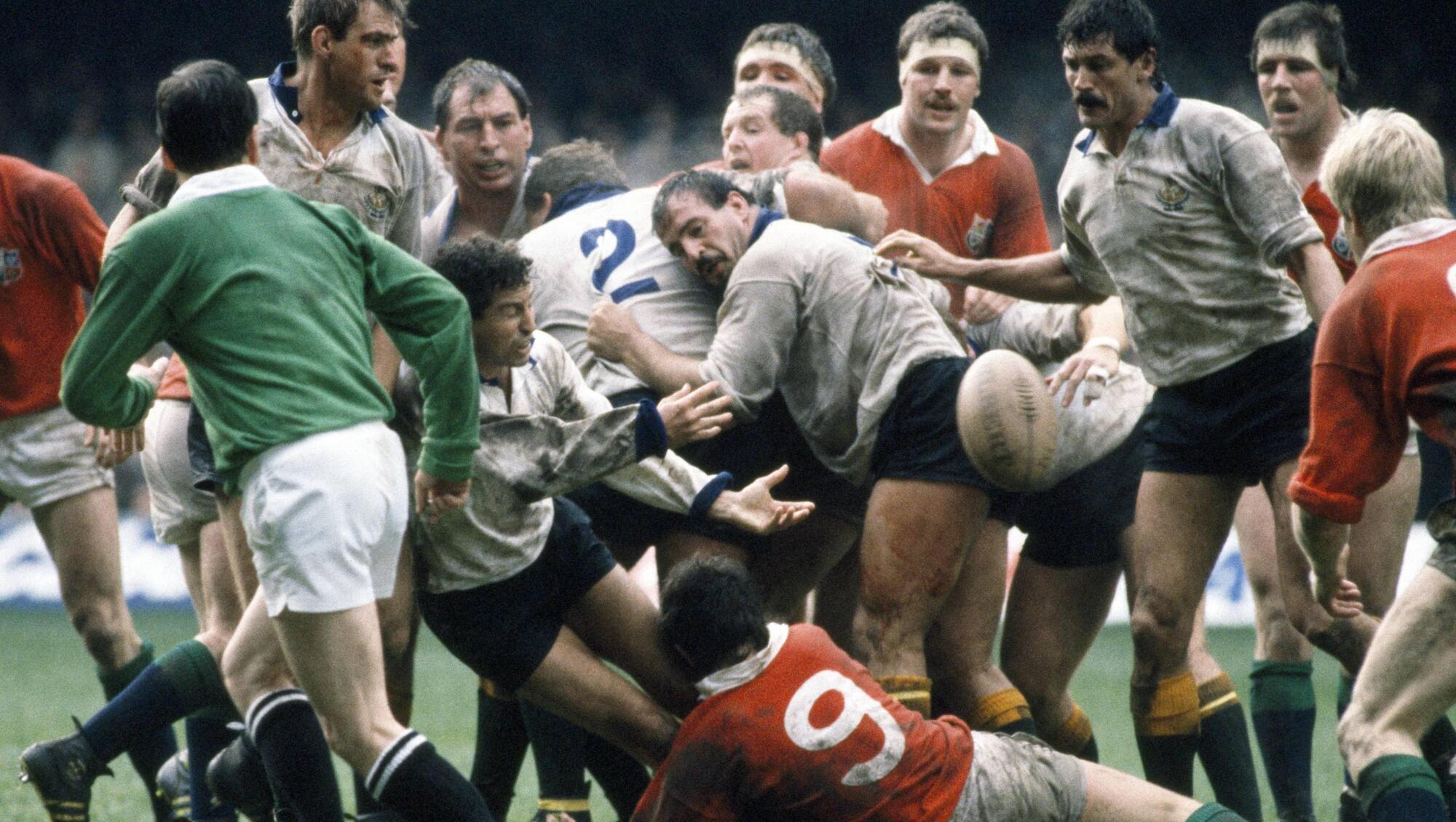
40 YEARS AGO: Robert Jones of the British Lions tackles Wayne Smith of the Rest of the World but Smith has already completed his pass, during the rugby union match between the British Lions and the Rest of the World at Cardiff Arms Park on 16th April 1986. Pic: Mike Brett/Popperfoto via Getty Images/Getty Images.
Nigel Carr was still a student at Regent House in Newtownards in the mid-1970s when his school coach predicted a future where he would go on to play for the British and Irish Lions in South Africa.
David McMaster would be half right.
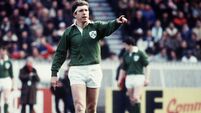
By 1986, Carr was living up to expectations. Part of an Ulster team that beat the 1984 Grand Slam Wallabies, he was integral to Ireland’s back row when they won a Five Nations and Triple Crown a season later. Carr would be 26 turning 27 when rugby’s most famous tourists were due in South Africa in ’86. Entering his prime.
The Lions was a natural next step. He duly made it 40 years ago, but not on the Highveld or in Cape Town. Carr’s only appearance for the game’s most iconic tourists came on a miserably wet Wednesday afternoon in April in a one-off match against a Rest of the World XV at Cardiff Arm’s Park.
***
Apartheid was made law in South Africa by the incoming National Party government in 1948. The International Olympic Committee expelled the country in 1970 and FIFA followed suit six years later. Other sports decided to expel or suspend, some adopted a business-almost-as-usual approach.
Too many in rugby covered their eyes and their ears and carried on regardless.
New Zealand toured South Africa in 1976 and hosted the Springboks in ’81. The Lions and France had visited in 1980. Ireland made a controversial tour a year later, as did England in 1984. By 1985 a state of emergency had been declared in a bid to stem the anti-apartheid tide, and in December of that year an invite for the Lions to tour was withheld.
Things were changing. Even rugby had to take notice.
Danie Craven, the president of the South African union who in 1969 had said there would be a black Springbok “over my dead body”, blamed the media for painting a picture of a country that would have visitors fearing for their safety. The tour was a non-starter. Anti-apartheid campaigners declared a famous victory.
***
The 1986 Five Nations hadn’t gone well for Ireland. The team lost all four games, but they still had six men selected when a British Lions squad – the ‘Irish’ didn’t apply officially to the title then - was put together for a game to celebrate the International Rugby Board’s centenary.
Carr’s call-up was a given.
Clive Rowlands and Mick Doyle served as manager and coach, and the Lions boasted blue-chip talent and leaders in men like Gavin Hastings, Rory Underwood, Robert Jones, Donal Lenihan and Colin Deans. Rowlands made it clear that this was no exhibition, that these men were Lions in the truest sense.
Opposing them was an all-star cast: Serge Blanco, Michael Lynagh, John Kirwan, Nick Farr-Jones, Simon Poidevin being just a few. Sprinkled in were four South Africans, three on the bench and Schalk Burger in the second row. If games were played on paper then this would have been a classic.
It wasn’t. The ‘visitors’ won a disappointing affair 15-7 in a half-full stadium.
“One of the disappointing things for us was that the weather was so poor because when you look at the side that we had it was a really fast, mobile side,” says Carr. “It wasn’t particularly suited to the wet weather in Cardiff that afternoon.
“In a South African context, you would have had a quick back line and a mobile pack and we would have been hopeful of doing well down there. Now, with hindsight, I suppose I can better understand the anti-apartheid campaign that led to the tour being cancelled.”
Only 21 players were chosen for that squad which, he points out, made it even harder than usual to earn a call-up. As he looks back now Carr can only see it as a “huge honour” to have worn that famous red jersey. As for the game itself, one potentially ugly clash with the renowned hardcase that was Australia’s Poidevin stands out.
“That’s my high point in international rugby. He said: ‘you’ve got a hard head, mate’.”
Confusion over the true nature of the game was only ended decades later when the Lions board retrospectively confirmed its Test status. Carr’s Lions number is officially listed as 602, but he is one of six players from that year’s class who never got to experience the immersive experience of tour south of the equator.
His career was ended in April of 1987, just over a year after that game in Cardiff, when the car in which he and other Ulster players were taking to an Ireland training session in Dublin before the first World Cup was caught in the blast from an IRA bomb that killed Lord Chief Justice Maurice Gibson and his wife.
“He was the type of player that you did not want to be in the opposition,” said Deans, the brilliant Scotland hooker who captained those ‘86 Lions. “It was a pleasure to play with him because he was a go-getter. He was the type of player nowadays people would hate to play against because he got the ball. It’s a shame he never got to tour. Every team needs a Nigel.”
Like Carr, Deans can see that ’86 tie through contrasting filters. An unused replacement in four Tests behind Ciaran Fitzgerald on the Lions New Zealand tour of 1983, he described Cardiff as a bittersweet, but mostly bitter, experience in an interview ten years ago. Now? As a feather in his cap. Compensation for that earlier, hotly-debated disappointment.
If one thing grates for both it is the fact that five of the six Kiwis on that Rest of World squad ended up in South Africa just weeks later as part of the divisive Cavaliers tour that filled the vacuum left by the Lions. But how should we frame that now at a time when debates over sporting boycotts of Russia, Israel and the USA are a regular part of the discourse?
***
Chris Bolsmann is a sociologist, a professor and the author of ‘Playing with Apartheid: Irish and South African Rugby 1964-1989’. Currently based in California, he grew up in Pretoria in the 1980s. The city was conservative with a white population that was roughly 70% Afrikaans speakers.
The son of a German father and an English-speaking mother, Bolsmann attended the same Pretoria Boys High that has graduated Elon Musk, Oscar Pretorius, former British government minister and anti-apartheid campaigner Peter Hain, and several Springboks, 2007 World-Cup winning Springbok captain John Smit among them.
An elite rugby school, Bolsmann made what he terms a political decision to play soccer. Sports were opening up and his exposure to black kids and black teams mostly better than theirs had prompted questions on the logic of apartheid and perceived white superiority. Other factors only increased his uneasy relationship with the oval ball.
“I was only two or three kilometres from Loftus Versfeld. You could hear when the home team scored. It was very much a big, burly Afrikaner, drunken, masculine, racist crowd. I still to this day struggle to support the Springboks even though many of their supporters and their players are black.”
Bolsmann can remember his mother explaining the seriousness of the security situation when the state of emergency was declared in July of 1985. Kids on his school’s shooting team were stationed in two bell towers with guns and live ammunition in case of intrusions on to the campus.
He’s never forgotten that.
The summer of 1986 was the tenth anniversary of the Soweto Uprising, a protest by black students that resulted in 176 people being killed by the police. A sense of beleaguerment on the part of the apartheid regime was only heightened by a stalemate in the ongoing war in southern Angola.
Topping all that was an economy creaking under pressure.
Many countries had applied trade and financial sanctions by the mid-80s. Foreign investment was leaking out of the country and, in time, Nelson Mandela and other black leaders would highlight this arm of the struggle in ridding the nation of its oppressive regime.
“I always remember going to the supermarket and buying imported German products, my dad being German, and now it was scaling back,” says Bolsmann. “‘We can’t afford that. We can’t go to Germany this year.’ It was very much the case, ‘we have to tighten our belts’. Many South Africans who had dual nationality left.”
***
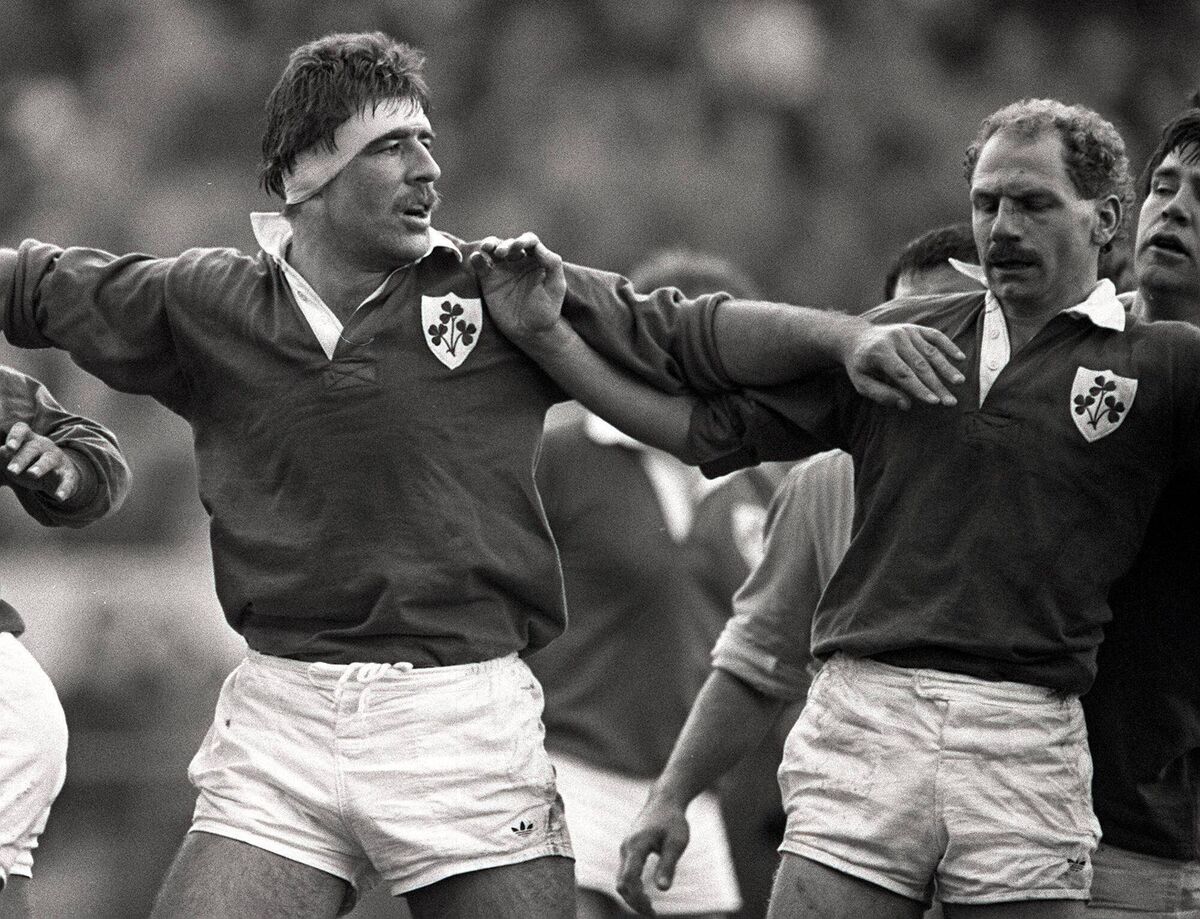
Four decades later and Deans still views that lost tour as the biggest disappointment of his playing career, but time brings perspective too, and the man from Hawick has found solace in the fact that he was “part of something that put pressure on people within the country to make appropriate changes” to a brutal, inhumane regime.
Carr was of the belief at the time that sport and politics shouldn’t mix. It was a stance borne of his own experiences during the Troubles when he played alongside Lenihan and Des Fitzgerald, both products of Republican backgrounds who became lifelong friends through their shared times with Ireland.
Media duties at the 1995 World Cup in South Africa gave him a close-up view of the unifying role Nelson Mandela played post-apartheid, and how a Springbok team that had come to be seen internally and abroad as a symbol of a racist, oppressive regime was now being adopted by more South Africans.
“Whenever I sometimes think of sport, and rugby in particular, in Ireland and in South Africa, I don’t want to overstate it, but I do think it has been a force for good in bringing people together,” says Carr.
“I really wouldn’t want to overegg that because it has only being a small contributing factor but still a factor in both countries. Now I can understand that sport was important and how influential it may have been in changing things in South Africa.”
For Bolsmann, rugby as a sport has “a lot to account for”. The country remained a member of what was then the IRB throughout the apartheid era. A World XV played two tests in South Africa to celebrate the centenary of the South African board. This was as late as 1989 and they were sanctioned by the IRB.
As for ’86, he believes there was a real risk of confrontation and violence had the Lions tour happened, that the tenth Soweto anniversary and the internal security situation would have made for a “powder keg that could have gone off”. As for the cancellation’s impact, he feels it was more symbolic and something that carried more weight internationally.
“The further we get away from that period, and the more access we have to the archives,” he says, “it’s possible that sport’s role is overstated.”
If rugby was important to apartheid’s ruling classes then Bolsmann doesn’t doubt that they would have sacrificed their place in that world if it meant continuing their hateful regime. When push came to shove, he argues, it was the harsh reality of the economic situation that forced their hand.
CONNECT WITH US TODAY



Be the first to know the latest news and updates