Donal Lenihan: Munster hierarchy need to open eyes and recognise diversity of fanbase
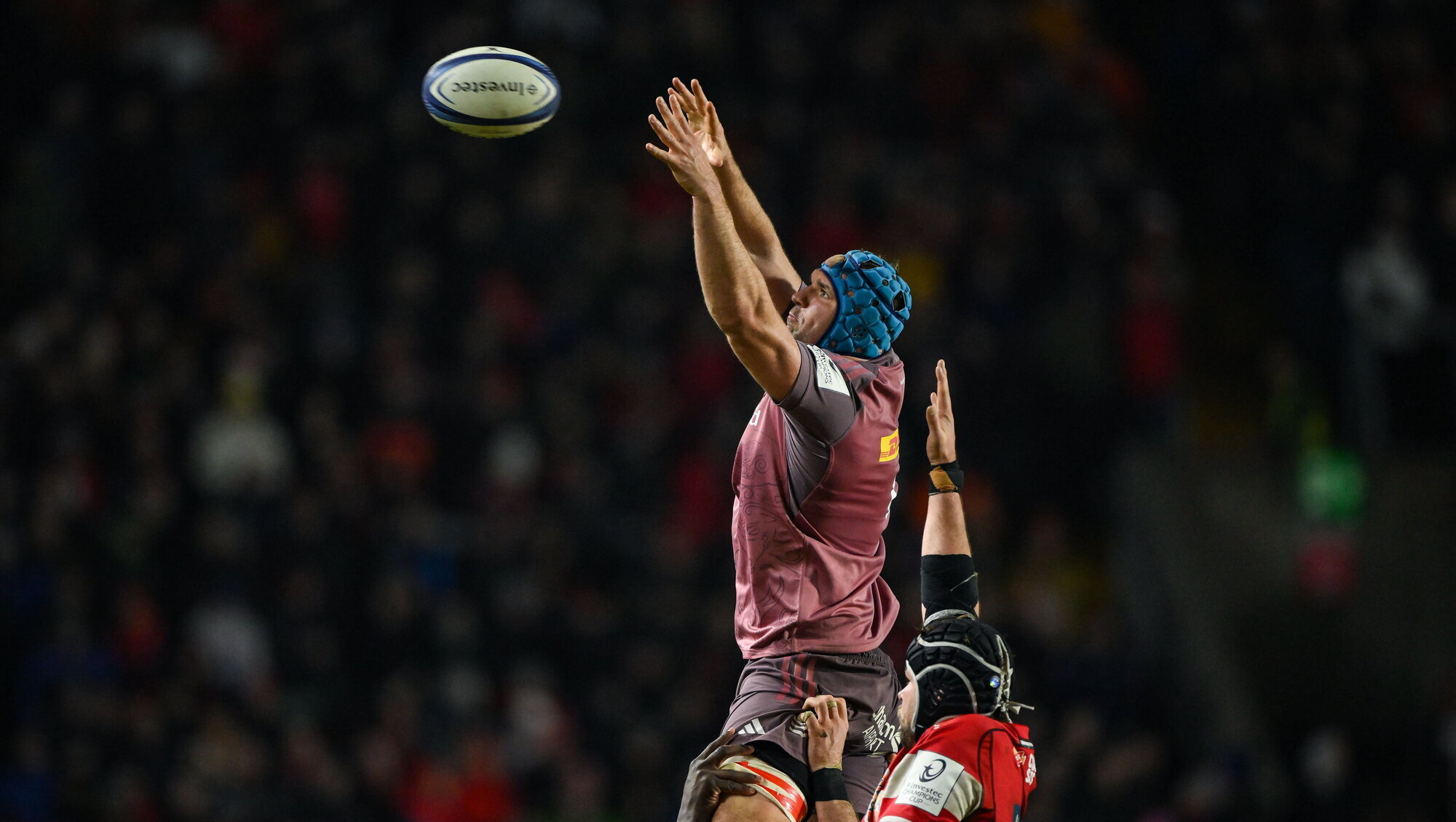
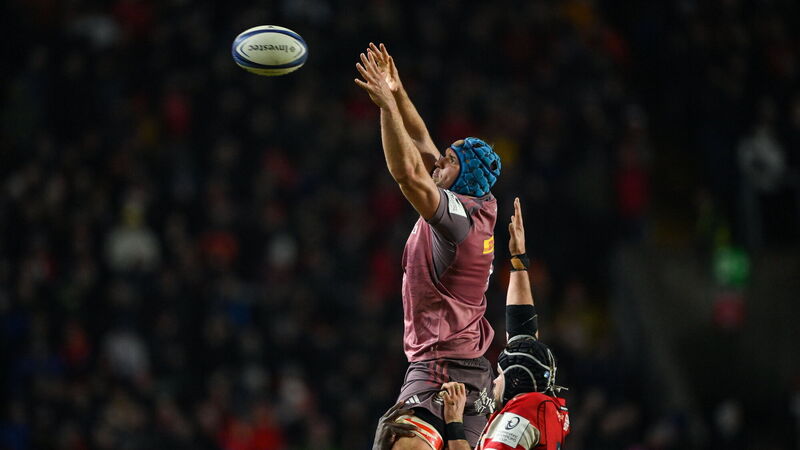
Tadhg Beirne of Munster takes possession in a line-out ahead of Cam Jordan of Gloucester. Pic: Brendan Moran/Sportsfile
HE body language of the Munster players on the final whistle, despite their 31-3 bonus point win on Saturday night, said a lot.
Heads slightly bowed, little or no histrionics, an acknowledgement that this latest performance against a weakened Gloucester side will be nowhere near good enough to beat Toulon at the electric Stade Mayol when the Champions Cup resumes next month.
All the ingredients should have been on show for something so much better but once it emerged on Friday that Gloucester were sending their seconds, the occasion was already tainted and, inevitably, failed to deliver on the pre-match expectation.
The last time I ventured down to Páirc Uí Chaoimh was for the National Hurling League final between Cork and Tipperary last April. Cork won 3-24 to 0-23 that day but Tipperary went on the win the All-Ireland final against the same opposition.
It begs the question. Who learned more from the league final?
The newly arrived Clayton McMillan will be asking himself the same question after this outing.
After an excellent start to the season, with five URC wins on the trot, recent defeats to the Stormers and Bath coupled with a disjointed performance against Gloucester have left him with a far better understanding of the task facing him in order to return Munster to a point where they are contending for silverware.
The reality is that in modern day professional sport, money talks. That’s why the biggest winner from last Saturday’s flat encounter down the Páirc was Munster’s bean counters. This pre-Christmas round of Champions Cup rugby has struggled to attract more than 17,000 fans to Thomond Park in recent seasons.
Something had to be done. It’s being reported that Munster will pocket an additional €500,000 in bottom-line revenue by staging the game in Cork. Given the province has been tasked by the IRFU to break even on an annual basis, that windfall will have a big impact.
In simple terms, if you want a squad deep enough to compete at the highest level you have to find a way to generate more money. Top-class overseas players cost serious money.
On that front, Munster should be looking at replicating what Leinster do in attracting top-quality All Blacks like Jordie Barrett and Rieko Ioane on a six-month sabbatical to boost their squad.
By only having them on your books from November to June, the financial outlay is reduced.
Even though they’ll only be with you for a short period, the different influence and approach from a seasoned overseas international can leave a legacy for younger players in the squad long after they’ve departed.
That is just one of a multiplicity of reasons why at least one big game needs to be staged in Cork annually.
That reality has been staring the Munster hierarchy in the face for a very long time but, for whatever reason, they’ve been reluctant to bite the bullet.
Apart altogether from the increased revenue generated, the players love something different.
In the past when I suggested that Munster’s URC game against Leinster should be hosted on rotation every second season in Páirc Uí Chaoimh, I attracted the ire of many a Limerick-based Munster fan.
One wasted no time in informing me that the festive derby in Limerick is worth over €6m to the local economy. Great, but what gives Limerick the divine right to that? Munster need to recognise the diversity of their fan base and use it to best effect.
In my opinion, Munster should look at staging a pre-season friendly or a September URC game at Fitzgerald Stadium in Killarney, not only as a reward for the loyal Kerry supporters who have followed the province for years, but because the many attractions Killarney has to offer would also make for a great weekend.
As for the rather muted atmosphere at Páirc Uí Chaoimh on Saturday, let me say I’ve witnessed many similar occasions at Thomond Park and the Aviva Stadium.
So much depends on what’s unfolding in front of you and, unfortunately, with the kicking fest that has taken hold of the game recently, fans are being regularly shortchanged.
Apart from the monetary aspects of shifting Munster’s games around, attending that hurling league final and the All-Ireland hurling final at Croke Park opened my eyes to the massive numbers of young boys and girls in attendance, proudly bedecked in Cork and Tipperary jerseys.
On that front, the Munster hierarchy need to open their eyes. By continually playing matches at 8pm on a Saturday night in Limerick, the younger cohort of fans travelling from outside Limerick has fallen massively.
I notice the difference every time I travel with very little traffic on the road home after those evening kickoffs.
I fully realise that the broadcasters are often responsible for this schedule but Munster need to stand up and insist they get more fixtures with a 5.30pm start. That would certainly make it more attractive for parents to bring young kids with them.
If you catch them early, you have them for life. Growing up, we were all influenced by the teams our parents followed and the matches we were brought to. My love of the GAA was developed in such circumstances.
Somehow Munster need to address how they make their home games more accessible if they want to grow their audience down the line. While the match was disappointing, there was a buzz around Cork on Saturday that I haven’t seen around a Munster game for a while, many using the occasion to travel home for the weekend to visit family and friends.
On the field, anyone who watched Toulon beat Bath 45-34 in a nine try cracker on Sunday will appreciate that those two teams alone are well ahead of Munster at the moment.
Outside altogether from Champions Cup rugby, the step-up in quality by the South African teams and the likes of Glasgow Warriors, who secured a brilliant win over Toulouse in another belter of a game last weekend, means the level of competition in the URC is also rising to a new high.
Further up the road, things are a bit more predictable. Leinster have accumulated nine from a possible 10 points from their opening pool games on the back of Friday night’s 15-23 win over the once mighty Leicester Tigers at Welford Road.
Yet, something just doesn’t feel right in their camp either.
For a matchday squad carrying 22 internationals, the manner in which they limped over the line has to be a worry, not only for Leo Cullen and Jacques Nienaber but also for Andy Farrell.
Equally worrying for Farrell, given the stern examination of Ireland’s scrum against South Africa, is the problems Munster and Leinster have encountered in the same area in recent weeks.
Like all young props, Paddy McCarthy, Thomas Clarkson, Jack Boyle, and Michael Milne need as much game time as possible to accelerate their development.
With Andrew Porter out injured and Tadhg Furlong a late withdrawal due to illness, the most impactful performance off the bench from a prop in those Champions Cup outings was delivered by 35-year-old French tighthead Rabah Slimani and 30-year-old tournament debutant Conor Bartley for Munster.
It may not be the most glamorous of roles but, once again, we saw how important a role front rows play in the modern game with Bartley’s spectacular breakthrough the highlight of Munster’s weekend. Good on him.