Glass half full, Clayton McMillan ready to be a Munster disrupter
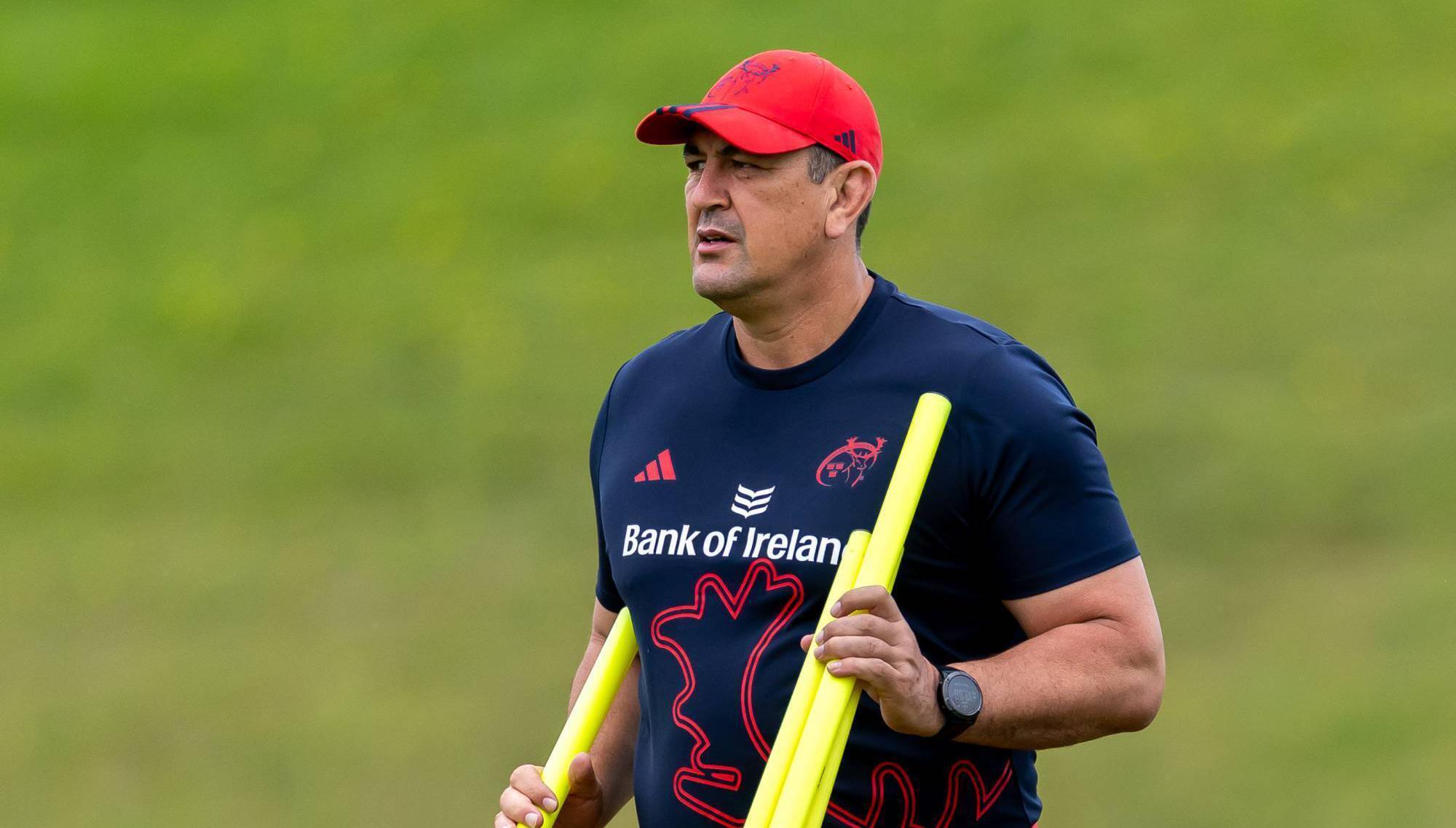
Munster Head Coach Clayton McMillan at squad training in UL. Pic: Morgan Treacy, Inpho
It may be a settled coaching group Clayton McMillan has adopted as he approaches his maiden season as Munster head coach, but the New Zealander has promised to put his own imprint on the way his squad and staff operate and, if necessary, to be “a disruptor”.
The former Chiefs head coach, fresh off a third consecutive Super Rugby final appearance with the Waikato-based franchise, introduced himself to home supporters in Cork last night as the province faced last season’s English and Challenge Cup champions Bath, two weeks out from a URC opener in west Wales against Scarlets.
That Bath were led by Johann van Graan, a predecessor, was a point of interest, given silverware at Munster eluded the South African, as we well as the three head coaches who preceded him.
Van Graan's successor, Graham Rowntree, finally ended a 12-year title drought with the 2023 URC success, which proved to be a blip. A welcome blip, no mistake, but McMillan’s task is to take Munster to the next level of consistent and lasting success.
Key will be productive relationships with the assistants he inherited, primarily Mike Prendergast, Denis Leamy, and Alex Codling, who will rejoin Munster following the conclusion of his duties as Ireland women’s forwards coach at the World Cup.
The Kiwi also has Mossy Lawler as his skills coach and assistant attack coach, while lead performance analyst George Murray serves as a technical coach.
So far so good was the message from McMillan, as regards finding the balance between dictating his assistants’ remits and giving them their heads on the training field.
“A bit of both,” the Munster boss said. “There is a lot of good stuff being done here. Everything that we are doing good, I don’t find any reason to disrupt that but it’s also my job and one of the reasons why people brought me in is to be a little bit of that disruptor – to bring a different set of eyes and look at things a little bit differently and to challenge the way things are being done.
“That doesn’t mean that we have to change. It just means that we may have to think about the opportunities that we may be missing.
“I definitely have a preference around some things and I’ve been putting those suggestions forward. We debate and we don’t always agree but at some stage you’ve got to commit and move forward. I think we have been doing a great job around that.
“That to me is a highly functioning coaching group. Not one that just agrees with everything I say. I want to be challenged. I think the other assistants need to be challenged. Out of that, we will look at the game a little bit deeper and what we need to do to be successful.”
Following his appointment last February, McMillan visited Munster’s High Performance Centre in Limerick during a bye week for the Chiefs in their Super Rugby campaign last March, which was appreciated by staff and players alike and hugely beneficial to the incoming boss, he explained.
Yet getting to know his players and the buttons he will need to press to get the best out of them has brought some surprises, he admitted.
“Doing a fair bit of reading, talking to a lot of people. Observing, keeping my ears open. There's lots of little things that I see every day and seem a bit foreign but I'll just let them marinate and then I'll ask a few questions later.
“I don't mind saying… I asked the players for some feedback at the end of training and the training could have gone really well. If they had that time again, they probably would have said that it went well, but it seems to be the Irish way that they focused on the three or four things that didn't go well in the training.
“When you speak to everyone, they say, ‘Oh, that’s just the Irish, that's just how we are, we're glass-half-empty type people.
“That's not my words. That's what other people are saying. That's not right or wrong, it's just a little bit different and, again, it's just having some conversations with some people and saying, well, it's important too that we recognise the good stuff that's going on.”
One of McMillan’s early priorities appears to be making the glass half full, he agreed.
“That’s it. Hopefully, all the way full.”
CONNECT WITH US TODAY



Be the first to know the latest news and updates