Ciara Griffin: Scott Bemand sets achievable goals for Ireland
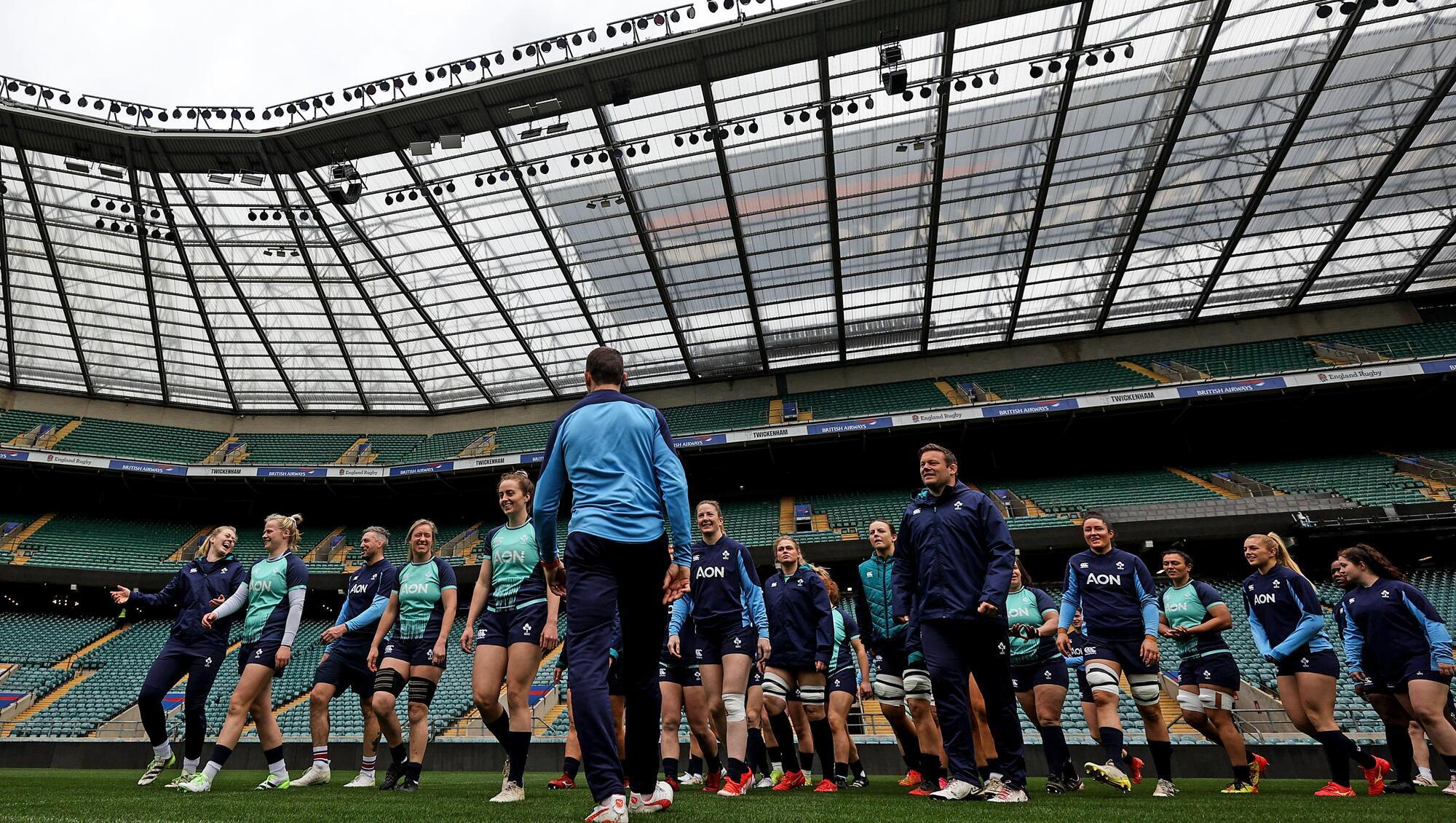
ACHIEVABLE GOALS: Head Coach Scott Bemand takes the team through their pitch walk. Pic Credit: Ben Brady, Inpho.
Ireland head into the fourth round of the Guinness Women’s Six Nations with a spring in their step after a bonus point home victory against Wales.
Good phases were put together with unforced errors being drastically reduced and scoring opportunities executed. Ireland currently find themselves in third position in the championship table but, the end of this weekend could paint a completely different picture.

Ireland have the unenviable task of travelling to Twickenham Saturday to take on the Red Roses in front of over 45,500 spectators. The record-breaking attendance presents both opportunities and challenges. It provides a platform for the emerging Irish team to showcase their abilities and compete against the reigning champions.
Conversely, it may serve as an opportunity for England to display their ruthless dominance and assert their position as the premier team in the northern hemisphere.
The Red Roses are in the midst of changing their attacking principal under new attack coach Lou Meadows. Meadows is moving away from the teams’ previous reliance on set-piece and driving mauls. It is clear the Red Roses have their eyes on the home World Cup in 2025 and are already working to eliminate the predictability of their attack.
Meadows this week emphasised the Red Roses’ exceptional passing abilities. She highlighted the importance of utilising these skills strategically throughout the game. Instead of relying solely on catching and carrying, Meadows advocated for dynamic play that involves releasing the ball to the outside channels or engaging forwards in interlinking movements, creating a continuous and unpredictable attack that poses challenges for opposing defences.
The Red Roses under the guidance of Mitchell and Meadows are undoubtedly seeking rugby perfection using an evolved attack shape and game plan.
For starters, Ireland will feel the absence of Sam Monaghan, as her formidable physical presence and adept ball-handling skills would have been invaluable. Scott Bemand, boasting eight years of experience with the opposition is likely to have meticulously crafted a game plan that aligns with the Irish style of play, aiming to mitigate any potential English dominance.
Bemand and his team will approach the match with a pragmatic outlook, setting achievable goals. Success, in the eyes of many, would entail limiting the Red Roses to under 50 points, maintaining cohesion in play, and securing Irish scores on the board as well.
Italy host Scotland in Parma and will be targeting their second win of the tournament and hoping to have a stronger hold on that coveted third place position in the competition. Italy will back themselves against a Scottish team coming off a bruising 48-0 home defeat to England.
The Azzurri will take confidence from their performance against France where they ran in two tries and had the French defence scrambling at times through multi-phase attack.
It appears Wales’ progress as a professional side has come to a sobering and grinding halt. Three heavy defeats on the bounce has highlighted the side’s inability to cope with pressure and has led to Welsh captain, Hannah Jones, questioning ‘the want’ of her side.
Wales head coach Ioan Cunningham has blamed the poor run of results on a transitional period with experienced players such as Elinor Snowsill, Sioned Harries and Carly Thomas retiring.
Tomorrow could be another tough day at the office when they host France at home in Cardiff Arms Park.
ON HER retirement from active refereeing, I want also to acknowledge the remarkable career of Joy Neville, an esteemed figure in the world of Irish Rugby. Throughout her tenure, she exemplified professionalism, integrity, and a deep passion for the game, leaving an indelible mark on the sport and inspiring countless individuals along the way.
Joy dedicated herself to the highest standards of officiating, earning respect and admiration from players, coaches, and fans alike. Her unwavering commitment to fairness and impartiality ensured that every match she officiated was conducted with the utmost integrity.
Beyond her technical proficiency, Joy Neville possessed a rare ability to connect with players on a personal level, earning their trust and admiration through her approachable demeanour and genuine concern for their welfare. Her calm and composed presence on the field instilled confidence and reassurance, creating an atmosphere conducive to competitive yet respectful play.
As a trailblazer for women in rugby both as a player and referee, Joy shattered glass ceilings and paved the way for future generations of female referees and players. Her achievements serve as a testament to the power of perseverance, resilience, and determination, inspiring countless young girls to pursue their dreams and break barriers in traditionally male-dominated fields.
Off the field, Joy Neville was a dedicated mentor and role model, generously sharing her knowledge and experience with both aspiring players and referees and fostering a culture of inclusivity and diversity within the rugby community. Her impact extended far beyond the confines of the pitch, leaving a lasting legacy that will continue to inspire and influence for years to come.
As we bid farewell to Joy Neville on her retirement from refereeing, we express our deepest gratitude for her invaluable contributions to Irish rugby and her enduring legacy as a pioneer, leader, and ambassador for the sport. I wish her all the best in her new role with World Rugby as their Elite Women's 15s Match Official Head Coach which means she will be able to continue passing on her experience and stay involved in a sport to which she has given so much.