Farrell's Ireland don't need to wait for World Cup to cement their greatness
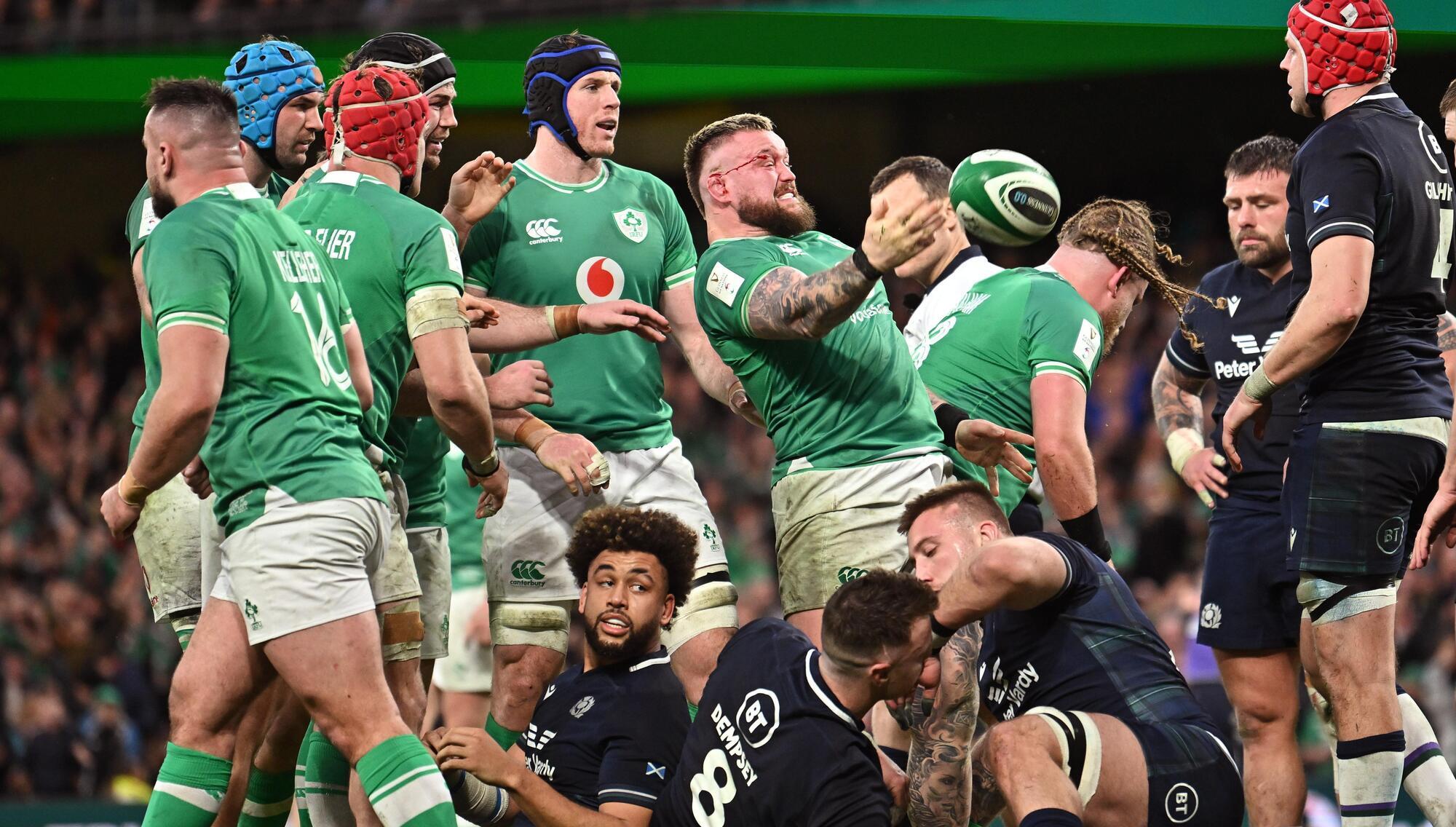
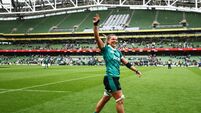
16 March 2024; Andrew Porter of Ireland, right, celebrates after scoring his side's second try during the Guinness Six Nations Rugby Championship match between Ireland and Scotland at the Aviva Stadium in Dublin. Photo by Sam Barnes/Sportsfile
There’s always a stat. Numbers, records, fun facts, did-you-knows: they litter sports like confetti on a wedding day. Sometimes the information dump obscures. Now and again it illuminates the way ahead.
One stat dominated above all since Ireland put a beat down on France in Marseille on Six Nations opening night. The one about how no side had ever stitched Grand Slams back-to-back in the Six Nations era. A nation dared to dream.
France had done it in 1998, England six years earlier, but here was new 21st century ground that Ireland could plough. A strip of land to call their own, an achievement to put that World Cup disappointment to bed and sow the seeds for a summer tour to South Africa.
Not to be.
Winning (just) a Championship was digested post-Twickenham as a consolation prize, a morsel that would have to do as larger appetites went unsated. It’s a strange kind of failure for a country that had won just 15 of them across the previous 141 years.
For context: only England had won back-to-back Championships twice in this 24-year old Six Nations era before this. In adding 23/24 to 14/15, Ireland now have the chance to go where no-one has gone before in all the years since this thing got going in 1883.
A three-in-a-row. What sport doesn’t eat up talk of a three-in-a-row?
There have been times when teams finished top of the pile three and four seasons on the bounce but never on their own. France put the last four-timer together between 1986 and 1990 but shared two of them, one with Wales and the other with Scotland. Not the same, it just isn’t.
So, Andy Farrell’s squad still has new worlds to conquer and they don’t need to wait until the next World Cup in Australia in 2027 for the opportunity to discover these untamed lands. Retain this title in 2025 and could you really dispute their greatness?
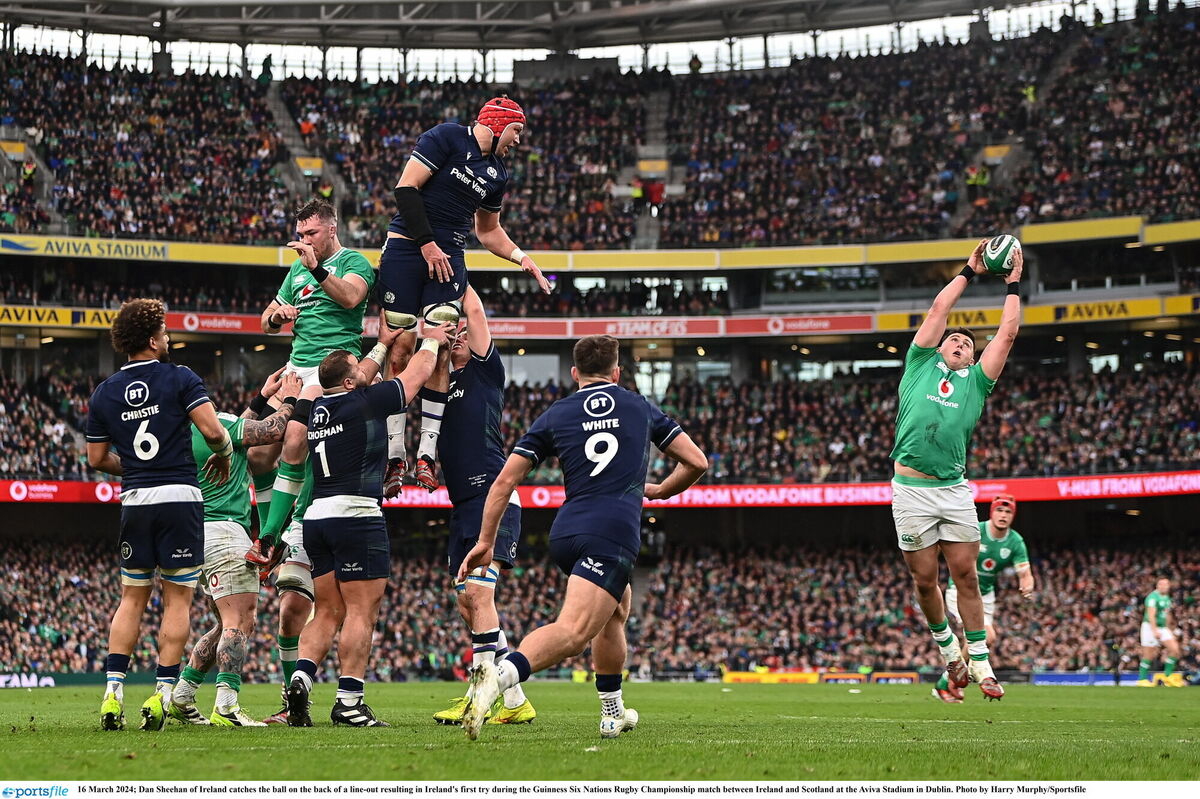
That’s the bigger picture stuff. The record books will be printed devoid of context in the years to come. Anyone who watched them play in the first-half against Scotland and in Twickenham last week will know that Ireland looked at times to be running on empty.
So quick out of the blocks in Marseille, they never came close to matching that through the rest of this Six Nations. Wales and Italy were dispatched with imperfect performances, England deserved their bragging rights, and this one was far from perfect.
Peter O’Mahony squeezed his eyes shut to keep the tears away during today's anthems, a sight that was automatically taken as a sign that his days in green may be approaching an end. Tadhg Beirne had already run out alone to mark his 50th cap. And there was silverware to win.
All systems should have been set to go.
Players and coaches had talked all week about their determination to make up for last week’s London loss. Mack Hansen, injured and absent since January, made the point that the team wasn’t in the habit of losing twice on the bounce.
And then they came out flat. Drained, almost. They were pedestrian in the first-half. Scotland were comfortable and calm in defence, making five times as many ‘dominant’ tackles if without ever threatening at the other end.
Ireland brought too many spills and too few thrills.
The reset button was activated at the break. James Lowe sparked a timid crowd into life with one big play and the noise levels ramped up. There was more zip to Ireland’s game and they dominated territory and possession all through the third quarter.
But without reward. Tadhg Furlong’s disallowed try was a shocking decision in a tournament that has had a few, Calvin Nash indulged in one sidestep too many with the try line in sight, and Garry Ringrose let slip a simple pass as another ‘22’ visit came up shy.
When Robbie Henshaw was held up over the chalk with 15 minutes to go there must have been a few bums squeaking in the home coaches’ box before Andrew Porter hammered over from a quick tap penalty soon after.
Farrell’s side had let a nine-point second-half lead slip against England in the space of 35 minutes. The way they let Scotland eat into an eleven-point lead here in the dying minutes only backed up the impression of a side winning this thing some way short of their best.
Plenty still to work on, plenty more to play for.
Not a bad place to be.
CONNECT WITH US TODAY



Be the first to know the latest news and updates