Hard to fathom how easily Scotland get up Ireland’s noses
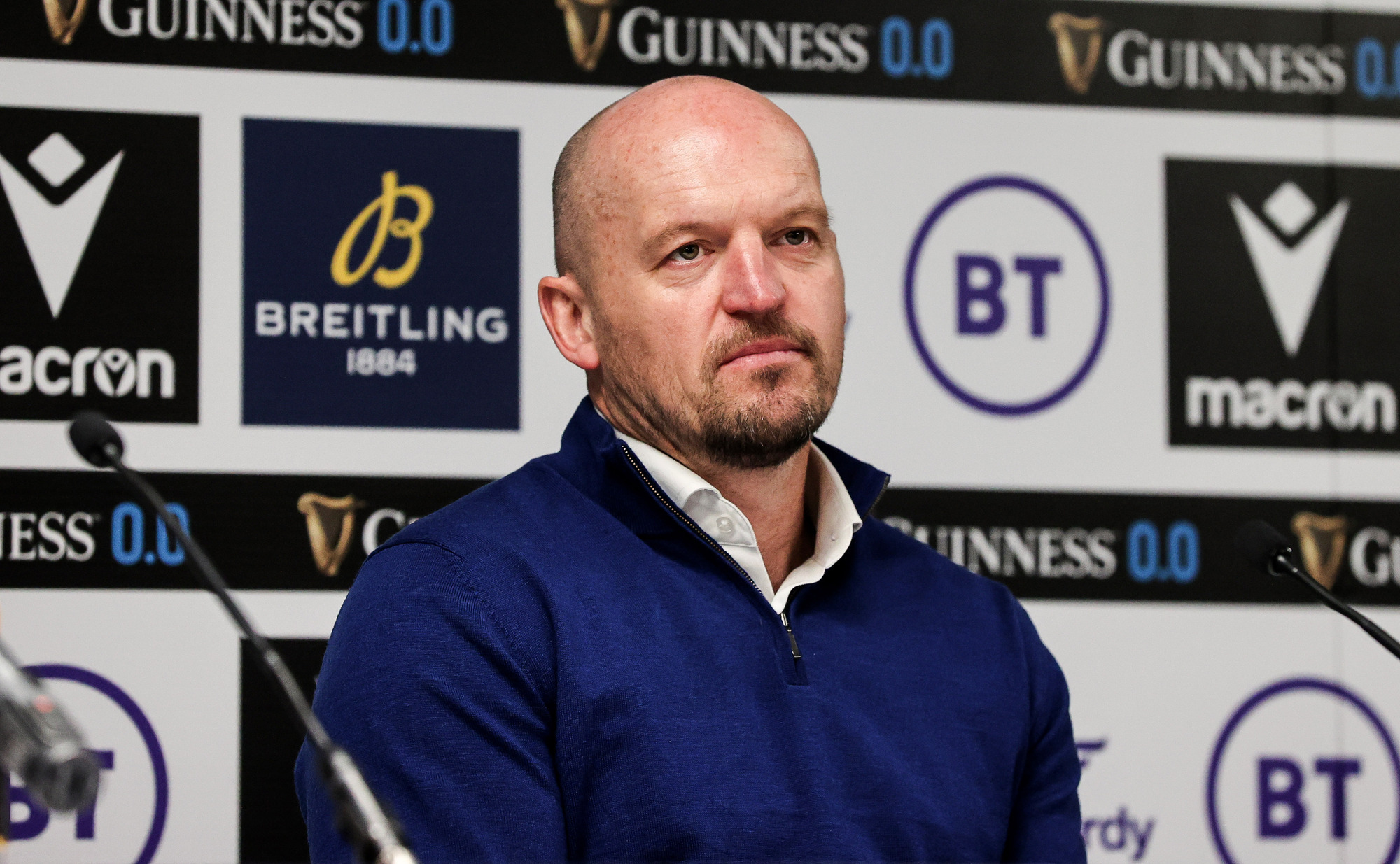
Scotland head coach Gregor Townsend. Picture: INPHO/Billy Stickland
It wasn’t a surprise to hear Tadhg Beirne have a gentle dig at Scotland earlier this week.
“The Scots are the Scots,” he said. “We have our perception of them and I’m not going to verbalise it here because they’ve given us ammo in the past from what they’ve said in the media. And I would be surprised if it was any different this week.”
We’re well aware in Scottish rugby that Irish rugby believes we have an overinflated opinion of ourselves. The thing we can’t quite figure out is: why does it bother them so much?
With four championship successes – including two Grand Slams – in the last 10 years for the senior national team, four titles since 2010 (including back-to-back Grand Slams the last two years) for the Under-20s, seven European Champions Cup titles for the provinces and 14 of a possible 22 URC/Pro14/Pro12/Celtic League titles, you’d think they are too far ahead to be remotely worried about any misplaced optimism from their noisy neighbours across the water.
As way of comparison, the Scotland senior team have peaked with third-place finishes in the Six Nations on three occasions since 2013, the under-20s team have four wooden spoons since 2018 and their aggregate points differential in the last three championships is -377, our best European performance was when an unheralded run saw Edinburgh reach the last four of the Champions Cup in 2012 before losing to Ulster, and we have one URC (or Pro12 as it was then known) title to boast of thanks to Glasgow in 2015.
We enjoy laughing at Ireland’s painful habit of getting knocked out of World Cups at the quarter-final stage, but it’s not so funny when we remember that we’ve headed home after the pool stage at the last two tournaments.
Ireland have won 20 of the 24 championship meetings between the two nations during the Six Nations era.
So, it really is hard to fathom why Scotland are so proficient at getting up Ireland’s noses. The decision not to support our Celtic cousins’ bid to host the 2023 World Cup may be a factor, but it is possible that the real driver is something a bit more instinctive than that.
Could it be that they hate reminders of what they used to be? Bear in mind that Scotland won 11 and drew one of 12 games against Ireland between 1989 and 1999, in the days before they moved stratospheres.
As tends to happen with the nouveau riche, have they moved on and are now embarrassed and infuriated in equal measure by the mere suggestion that those they used to regard as equals may not recognise the status shift?
From a Scottish perspective, it is all a bit of a joke. We are not good enough to take ourselves too seriously, and we don’t really understand why we should be expected to talk our chances down before a ball is kicked.
But if we are really honest with ourselves, then we have to admit that our positive talk has increasingly had a habit of straying into the realms of hubris, and it is slowly dawning on even the most patriotic of Scots that it has contributed to a critical weakness in the team’s psyche which is preventing them from consistently performing at the levels they expect of themselves.
To paraphrase the words of Henry Wadsworth Longfellow, when Scotland are good, they are very, very good, but when they are bad, they are atrocious, with last week’s loss to Italy in Rome a classic case in point.
Scotland were sensational for half an hour as they raced into a 22-10 lead, but then they took their foot off Italy’s throat. They lost focus and were really loose during the last 10 minutes of the first half, which allowed the Azzurri to haul it back to a six-point game at the break.
Bad enough, but worse was to come when a George Horne try straight after the break was chalked off because of a clumsy obstruction by Pierre Schoeman, and Scotland disintegrated. They conceded a try two minutes later and didn’t get a foothold back in the game until it was too late.
Head coach Gregor Townsend conceded afterwards that this was a turning point, then suggested that Sam Skinner’s late consolation score should be applauded as some sort of sign of the team’s resilience, which is shocking when you think about it given that Scotland were still six points ahead when the Horne try was disallowed against a team they had not lost to since 2015.
If only that was a one-off lapse, but Townsend stirred up an almighty fuss after a late try was disallowed to prevent a Scotland win over France at Murrayfield in round two, which distracted from the fact that they should never have been behind going into the final minutes given their level of dominance on the hour mark.
And, of course, they nearly blew it against Wales in that head-scrambling match at the Principality Stadium in round one, when a 27-0 lead early in the second half ended up as a too-close-for-comfort 27-26 win (without a bonus point).
Very few teams – if any – can play the way Scotland did during the opening quarter against Italy for the full 80 minutes, but the best can batten down the hatches when the storm turns against them.
Scotland are incapable of doing that. They compound errors with more errors, then come into the media room afterwards and tell us they are focussing on the good bits of their performance. Maybe if they were a bit harder on themselves, history wouldn’t keep repeating itself.
There is no learning curve, and the joke about them being ‘great to watch and great to play against’ is beginning to wear thin.
For the first time this week, Townsend’s future has been seriously debated. His current contract doesn’t run out until April 2026, and with the Union already recruiting a new Chief Executive, Chief Financial Officer and Director of Performance Rugby, there won’t be much of an appetite inside Murrayfield to create another vacancy in a key position – especially given the organisation’s perilous financial position (reporting a £10.5m loss last year).
But another two-win Six Nations – as seems inevitable – would reinforce the impression that the head coach has taken the team as far as he can. A big defeat today will really pile the pressure on.
CONNECT WITH US TODAY



Be the first to know the latest news and updates