Jacques Nienaber and Rassie Erasmus plotting a dramatic second act
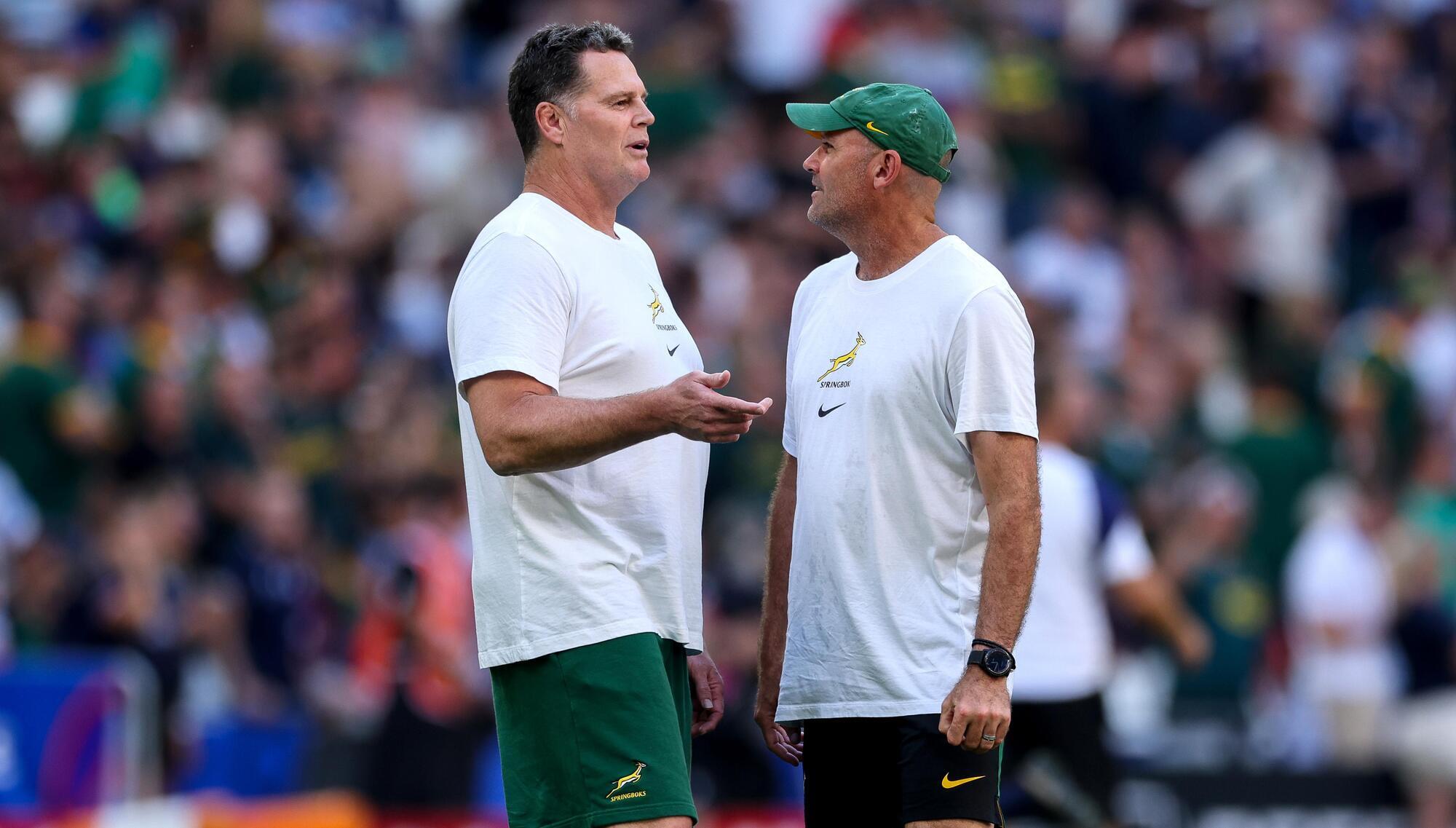
It was hard not to watch Siya Kolisi lift the Webb Ellis trophy in Yokohama four years ago and see it as anything but an exclamation point
PERFECT COMBO: South Africa Director Of Rugby Rassie Erasmus and South Africa Head Coach Jacques Nienaber. Pic: ©INPHO/James Crombie

PERFECT COMBO: South Africa Director Of Rugby Rassie Erasmus and South Africa Head Coach Jacques Nienaber. Pic: ©INPHO/James Crombie

When is the world not enough?

It was hard not to watch Siya Kolisi lift the Webb Ellis trophy in Yokohama four years ago and see it as anything but an exclamation point. As a destination reached. Nine days short of two years had passed since Rassie Erasmus and Jacques Nienaber sat in the Aviva Stadium stands and watched the Springboks lose 38-3 to Ireland.


Hollywood would have rolled the credits there and then.

How can you overplay the mess in which the Boks had found themselves? New Zealand had humiliated them 57-0 in North Harbour in the summer of 2017. Italy, Argentina and Wales all had their number in the not-too-distant past and the team, the union, and the country were all still grappling with the grenade that was ‘transformation’ and quotas.

“2016 and 2017 were quite difficult for us as South Africans,” says the forward Pieter-Steph du Toit. “We had a lot of different defence coaches, I think we had three in 2016. When Rassie and Jacques took over there was a lot of planning.

“I still remember the first camp, it was quite early in the year before the season starts, and the way they handled those camps. And the way they explained everything to us was something I didn’t experience in the past.

“Normally it was just a week or two weeks ahead in terms of what was going to happen. They almost gave us the whole year ahead and 2019 as well. That’s when I thought it was possible that things would change for us for the better with all this planning.” 

Siya Kolis then was not the Siya Kolisi we know now. Making him captain, the first black captain in Springbok history, was an inspirational, era-turning idea even if Erasmus has since declared that there were no big picture considerations, no eureka moment, in it.

Erasmus is the master when it comes to shaping and even redefining a narrative but if we are to take that Kolisi entreaty at face value then it still gives us an insight into a man whose vision for the national team was crystal clear from day one.

“The coaches came in and basically told us, 'we definitely won’t win the World Cup, or have a chance of winning the World Cup, by playing exactly the same way as we did before,'” says Kolisi. “They did their homework and looked at how a lot of teams defend and attack.

“They found ways to innovate the way we play, but we still have the big foundations. We are now able to do a bit more. You can see how much we have attacked since we played Ireland [that day in 2017], how our game has a lot of variety in it, which is good.” 

Erasmus and Nienaber have said before that 2019 unfurled ahead of schedule, and that the 2023 tournament would always be the point at which the fruits of their labours would fully mature and give expression to the true capabilities inherent within this project.

By January of 2020 the pair were sitting down planning and future-proofing for the road still to travel before covid intervened and prompted a rewrite. When rugby resumed, the British and Irish Lions were nearing their shores so they braced for the here and now.

A year later and they were went back to the drawing board. When Wales touched down for a three-Test tour the Boks met them with a strong team first up at Loftus Versfeld but shredded the squad with 18 changes to the XV for the follow-up in Bloemfontein.

Wales edged them 13-12.

Nienaber has spoken since about the pressures, internal and external, of promoting change. The coaching staff derives 40% of its salary from win bonuses, so this took courage and sacrifice, and they were acutely aware of the short-term pain their approach would bring.

“There was a big expectation on performance within our country and that’s a massive thanks to our supporters for sticking around with us,” says Nienaber. “When we lost that second Test match with all those changes, the answers we got have probably put us in the place where we are currently.

“It’s not always nice for a fan who spends a lot of money to go to a match in Bloemfontein and then we lost it and that was the first time South Africa had lost to Wales in South Africa ever. But there was method in the madness, if I can put it like that. There is always a long-play at work as well.” 

Their embrace of the new and the different has run through their five years in charge. Erasmus may be the Great Disruptor but we should look beyond the traffic lights in the coaches box, the video rants at referees, and his days as a waterboy on match days.

Versatility is a currency that carries infinite more value now than ever but the Boks have been market leaders in getting it accepted on the ground. They were innovators with the 6/2 and the 7/1 splits and they have stretched their beliefs to ever greater lengths.

Four scrum-halves in a matchday squad, one out-half, hybrid hookers/flankers: these are all products of fertile minds that have sought to infuse traditional South African values and strengths with bold, ground-breaking ideas.

Nienaber gave an insight into this ability to see the familiar in a new light when he was asked this week about his and Erasmus’ time in Munster and how that stint, short as it was, had informed their thinking on their return home.

He waxed lyrical on the growth that comes with immersing yourself in a new environment, the lessons that come with seeing new people go about things a different way and how this exposure to different norms and skillsets and ideas had shaped them.

“You can't just take a plan and copy and paste it [with a different team]. Moving abroad and coaching in Ireland and coaching different people, you have to adapt. The same thing happened with me when I coached the Springboks women's team and sevens.

“You can't just take the skillset and take the plans that you incorporate with men, who have different attributes, and apply it to women, and vice-versa… The interweaving of working in different environments was a good thing for me.” 

It was a game against Ireland that kickstarted this journey. And, if Saturday night’s affair against the same team isn’t the culmination of this World Cup mission, it may well be the first time we get to see their long-held ambitions for this team tested on the biggest of stages.

x

More in this section

Sport

Newsletter

Sign up to our daily sports bulletin, delivered straight to your inbox at 5pm. Subscribers also receive an exclusive email from our sports desk editors every Friday evening looking forward to the weekend's sporting action.

Cookie Policy Privacy Policy Brand Safety FAQ Help Contact Us Terms and Conditions

© Examiner Echo Group Limited