How 'The Troubles' demolished Irish Grand Slam hopes in 1972
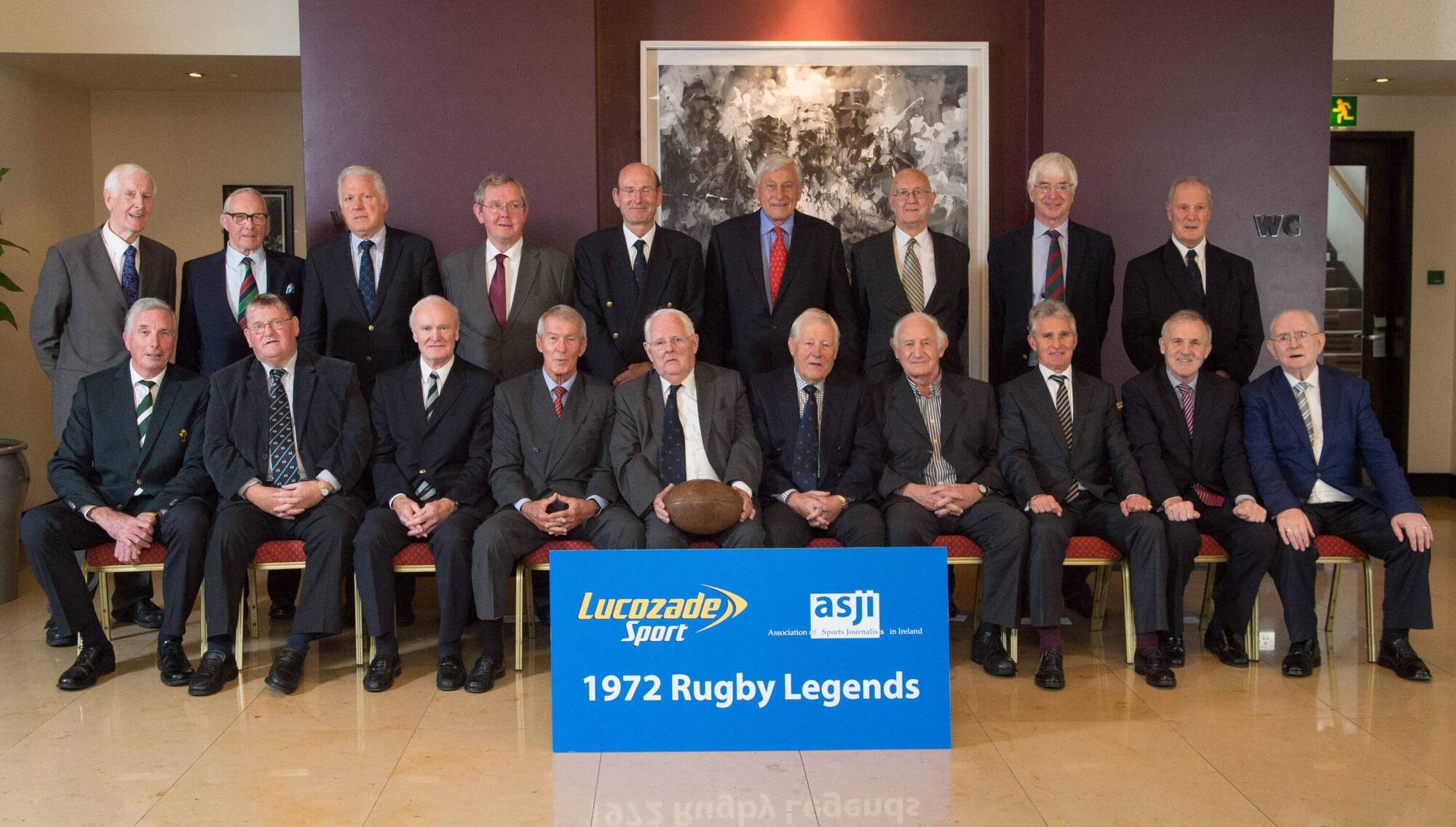
Fifty years ago Scotland and Wales refused to come to Dublin to play Ireland in the Five Nations Championship citing concerns over player safety in the city.
How 'The Troubles' demolished Irish Grand Slam hopes in 1972

The international Rugby Grand Slam title which got away from Ireland in 1972. Picture: Ray McManus

If the tragedy that was Bloody Sunday prompted a mass mobilisation of people around Ireland 50 years ago this last week, then the day itself was one of stillness across a large sweep of the island as a storm front deposited a thick blanket of snow and treacherous ice.
Reports detailed dozens of motorists marooned in Wicklow’s Sally Gap and Glen of the Downs, an Irish Lights tender battled the elements to bring relief already overdue to the Tuskar Rock Lighthouse, and Dublin Airport surrendered its runway to the elements in the early afternoon.

A League of Ireland game between Shelbourne and Cork Celtic at Tolka Park was cancelled. A Railway Cup encounter at Croke Park started but couldn’t finish. In Paris, where similar conditions had taken grip, Ireland’s rugby players had already beaten the weather and the odds as they looked to take their leave.

Ireland’s rugby community had been 20 years waiting for a win on the continent when Con Feighery, a 25-year old Lansdowne second row, and four other rookies were cast into the unforgiving Stade Colombes bear pit. They emerged that Saturday not with the usual mauling but a 14-9 win that didn’t nearly reflect their dominance.

It wasn’t a vintage French side but Mike Gibson, the great centre who was experiencing his first win against les Bleus in seven attempts, said it was a game that could prompt “the renaissance of Irish rugby”.

It had been close to a quarter of a century since a Triple Crown or a Championship had been won.

One report hailed the 15-man rugby played and hopes were high for the rest of the Five Nations for a side invigorated by the new blood and a collective already boasting seven Lions in Tom Kiernan, Tom Grace, Gibson, Ray McLoughlin, Sean Lynch, Willie John McBride, and Fergus Slattery.

It wasn’t to be.

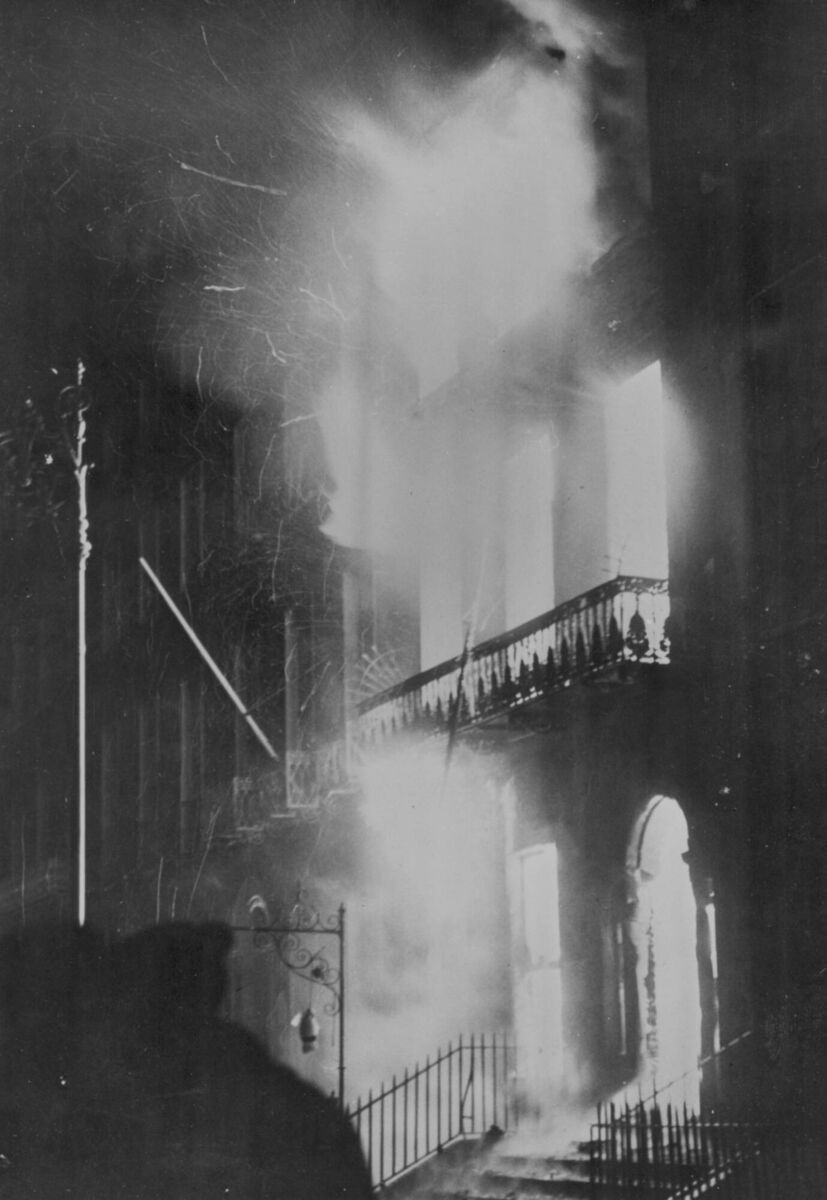
By midweek the British Embassy in Dublin was burning and, while Ireland would claim a win in Twickenham for the first time since 1964 10 days later, their hopes of playing for a first Grand Slam since 1948 would ultimately come undone by the Scottish and Welsh unions’ decisions not to send their teams to Dublin.

The British Embassy at Merrion Square in Dublin is bombed following a march to protest against the Bloody Sunday shootings in Derry City, when British paratroopers shot dead 13 civilians on a civil rights march. Picture: Keystone/Getty Images

If the players could only be oblivious to all this as they waited to leave the French capital then Feighery is straight up about the fact that he at least remained somewhat detached from the turmoil that followed as, like elite sportspeople since time immemorial, he fixated on the job ahead.

“I was, I would call it, a new and distracted player engrossed in my rugby career, to say nothing about my medical career, but we played France on the Saturday and flew home the next day, all probably full and pleased with ourselves. That was Bloody Sunday when 14 people were killed by the British army in Derry.

“That was the stimulus for the crowd attacking the British Embassy and I remember chatting to a guy who had recently hung up his international rugby boots who was part of the crowd that were involved in the burning of the Embassy. He was totally unsympathetic to the British. I remember all that very clearly.”

Sympathy was in equally short supply when Scotland and Wales got a historic case of cold feet. Whether players or officials, Ulstermen of a unionist persuasion or nationalists from down south, the reaction in Ireland was one of stupefaction and naked fury.

Cork Con’s Tom Kiernan, the Irish captain, expressed amazement. McBride, the second-row from Antrim, couldn’t get his head around it. Karl Mullen, the Wicklow-born skipper in ’48, expressed his anger “in the strongest possible manner”. Dominic Dineen, the IRFU president from Limerick, declared himself “shattered” by the Scots’ refusal.

Journalists pointed out that no visiting teams had pulled out during the War of Independence or Civil War years. An article in The Scotsman a decade ago quoted a handful of Scottish players from the time who stated in unequivocal terms that, had the decision been theirs, they would have come.

Of all the voices to rail against the no-shows down the years maybe the loudest has been that of Slattery. Like so many others, the flanker has always maintained that there was no danger to either set of visitors and that Ireland would have gone on to register a clean sweep.

Whatever about the inevitability of a Grand Slam, the purpose here isn’t to question the argument that Dublin would have been safe, but there is merit in a deeper excavation of the time and the mood and in asking what it was that people saw differently across the Irish Sea.

The conviction at the time that the IRA were disinterested in targeting visiting sports team is backed up by reports of the paramilitaries saying as much, but there was so much more swirling around in that most uncertain and fraught February in 1972.

The most obvious of points still needs to be made: Bloody Sunday and the Embassy burning did not happen in isolation. Another 17 people would lose their lives to the Troubles just in the month of February, seven of them in England, while there were minor incidents peppering the border with the 26 counties.

Dr Brian Hanley is an assistant professor in 20th -century Irish history at Trinity College, Dublin. His book, The Impact of the Troubles on the Republic of Ireland, 1968-79: boiling volcano?, goes into forensic detail on the aftermath of Bloody Sunday and the concerns that the conflict would spread to the south.

He points out that John Peck, London’s ambassador in Dublin at the time, wrote a report in late 1971 stating that the Irish capital was still a friendly and welcoming city to the British. The addendum was that this state of affairs could change depending on events north of the border.

There had already been instances of aggression against British people and symbols of ‘Britishness’ that would continue into 1972. British Legion halls targeted in Dublin and Cork, Property belonging to British Rail and the airline BOAC occupied and/or attacked, reports of holiday homes in Kerry being fire-bombed.

The immediate reaction to Bloody Sunday here was a mass mobilisation of the population with a form of protest in thousands of towns and villages. Union Jacks and effigies of Prime Minister Ted Heath flickered in flames, although the vast majority of gatherings were untroubled by violence.

There was a report of one woman shouting ‘Go home English’ at a Limerick protest as early as mid-1971 and, while efforts were made at rallies, in newspapers, and by Sinn Fein and the IRA after Bloody Sunday to stress that English people were not the enemy, there was a heightened sense of collective anger that would eventually find a focus.

A national day of mourning was held on the Wednesday when 11 of the Bloody Sunday victims were buried in Derry. The Embassy in Dublin was burned by an enormous crowd on Merrion Square that same evening. Peck asked the Irish government to deploy the army, without success, and plans were in place to airlift embassy personnel out if necessary.

“And then, things really quietened down quite rapidly,” says Dr Hanley.

And here’s the thing, maybe the bit that we don’t consider enough in relation to the Five Nations. In the south and in nationalist areas in the north the events of Bloody Sunday were digested without question or hesitation for what they were — a massacre. Newspaper headlines and reports from then tell us as much.

In unionist areas and in Britain it was very different. The official version of events from the British authorities was already serving to poison the picture. Kiernan, in an interview given to RTÉ at an empty and grey Lansdowne Road, suggested that the Scots must have been influenced by hysterical TV and newspaper reports.

This same divergence of views held for the Embassy’s burning, which, as Dr Hanley put it, prompted a sort of shrugging of collective shoulders here but was deemed to be a far more dramatic and dangerous turn of events in the UK. The calming of the waters that occurred in its aftermath just didn’t register on more distant shores.

“There is definitely an atmosphere that is certainly not calm (in the south of Ireland) and from the outside looks pretty dramatic. And the British are very, very angry over the burning of the Embassy,” Dr Hanley explains. “As far as they are concerned the Irish Government let that happen. The view in Britain is that people were allowed to run amok.”

How must this have looked and sounded to a Scottish rugby official? Two of their players, the wing Billy Steele and hooker Bobby Clark, were in the British armed forces at the time. We can be as adamant as we like that they would have all been perfectly safe in Dublin, but were their worries, exaggerated as they were, so hard to fathom?

And what of the Welsh?

Bill Clement, the WRU secretary, all but admitted that the likelihood of any danger in Dublin was negligible but they demurred five days after the Official IRA attacked the Parachute Regiment’s Aldershot barracks. Five female civilian staff, a gardener and a Catholic chaplain died and it was reported that this attack was taken on board in the union’s deliberations.

Gerald Davies and Barry Llewelyn had already been named in the papers as two players who would not travel and the quandary in which the WRU found itself was being played out in the daily post. Among the deliveries received was a letter with 30 signatories insisting they shouldn’t go and another with 15 white feathers.

John Taylor, their place-kicking flanker, wrote a column for ESPN years later when he picked at the pros and cons to that no-show and the mental gymnastics that exercised officials across the home unions over a period that, from Bloody Sunday to the WRU declaration, spanned just four weeks.

“The Irish board desperately wanted the match to go ahead and I felt we let them down,” he wrote 42 years after the event. “In retrospect, I suppose it would have been foolish to risk lives for a game of rugby. I guess I hated the thought of caving into the IRA.”

Those adamant that all would have been well could also argue that Ireland went to Twickenham in the midst of all this, received the warmest of welcomes and, after a delay of a few minutes caused by a handful of protestors, snatched a win with a Kevin Flynn try and a Kiernan conversion deep into injury-time.

This wasn’t long after a recently-opened Irish centre in Oxford had been burned down. When the London offices of Aer Lingus and the Irish Times had both received threats. When some retailers back in Ireland were boycotting British biscuits and Scotch whiskey. And when a large Republican rally was converging on Dublin’s GPO that same day.

Taylor’s ESPN piece was headlined ‘The Grand Slam That Never Was’ and he wasn’t referring to Ireland. The Welsh won all three games they played that year and with an unchanged XV. Reigning champions, they would have been chasing a rare back-to-back Grand Slam with men like JPR Williams, Barry John and Gareth Edwards playing at their peak.

Seven of the Barbarians who beat the All Blacks in Cardiff the following January were Welshmen, four of them Irish. Any game of ‘what if?’ is only complicated by a ’73 Championship that finished in a unique five-way tie. And, while Ireland won it out a year later, they were held to a draw by Wales. In Dublin.

The great Willie John, who would find himself in Belfast city centre for Bloody Friday in the summer of ’72 when 22 IRA bombs killed nine people and injured well over 100, would later say that the Ireland side thwarted in that haunted year was the best he had ever played on.

Feighery, whose international career came to an end that April after earning a third cap against a French side that came to play a friendly at Lansdowne Road — a gesture repaid with the warmest of welcomes and another heavy beating — could only chuckle wistfully at his old teammate’s take. “If Willie John said that I would be very satisfied.”

More in this section

Sport

Newsletter

Sign up to our daily sports bulletin, delivered straight to your inbox at 5pm. Subscribers also receive an exclusive email from our sports desk editors every Friday evening looking forward to the weekend's sporting action.

Cookie Policy Privacy Policy Brand Safety FAQ Help Contact Us Terms and Conditions

© Examiner Echo Group Limited