Keith Earls: Moyross, Munster, and finding an inner peace with yourself
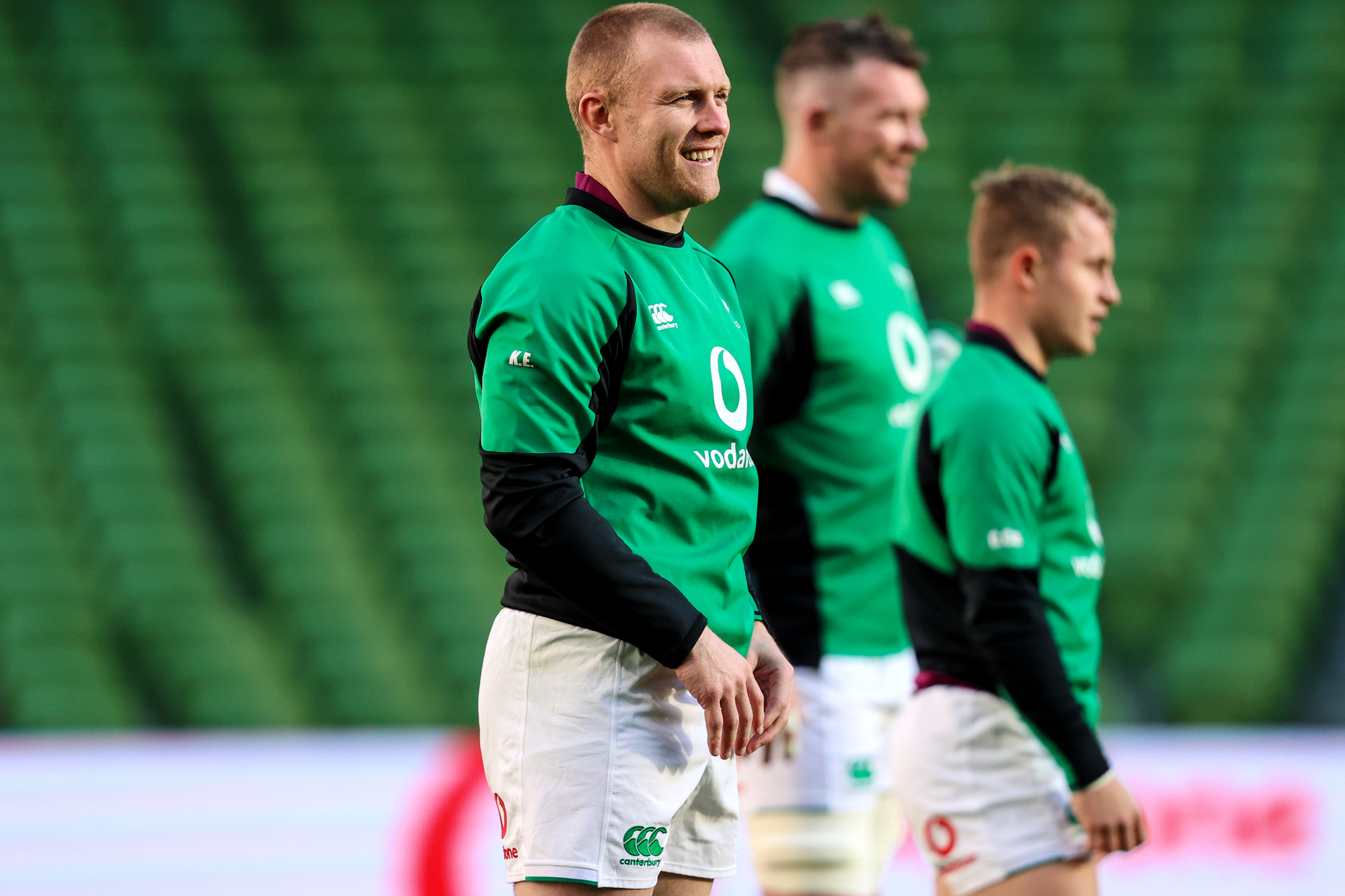
‘In the past I held on to a lot of stuff. The difference in my thinking is now night and day’
Keith Earls: Moyross, Munster, and finding an inner peace with yourself

Keith Earls: ‘In the past I held on to a lot of stuff. The difference in my thinking is now night and day’. Picture: INPHO/Bryan Keane

He's in a different place now, though it’s still the same dressing room.
Five years ago this month Ireland were playing an autumn international in the Aviva. The opposition was Canada, hardly the kind that would have you quaking in your boots, but that evening Keith Earls was. A few minutes before the team headed out, Earls broke from a team huddle and furtively headed to a toilet cubicle to try and avert the kind of panic attack he’d had in his hotel room a couple of days earlier. Then, after fighting off the tears, he’d go out onto a field he didn’t want to be on. Standing for the national anthem, he could only think: Jesus, if only people knew.

Now they know, through the terrific, award-winning book Fight or Flight he’s just written with Tommy Conlon and some of the ancillary broadcast interviews he’s given this past month. And maybe that’s part of why just the other week, when facing the mighty All Blacks in another autumn international in the Aviva, he was a model of serenity, not anxiety.

“It’s amazing, I had no nerves leading into that game,” he says. “People talk about how you need at least some nerves to perform at a high level but I literally had zero. It’s amazing. It was the first time in all my years playing the All Blacks that I really enjoyed the haka. I looked at it and took it all in.”

He embraced everything. The crowd, the setting. “Just having a full house again, it was maybe something we took for granted before.”

The whole month, that entire camp, was like that. “Unbelievable. Incredible.”

And peaceful, because he was and is finally at peace with himself. In the mornings he’d wake up, do a bit of breathing and meditation and then, as he puts it, “have an old word with myself” before heading down to have breakfast with the rest of the team.

In these Covid times he was alone in the room saying those words to himself, affirmations which he’s written out to remind himself all the good things he is and does and has on and off the field. But even if it had been like old times and Conor Murray was still his roommate, he’d still have said them. “Conor would often have seen me out with the journal muttering things to myself. I’d never have been embarrassed doing that in front of Conor and he would not slag me about it. He knew that it was helping me.”

Murray would have been one of only a handful of people outside of Earls’ immediate family who’d have known just why Earls needed that help. Because back when they were rooming together, Earls would have confided that there was someone else with them there as well. Hank, the incessant nagging negative voice that Murray couldn’t hear but knew that Earls found so hard to silence or switch off.

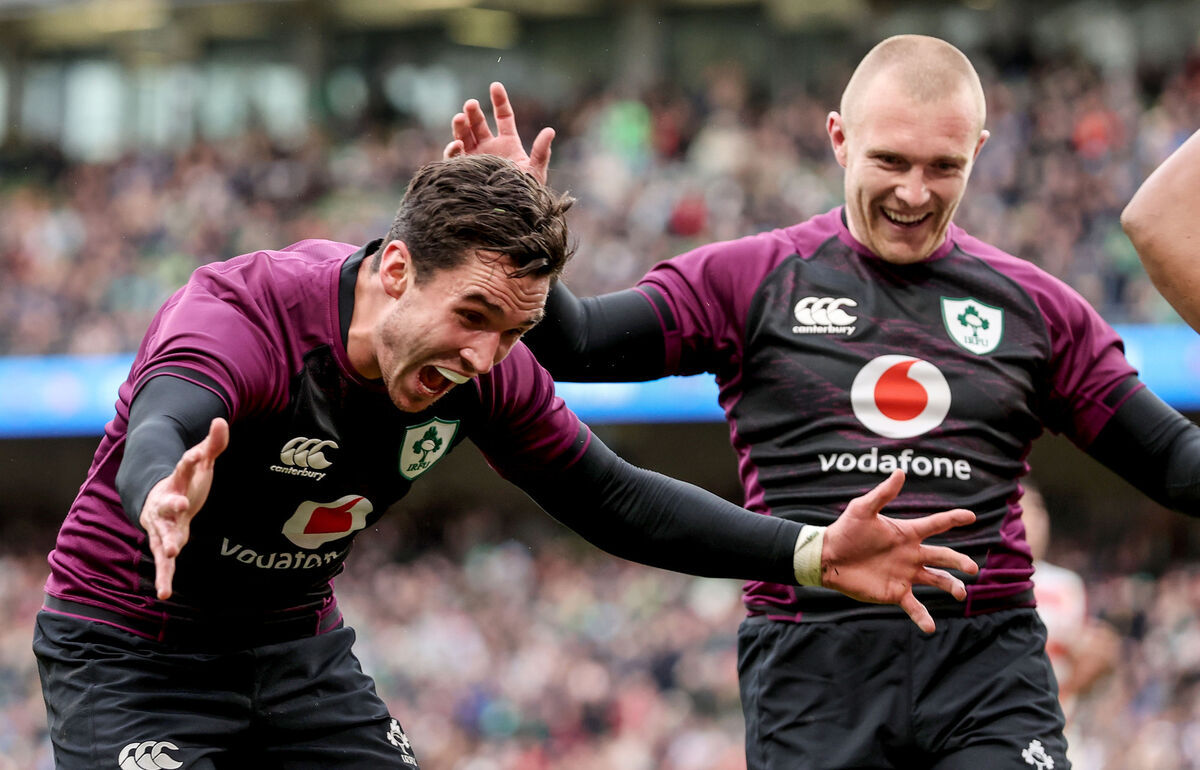
Ireland's Joey Carbery and Keith Earls celebrate. Picture: INPHO/Dan Sheridan

You could hardly describe Hank as an old friend from school, more like an old hanger-on he couldn’t shake. Growing up where he did, you were constantly on alert because your parents were constantly on alert, fearing that you’d be mistaken for some other kid in a hoodie that was caught up in the drug wars that afflicted the area and the city in those years.

Neighbours, even cousins, were among those who died in those years and through his teens that “hovering darkness” would manifest itself in “this fucker Hank inside me, talking all sorts of horrible stuff to me, polluting me inside”.

To compound that, there were physical, actual people who also said all sorts of horrible stuff to him. After primary school he opted to go to St Munchin’s, the kind of college few kids from Moyross attended but plenty of aspiring rugby players did.

It wasn’t a natural fit. He liked to have his head shaved, just like his dad, Ger. But the school didn’t. They even suspended him over it. Another day he was put outside class for being disruptive.

“Nothing serious but talking and messing — enough to be annoying the teacher.”

Another teacher walking by asked him why he’d been put out, and when Earls explained why, the teacher sneered: “You’ll go nowhere in life” before dismissively walking on. And that was the school’s career guidance counsellor.

It’s been said about words that they’re weapons: Used wisely and open-heartedly they can help someone conquer a world but used flippantly or cruelly and they can shatter one. Well, with those ones that teacher shattered Earls’, or at least made him want to shatter one. When the bell rang he made his way back into that classroom, took one of his classmates’ hurley and started walloping it off every desk and blackboard before another passing teacher interrupted him and had him duly expelled.

A couple of days later Ger Earls went ballistic as well upon hearing the source of his child’s outrage. “I didn’t tell him at first why,” says Keith. “He’d thought I just wanted to get thrown out of Munchin’s and get back to my friends in [St] Nessan’s [Community College]. But when he came up the stairs to me and asked me what the story was, had he and Mam been bad parents or something, I told him no: They’d been great and I’d had the best childhood but that teacher had said something awful. And it was. I mean, what a horrible thing to say to a young lad! I know I had been messing around, throwing a rubber around the place, but I wasn’t that bad of a young fella.”

Ger Earls would forcibly point that and the root of his child’s anger out to the school authorities, and while it wasn’t enough to keep Keith in Munchin’s that time, he would return there a few years later so he could play in and challenge for the Munster Colleges Cup. And there he’d follow some career guidance of his own: In the school yearbook he declared that someday he wanted to marry his childhood sweetheart Edel and play for the Lions.

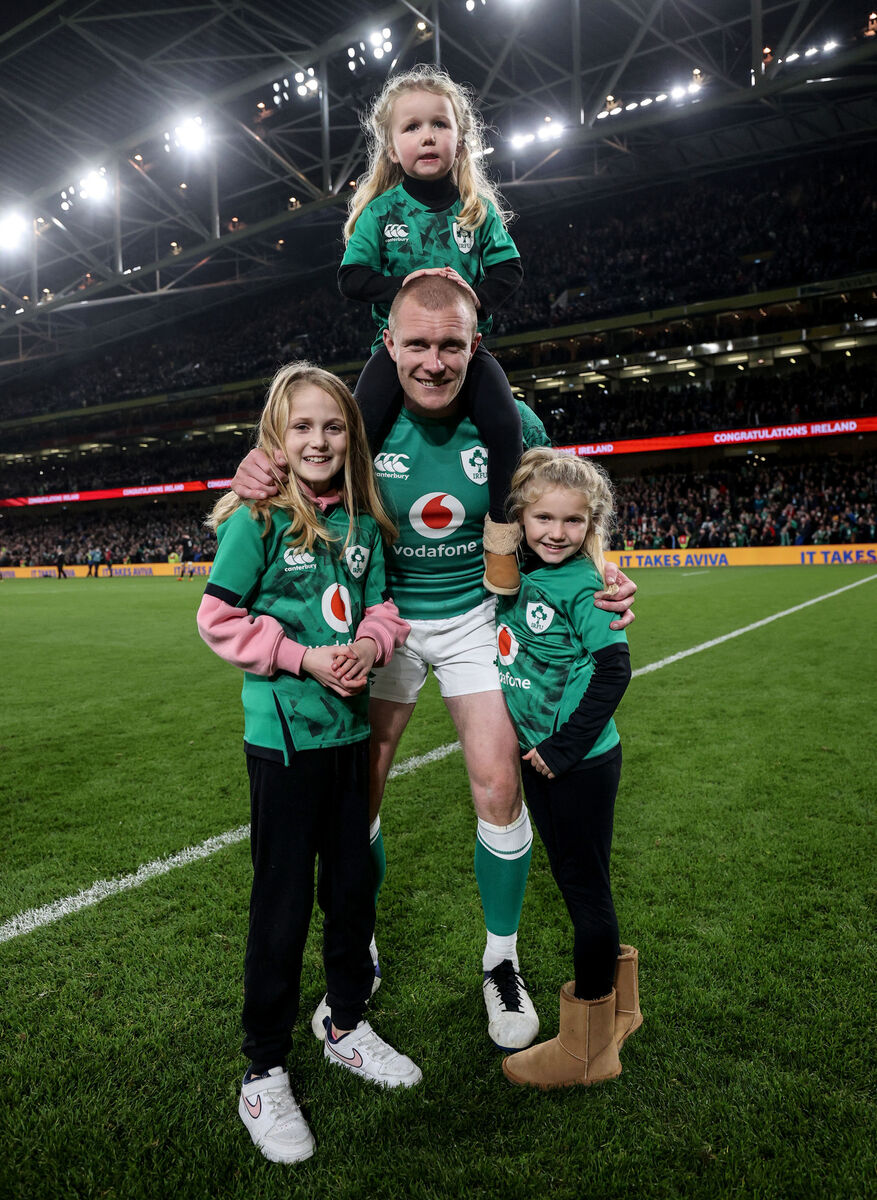
Ireland's Keith Earls celebrates after the game with his daughters Ella May, Emie and Laurie. Picture: INPHO/Dan Sheridan

As for the guidance counsellor, no, Earls never got the chance or satisfaction to tell him how wrong he’d been. Their paths never crossed again. “He and the principal were gone by the time I returned. I wouldn’t have gone back if they had still been there.”

It’s a subtle theme of the book, just how much Ger Earls helped shape his boy. His love of kin and rugby, his edginess and wariness (Ger infamously was never capped by Ireland), his sense of community yet self-independence: All these qualities were passed from father to son. Moyross was no easy place to bring up or be a young fella. Philly McMahon’s is one of the few other Irish sports figures to describe in book form what it was like to grow up on what Earls describes as “the wrong side of the tracks”, talking about The Choice he took and the other his late brother John did. Earls encountered The Choice too, only the standing of his father in the community made it for him.

“People have said that growing up where we did that there was no pathway to follow, that there was no one really to look up to, but I had my father to look up to. He was my role model, my hero, as cheesy as that sounds. Even something like moving to Young Munster from Thomond: It mightn’t sound like a big thing but it was. He got outside his comfort zone and pushed the boundaries and opened my eyes.

“Yeah, drugs could have been an easy option for me. There were always drugs around. But I met Edel when I was 12 and I also had this thing in my head not to disrespect my father who had a big and respected reputation within the community. I didn’t want to be bringing the guards to his house.

“He would have grown up around drugs as well. And I know from talking to him how much heat he had to take and that he had his friends who went down the wrong route. But he didn’t. And my friends knew the respect I had for him. And they knew how good I was at sport. So the friends I did have that [took drugs] would actually tell me that they were about to do stuff and for me to head away. They didn’t want to bring me down with them.”

A few on the margins of his circle would experiment with hard stuff. In the book he talks about a few years ago coming across the fella who set himself and Edel up and the guy was holding a paper cup on the street, begging for change. That’s what came with The Choice he made. But Earls is glad to report that only this past week he saw the same guy across the street pushing a pram and looking incredible. “He’s obviously sorted himself out. I’m delighted for him.”

Ger as well as Keith no longer live in Moyross; when Ger and Sandra had another child, Jenny, back when Keith was breaking onto the Munster and Irish team but the drug war in Limerick was at its height, they moved to a safer, more affluent part of town. But as they say, you might take the people out of the place but never the place out of the people. They regularly visit, having many relatives still living there, and Earls can see how the place has changed, much of it for the better. There’s a mental health hub there now while he gushes about the Corpus Christi school under the sterling leadership of their recent principal Tiernan Martin O’Neill and what they have done for the local kids.

And yet as proud as he is that Moyross made Keith Earls, he also has a theory that the anxiety it induced also give birth to Hank. It was only in 2013 that he was able to name that nagging companion, just as it took that long to diagnose and name his condition as bipolar. The pair of them would continue to wrestle over the next few years, with Hank often being the one on top, and even when Keith finally managed to get the upper hand with all the mental tools he’d equipped himself with, his body began to act up on him.

He reckons that from about 2017 to the end of 2020 his lung capacity was only functioning at about 50% . Even when he was the Players’ Player of the Year in that year of years for Ireland, the grand-slamming, the All Blacks-defeating year of 2018, which concluded with him scoring a late coast-to-coast try in a Christmas derby win over Leinster in a packed Thomond Park. In all that glory the man was in absolute physical and thus mental agony. He wasn’t even fit to walk the dog.

“Every day going into training,” he writes in the book, “I was dreading it.”

Fourteen months ago he told Johann van Graan’s office that he was retiring with immediate effect.

And yet here he still is. Van Graan walked him off the ledge and then Stephen Larkham called to his house and guided him back to the field. And then Andy Farrell invited him to be part of his squad for the resuming Six Nations and the team physio, Phil Glasgow, pointed him in the direction of a breathing specialist in London. So a few days ahead of Ireland’s clash with England, Earls learned that his liver was the root of most of his anguish. An hour before the game his ribcage was strapped up as tightly as a corset to keep his liver tied down. It literally breathed new life into his career. He could breathe again. He could run, tackle, hit rucks time and time again without feeling he was asphyxiating. He’d often played better over the previous four years but never felt better.

“The physical toll and then the mental, it was just draining my life. Every decision I was making in life, I’d be going: ‘Is this going to affect my breathing? Am I going to go into spasms here?’ It was taking over my life and making it miserable. On one hand the game was giving me great joy, getting to play for Ireland and Munster, but at the same time it was bringing me absolute misery as well and I just wanted a normal life and enjoy my kids and be around them.

“I don’t know how or why I kept playing. It did pop into my head — Why don’t I just retire? — and Edel said: ‘Okay, retire, but what the hell are you going to do?’ And maybe that’s what kept me going. ‘Okay, I’ll keep putting myself through this, it could be worse if I go into the real world.’ So it was probably a bit of fear and stubbornness. And also maybe chasing that feeling you might get one day in the month. Like that [Christmas 2018] try against Leinster. You were always chasing that feeling.

“It’s amazing what a bit of a strapping has done. Don’t get me wrong: I still get bad days. Against Japan I taped myself and it wasn’t great and I went into spasm again. I need to keep doing certain protocols but when I do I feel great.”

And so though he’s now 34, Keith Earls you could say is in his prime, at his peak. Never has the tactical and technical and especially the physical and mental being so in simpatico. The speed is still there — as someone who very early in his career identified what his signature strength was, he’s a student on the science of speed and the scores show he’s never been faster, just as he’s never been beaten in a sprint in Munster. The medical teams now have a grip on his medical condition. And with everything from his work with a psychotherapist to his visualisation work with Keith Barry to devouring books like The Power of Now and The Brain Gain his mind is now his greatest strength, not foible.
“I suppose I’m not yet properly match fit this year. When you accumulate all my minutes, I’ve really only played two and a half games. It takes about four or five matches to get properly match fit and feel sharp but that’ll hopefully come in the new few weeks. But yeah, I feel like I’m in a great place. The visualisation work with Keith has been a game-changer. Even picturing how I’ll react to a mistake has been powerful. I just say to myself, ‘Fuck it, that’s gone, move on.’ I’ve got good at letting it go. In the past I held on to a lot of stuff. The difference in my thinking is now night and day.

“I still have shit days and negative thoughts. Hank still pops out every now and then. But the big thing is accepting and recognising that he is there. And thankfully I now have the tools to handle him. I’ve put the work into myself.”

So much so he’s in a position to help others. His motivation for writing the book was that someone born on the supposedly wrong side of the tracks and-or someone with their own Hank on their shoulder would pick it up and realise there is a way out or at least a way forward. Even before the book he’d become a bit of a mentor in the Munster set-up, telling young pros what he wouldn’t mind telling that
21-year-old who surged onto the scene all those years ago.

“I’d say to someone [with a Hank], go talk to someone [a specialist]. I kept it to myself for years. And I would tell the young lads not to take it overly seriously. Yeah, put everything into it and try to prepare as best you can, but if it doesn’t work out for you, it doesn’t work out for you.

“Axel[’s passing] brought that home to me. We were taking rugby too seriously. I saw the abuse he was getting [as head coach] and that year poor Ian Keatley was getting abuse as well. But then Axel was gone and it became irrelevant. Olive Foley and her family are sitting at home and her husband is gone. Never mind the rugby coach and the rugby man; it’s her husband, their children’s father that is gone, the man in the world that meant the most to them. I know Axel himself wouldn’t have listened to a lot of the noise going on but people around him and around us would have felt it. After his passing, I realised: ‘We’re taking this too seriously.’

“So yeah, I’ve given rugby everything but when I think of my life rugby in a way is irrelevant to me. It’s great and I love it, especially playing for the teams that I do, but my kids, their health, their education, our time together, that’s what’s most important to me.”

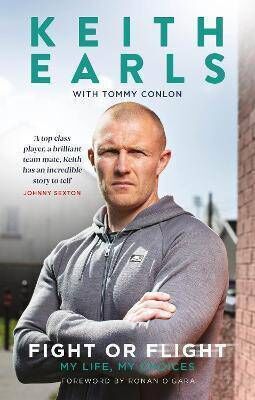
Keith Earls book
Keith Earls book

Fight Or Flight: My Life, My Choices by Keith Earls with Tommy Conlon is published by Reach Sport.

x

More in this section

Sport

Newsletter

Latest news from the world of sport, along with the best in opinion from our outstanding team of sports writers. and reporters

Cookie Policy Privacy Policy Brand Safety FAQ Help Contact Us Terms and Conditions

© Examiner Echo Group Limited