'Being diagnosed with dementia at 48 is hard': Rugby League stars to sue over concussion risks

Michael Edwards was diagnosed with early-onset dementia and probable CTE (chronic traumatic encephalopathy) earlier this month
A group of former players are planning to sue the Rugby Football League for negligence over what they say was a failure to protect them from the risks of concussion during their careers.
Bobbie Goulding, Paul Highton and Jason Roach are part of a test group of 10 ex-professionals involved in the action against the governing body. Those three men have been diagnosed with early-onset dementia and probable CTE.
CTE – chronic traumatic encephalopathy – is a progressive brain condition which is thought to be caused by repeated blows to the head.
The players allege in a letter being sent to the RFL that, given the significant risk of serious or permanent brain damage caused by concussions, the governing body “owed them, as individual professional players, a duty to take reasonable care for their safety by establishing and implementing rules in respect of the assessment, diagnosis and treatment of actual or suspected concussive and sub-concussive injuries”.
The group is represented by Richard Boardman of Rylands Law, the firm which has also launched an action on behalf of ex-rugby union players against World Rugby, the Rugby Football Union and the Welsh Rugby Union.
Boardman is representing a wider group of more than 50 players, ranging in age from their 20s to their 50s, many of whom are showing symptoms associated with neurological complications.
Goulding, 49, played for 17 years as a professional, representing Great Britain; Highton, 44, played over 200 Super League games; and Roach, 50, is a former Scotland international who played for various top clubs in England.
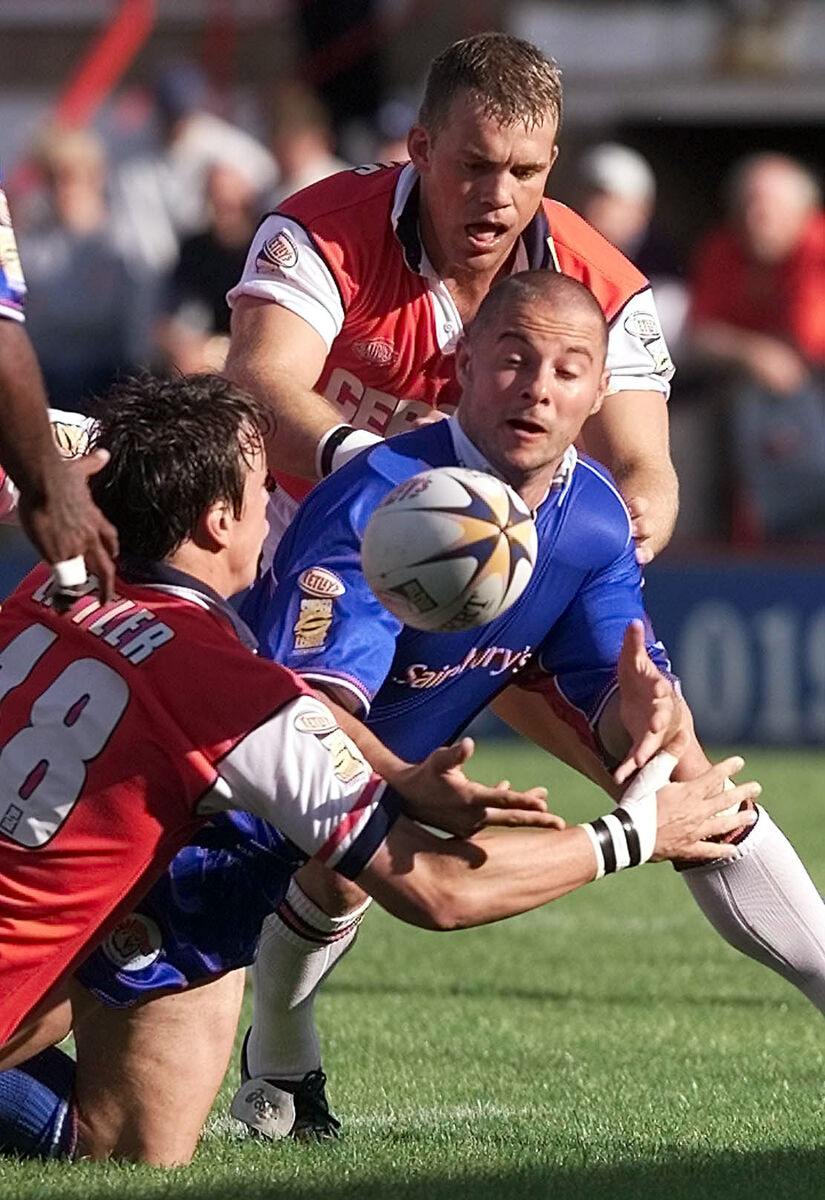
Michael Edwards, who played for Oldham, Leigh, Swinton and St Helens in a professional career spanning more than a decade in the 1990s and 2000s, was diagnosed with early-onset dementia and probable CTE (chronic traumatic encephalopathy) earlier this month.
As a player, Edwards was fearless. In retirement, the 48-year-old fears the day when he no longer recognises those closest to him.
Edwards acknowledges greater structure, science and regulation have been applied in recent years, but told the PA news agency that was in stark contrast to his own playing days.
“You were treated like a piece of meat,” he said.
“It was like the Wild West when you went on those fields sometimes. People would be swinging their arms like windmills.
“I remember playing my first game and half the lads were eight times bigger than me and they all wanted to knock my head off.
“And I thought, ‘This is what I’m going to have to put up with now for so many years’. There were no regulations in place. But I was a tough b*****, I gave what I got.
“The worst thing about it is you come to enjoy it – you enjoy the pain, you enjoy being out there, you enjoy the blood – it was part and parcel.”
Edwards says the problems with his short-term memory have become “horrendous” and added: “I put my keys down and I won’t find them for an hour, and they’ll be in the microwave or something, or the fridge, and I think, ‘Why would I put them in the fridge?'”
Edwards hopes the diagnosis will now enable him to receive targeted treatment and support but is understandably anxious about what the future might hold.
“Being diagnosed with dementia at 48 is hard to swallow really. Because it is not what it is now – it’s 10, 15 years down the line,” he said.
“I might be sat in a care home basically not even knowing who my girlfriend is.
“It’s hard because I want to share (retirement) with her and now I might be robbed of it all. I’m already robbed of most of the memories from when I played rugby – it’s hard to remember most of it, which is hard, because it means a lot to me, just to tell people what I’ve done, the places I’ve been.
“Relaying back to some of the games I did play in, I’ve got to look into my scrapbooks now and videos to give myself a reminder.”
CONNECT WITH US TODAY



Be the first to know the latest news and updates