Keith Earls reveals bipolar diagnosis: 'I didn’t know when I was Keith or Hank'
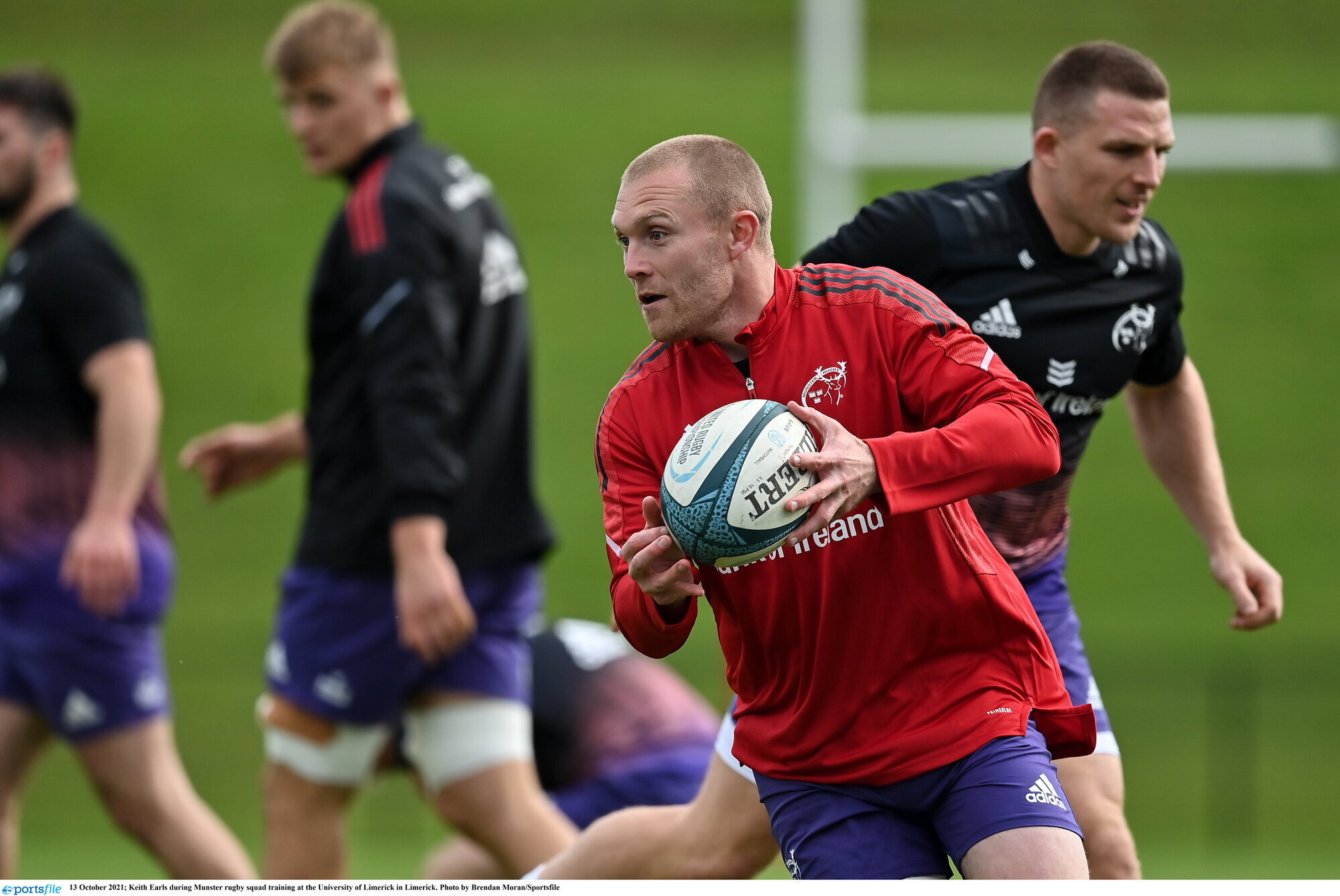
Keith Earls. Photo by Brendan Moran/Sportsfile
Keith Earls has opened up about his mental health battle and diagnosis with bipolar II disorder in a strikingly candid interview that he hopes will help others with similar issues.
The Munster and Ireland veteran shared his story on the ‘Late Late Show’, tracing his difficulties back to a first panic attack as a 12-year-old which followed the tragic, early passing of a young relative.
Earls recalled the moment vividly, sharing how his parents were out of work at the time and he was sitting on the couch at home when the gravity of the moment overwhelmed him.
“I was still in my primary school uniform. What kicked it off was I had a cousin who died in a car accident and I found that tough because he was only 19, he was young, and that was my first time I came across death or spoke about death.”
The thought struck that he would never see his cousin again.
“It just went downhill from there and I was thinking, ‘when I die I’ll never see my parents’, and I was shaking, I was trembling. The panic attack had started. I didn’t know what was happening. I genuinely thought I was going to die.”
The attack eventually passed but, as Earls pointed out, this was a time when there was less of an understanding and maybe even empathy for mental health issues in Ireland. The youngster kept the incident quiet.
Further attacks happened over the years and the Moyross man went on to talk about what he described as “the other voice in my head”, a voice he called Hank which owed to the 2000 movie ‘Me Myself and Irene’.
“Jim Carey’s character has a split personality. I suppose my Hank isn’t as mad as his Hank but my Hank is there in my head and he is the other side, the depression and the negative thoughts that have been living in my head since that day, since I was 12 years of age.
“He just doesn’t want me to be happy. He just makes me think quite negative. He makes me do a lot of things that I don’t want to do, like, just negative thinking in general. Thankfully I’ve never had suicidal thoughts but Hank is always there and he’s always negative. And he’s a fella I’ve lived with for most of my life now.”
Earls, a 93-times capped Ireland international, Munster legend, and British and Irish Lion, explained that this could even surface during games, that there have been times on the field when his biggest battle was with this alter ego.
“There are games I probably shouldn’t have played in I was in such a bad place mentally, but I found a way to get out onto the pitch and take Hank down.”
He eventually reached out eight years ago. His first daughter, Ella-Mae, had been born with a serious respiratory condition the year before. Joe Schmidt had taken over as Ireland coach. There was a lot happening, a lot of emotions to process.
Earls was struggling massively with paranoia and negative thoughts at this point and that was when he called the then Ireland team doctor, Éanna Falvey, and asked him to come up to his room for a chat.
From there it was on to a psychiatrist in Cork and the diagnosis came back: bipolar II. Not as severe as bipolar I, Earls half-joked when describing his as the “better” one, but still a condition that needed treatment.
That said, the diagnosis was met with a kind of relief by a man who felt he was losing his mind a d hurting the people close to him with behaviour which he described as bizarre.
Earls was adamant that he wasn’t leaving the doctor’s office that day without some form of medication to help treat it but coping methods, his own research into the condition and the input of behavioural therapy have all played a huge role as well.
“I still have my bad days but it’s definitely stabilised me and the last few years I’ve got a great hold on it. I’ve found my identity, which I think was part of it.
“I didn’t know who I was and I was always trying to be other people. I didn’t know when I was Keith and I didn’t know when I was Hank and thankfully I can tell the difference now.”
Earls’ remarkable honesty and bravery in discussing all this on TV was prompted by his hope that it could help others, whether those close to him or strangers, to come to grips with whatever issues they might be facing.
It’s also a reminder of the fact that the 80 minutes of their lives played out in front of spectators and sports fans throughout the course of their careers is merely a brief and at times deceiving window into the lives of athletes.
That same point, about perception and reality, is equally true for everyone.
“Why am I saying all this? There are people looking at me playing every weekend for Ireland for Munster but when you take off the green and red jersey there is just another normal person there.
“When you are looking at my social media you think I have the best life in the world which in my eyes I think I do but there is struggles and sometimes a lot of us aren’t doing as good as the people at home watching us.”

CONNECT WITH US TODAY



Be the first to know the latest news and updates