Alain Rolland on the hardest thing in Irish sport: The referee's search for consistency
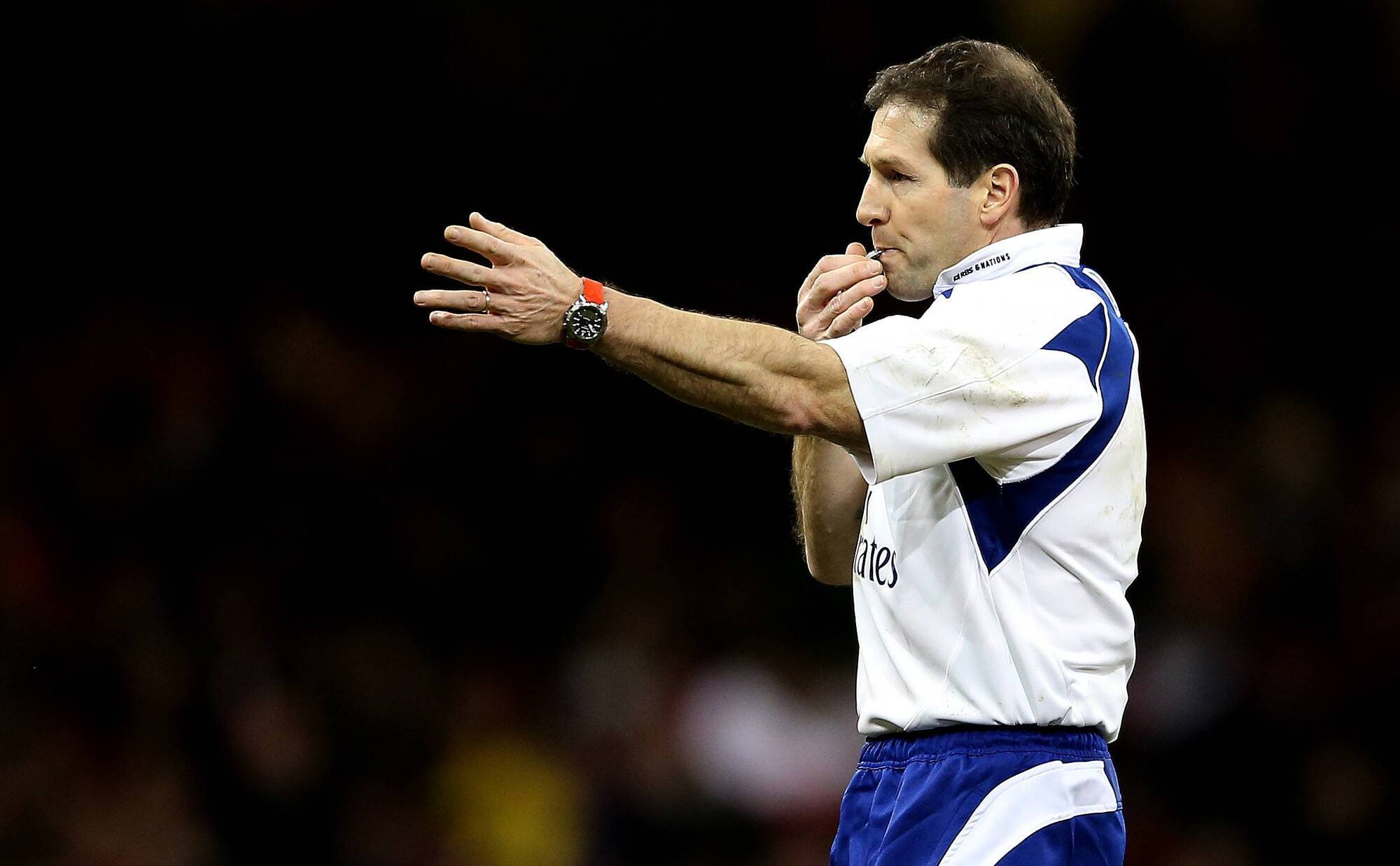
Alain Rolland: One of the biggest challenges in sport is how to improve (consistency), because it can be really difficult
Between his time as high performance referees manager with World Rugby and handling the World Rugby Cup final in 2007, Alain Rolland has plenty of authority when it comes to officiating.
Little wonder, then, his pick for hardest thing in Irish sport revolves around the men and women who wield the referee’s whistle.
“From my own perspective, the most challenging thing for us as a group, and something we can be criticised for, is how we can improve on our consistency.
“And that’s not just for rugby. It’s the same for any sport, we see it in GAA, in soccer — there can sometimes be a perceived impression that there’s a lack of consistency in relation to how laws are interpreted.
“One of the biggest challenges in sport is how to improve that, because it can be really difficult. Sometimes it’s due to how the laws are written, for instance, because they’re open to interpretation, there can be outside influences — I just found that you can’t keep everybody happy all the time. It’s impossible.”
The counter-argument, presumably, is that slavish consistency militates against individual interpretation.
Does that mean refereeing with “personality” is out?
“I’d hope it’s not, I’d have a fear that if we get really prescriptive with how things are to be applied that it’s going to take away the individual’s personality, and the official will become more robotic — and not necessarily use the common-sense approach.
“And that’s the thing that’s missing sometimes. You look at an action and think, ‘what would people understand the decision to mean — if you make a decision will they understand it or not understand it? Technically the law states you must do X but no-one will understand that, so the common-sense approach is what everyone will understand’.
“That’s where we’re finding it difficult.”
Factor in the levels of scrutiny and Rolland expresses his concern that people are becoming more reluctant to get involved as officials.
“I think it’ll deter people from getting involved in officiating in many sports.
“The social media thing is also part of it. That’s not something I’ve ever been involved in and I don’t know how it works — I have to ask the kids what’s involved in it — but I think it’s a dangerous tool.
“Because of what it can do, it has the power to deter a lot of talented people from getting involved in officiating. And the thing about officiating is that it’s an amazing way to stay involved in a sport. You have a front row seat.
“But many players would not consider it as an option because from their playing side they see the negativity officiating attracts, so their attitude is ‘why take on all that hassle?’”
Unsurprisingly, the former Ireland scrum-half is a strong advocate for the opposing view.
“The reality couldn’t be further from the truth,” says Rolland.
“I’d love people to give it a go. They’d be amazed how much they enjoy it.
“I can understand people’s attitude, that they don’t want to draw hassle on themselves, but it’s a fantastic way to give back to your sport, and no matter what sport it is, it needs people to give back.
“A lot of people can be brave with a TV, pausing and rewinding a game to look at decisions, but a match official in any sport only has a split-second to make a decision — and after that decision it’s a split-second for the next decision as well.
“I’ve been told that in soccer a referee may have 250 occasions on which to decide whether or not to blow a whistle; in rugby that can be 1,000 occasions in a game, because the way the sport is played now there can be 200 breakdowns over the course of a game.
“And as I said, the good officials can interpret when they need to blow and when they don’t. So we’re back again to the common-sense approach. And back again to the need to attract more players into officiating.”
Is there any other dividend to refereeing? Does it make people more decisive off the field, for instance?
“It does help with your discipline when it comes to other areas of life, but decisiveness? If you asked my kids that question they’d probably say no.”

CONNECT WITH US TODAY



Be the first to know the latest news and updates