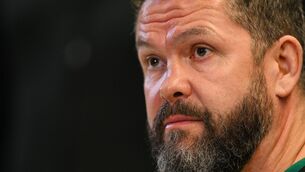
Ireland throwing up same old questions in quest for new answers
Joe Schmidt used to work long into the wee hours after every Ireland game, poring over the match video for the smallest of errors and infractions. You would hope that Andy Farrell isn’t of a similar mind, or sleep will be off the agenda for the entire week.
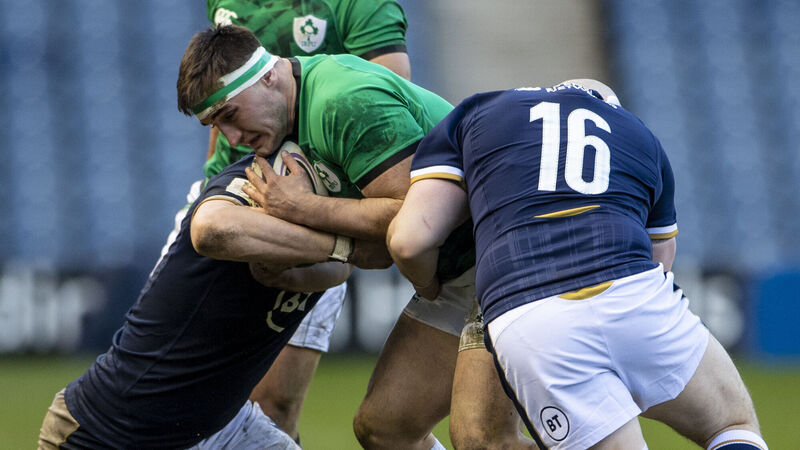
This was an all-too-familiar Ireland performance in that every one thing they did well seemed to be countered by another done badly, and it made for another scrappy, stuttering performance that fell far short of the desired standard.
The concession of the first two, soft Scottish tries was typical, the manner in which they coughed up a 14-point lead, and with it all the momentum, bewildering. Individuals are performing, and the win is the immediate bottom line, but consistency continues to elude.
Johnny Sexton’s takes — that they have yet to beat a ‘top’ team and, similarly, that top teams don’t cough up 14-point leads — is pretty much where Ireland found themselves at the start of the championship.
Have they made any progress? Or are they standing still?
Long-time lieutenants are now the generals
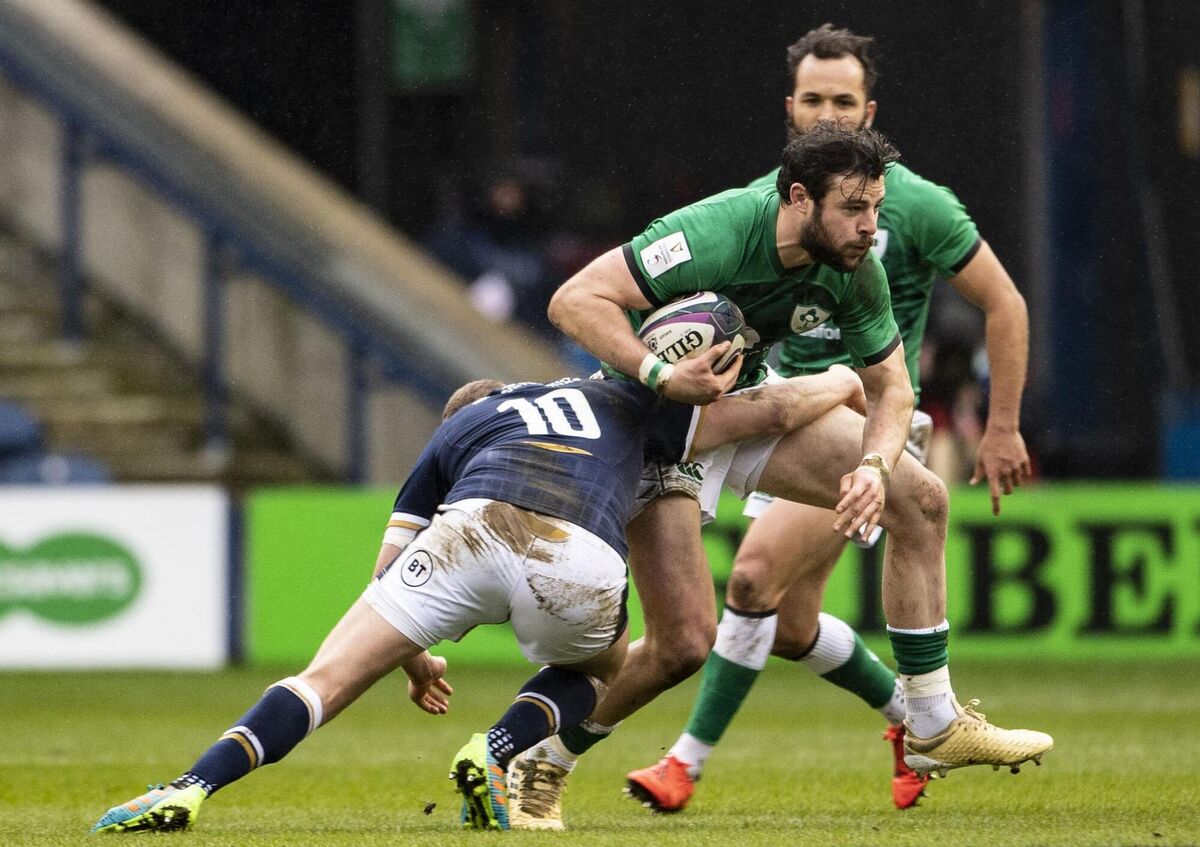
Is Robbie Henshaw now Ireland’s best player? Or would that be Tadhg Beirne? Maybe Iain Henderson? There’s no easy answer to that, no one-size-fits-all metric that allows an accurate comparison between a prop to a winger, but new ‘leaders’ have emerged.

The Sextons, Conor Murrays, Keith Earls, and Cian Healys have plenty of rugby left in them, but this shift is undeniable.
What else does Henshaw have to do for the ‘world-class’ moniker to apply? How many Man of the Match awards is that now for Beirne, regardless of where he plays? Has Henderson finally shaken off the sense that he is still being talked about as a player of potential?
Henshaw is 27, the other two 29. These are the men Ireland will be looking to for leadership and acts of consistent class come the next World Cup, and they are doing more than most to get the team back to something like the level of 2018 as it is.
Scotland do another Scotland
When Rory Sutherland went public with Scotland’s intention to take England on up front before the opening round, it brought to mind the scene in Braveheart when Mel Gibson and his army mooned the Sassenach before battle.
It was bullish stuff and left them open to derision if things turned sour in Twickenham, but they did the job. Just. But Scotland have been unable to back it up. Two defeats later, they have once again failed to live up to their own hype.
They weren’t alone in their delusions of grandeur this time. Rarely, if ever, has the Irish media placed such emphasis on the danger posed by the Scots before a Six Nations meeting between the sides. You would swear they were the ’85 Chicago Bears.
Let he who is without sin in this regard cast the first stone.
Paul O’Connell’s line last week about this being the best Scottish side he had faced in his time in professional rugby looked good on paper and sounded great on the airwaves, but Ireland left the key under the pot plant here and Scotland still couldn’t let themselves in.
It’s unlikely they will return from Paris with a win either.
It’s all so very ... Scotland.
Questions mount over Italy — and Franco Smith
Another evisceration of the Azzurri, this time by Wales on Saturday, but are we any closer to a tipping point? Is 31 Six Nations defeats in a row not enough to at least start the conversation among the organisers as to their future in this competition?

There are endemic problems running through Italian rugby. The desire for change was evident in recent elections when the serving union president Alfredo Gavazzi took in just 3% of the vote and Marzio Innocenti was ushered in with 56% support.
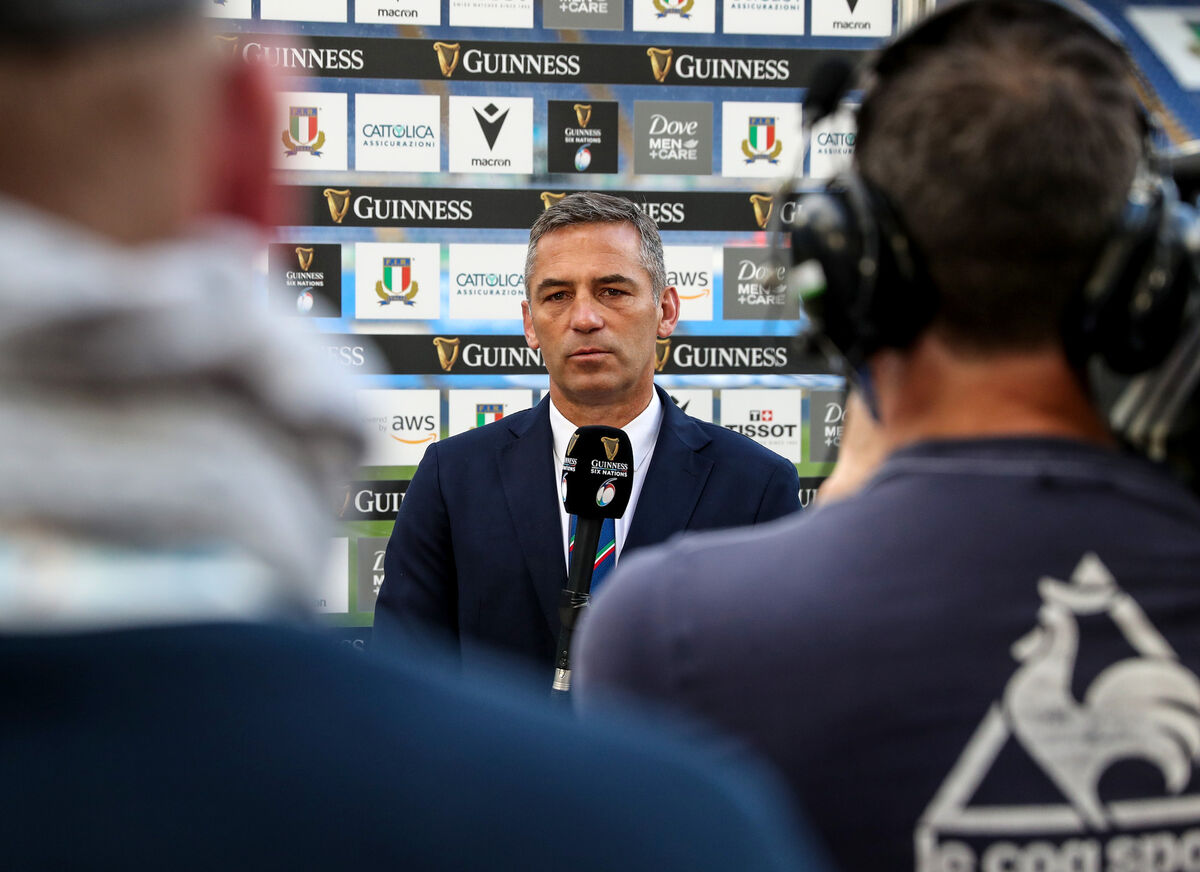
Franco Smith inherited a house in rag order, but what has he done to clean own his room? The South African has been head coach through a dozen games now between the Six Nations and the Autumn Nations Cup, and the stats suggest that zero progress has been made.
Conor O’Shea, his predecessor, lost all 12 of his first Six Nations games. His Italy side scored 23 tries in that period, conceded 60 and had a points difference of -273.
Smith’s Italy have scored 13 tries, conceded 59 and have a points difference of -320.
Shouldn’t they at least be showing some improvement? Defence is supposed to be the most straightforward area to fix, but Italy are worse than in that respect that they were under the previous regime.
England coming to the boil at just the wrong time
The Six Nations may throw up the same fixtures every year, but the venues and the order in which they appear in the calendar are the curveballs, the crucial nuances that can change everything, and change it utterly.
Facing England in the closing round always looked a bit of a bum deal, given Eddie Jones’ side are heavily reliant on a Saracens core that was light on game time thanks to the club’s championship exile when Scotland sacked Twickenham.
Defeat and the concession of 40 points in Cardiff added to their problems and sense of woe, but the flip side against Wales was an attack that looked more inventive and energised than it had in some time — and that was confirmed this weekend.
England looked sharp, less restricted against the French. They accepted the challenge of playing with tempo and cut down on the indiscipline that had haunted them in the first three rounds.
They’ll likely be better again in Dublin next week.
CONNECT WITH US TODAY
Be the first to know the latest news and updates