Risk doesn't pay - team who kicked most won all but one 2020 Six Nations game

England's Owen Farrell poses with the Six Nations trophy
Risk doesn't pay in the Six Nations — that's the message delivered by the 'QBE Risk & Reward Index', a new data tool which analyses how teams managed risk during the 2020 tournament.
Developed by QBE using rugby performance analysts, the index number of key performance indicators, such as kicking rates, penalty concessions, turnovers, gainline breaks and and 'red zone' entries.
It concludes that playing for territory by kicking is "the most successful risk management strategy".
And it reveals that teams who avoid errors by playing without the ball, and refusing to spread it wide, are statistically more likely to win games.
The data also shows that when an error is made, teams are to concede a penalty rather than allow a turnover.
And in analysing England's victory in the 2020 tournament, it found Eddie Jones' side had the highest metrics compared to other teams for kicks in play, kicking metres, turnovers, dominant tackles, lineout steals and total possessions and entries in the red zone (between try line and 22).
It adds: "Key playmakers like George Ford, Owen Farrell and Jonny Sexton control the game and manage risk effectively by having very low error rates for kicking and passing which, when combined with the positive outcome from their kicks and passes, leads to a high rate of reward compared to risk profile."
Some of the key QBE Risk & Reward Index findings:
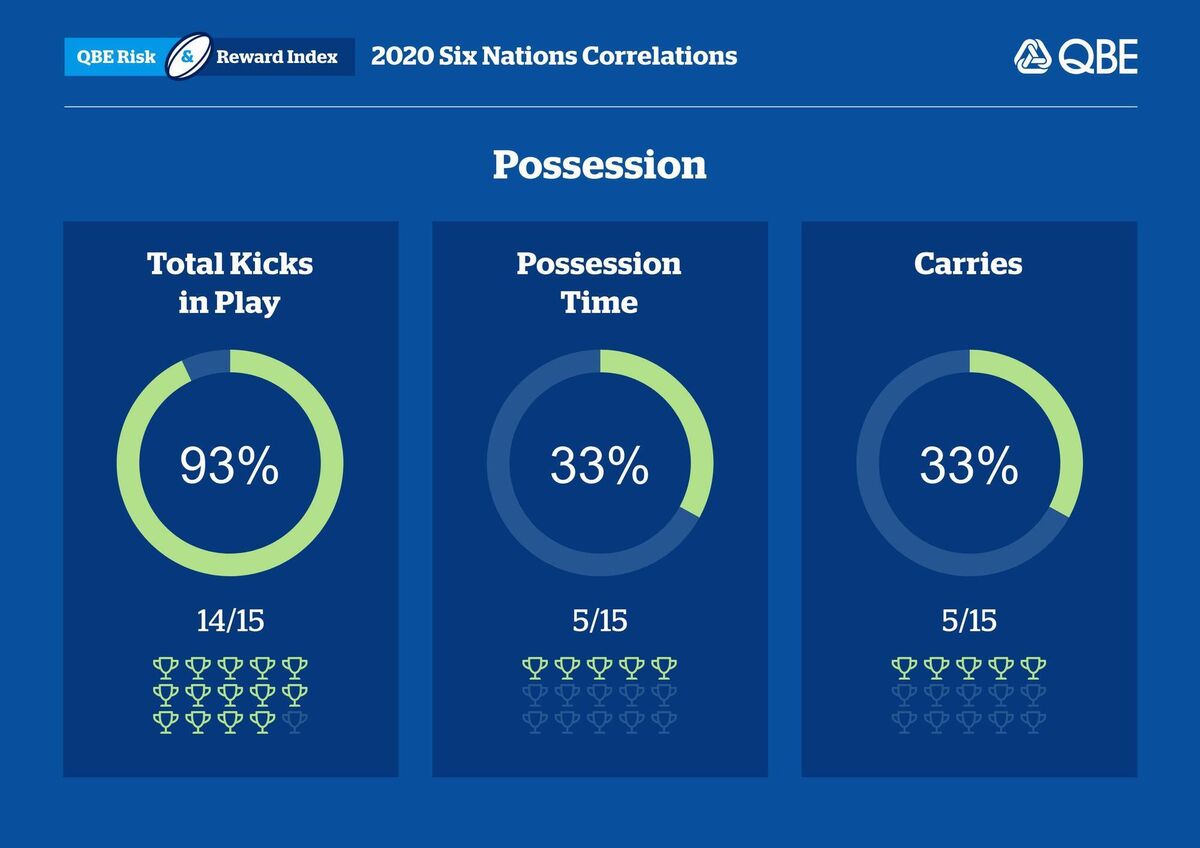
- "Total kicks in play has the highest correlation with winning games at 93%. Playing for territory by kicking, and thus playing without the ball, was the most successful risk management strategy. There was only one game in the 2020 tournament where the team who kicked less won the match."
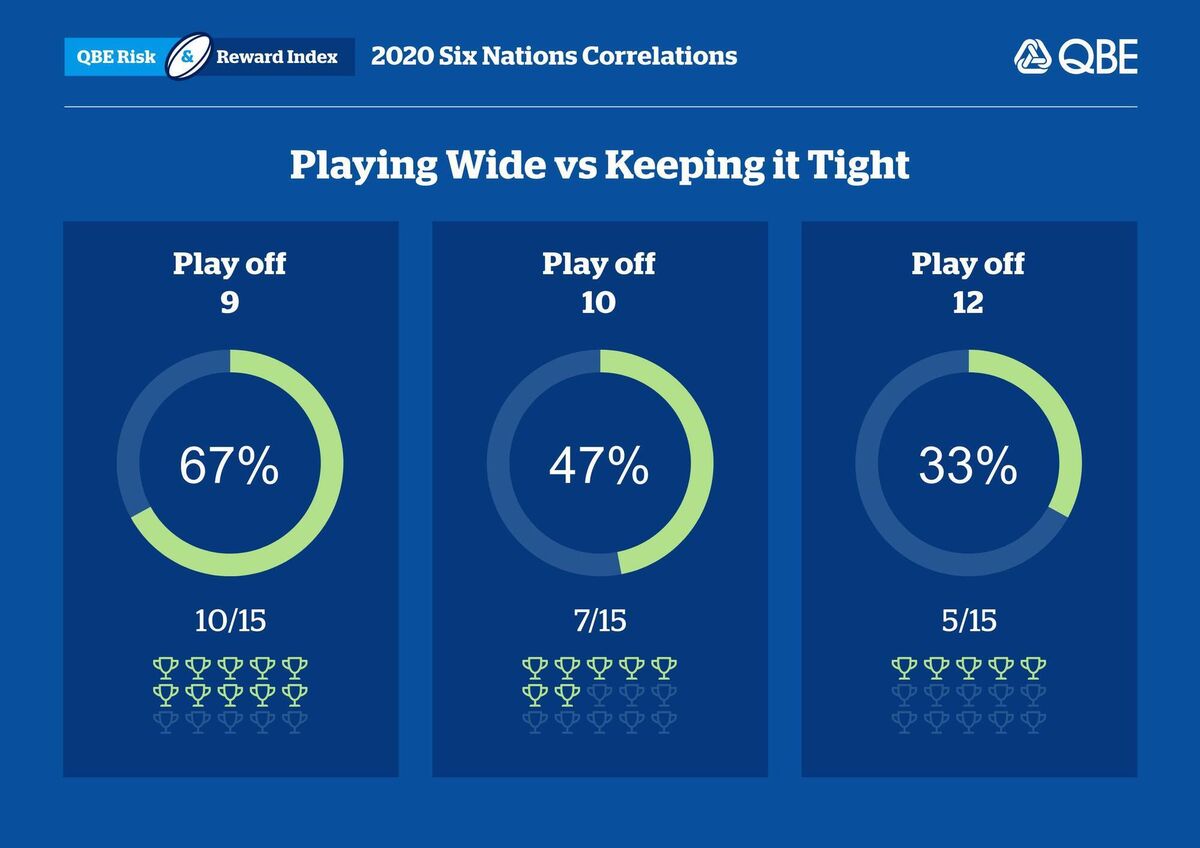
- "Teams who played off their 9 more than their opposition, and thus which managed the risk down by keeping the ball tight, were much more likely to win matches at 67%.
- "The respective figures for 10 at 47% and 12 at 33% demonstrates that playing wider means that teams lost more often. The wider a team plays the more chances for errors with more links to the chain and less support to resource breakdowns."
- "Teams that play wider on the pitch take more risk and that risk does not pay off as they are more likely to commit errors and less likely to win."
- Taking the risk of conceding a penalty during a turnover does pay off as teams are more likely to win games (73%) if they win more turnovers than if they concede more penalties (47%).
- Positive outcomes, where the team who completed their possessions and avoided errors more than their opposition won 87% of the time.

CONNECT WITH US TODAY



Be the first to know the latest news and updates