It’s oddly unnerving: Springboks delighted and united under Rassie
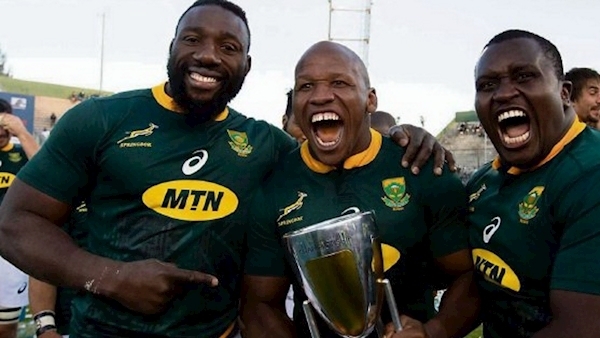
There is something unnerving about the Springboks travelling to a Rugby World Cup in a complete state of readiness, carrying confidence, form and the apparently universal support of the entire country.
Springbok rugby and World Cup campaigns are generally successful (they’ve won 30 of 36 World Cup matches) but they are never without controversy, in-fighting and political rancour.
The Boks don’t do calm. They do chaos and laager mentality.
It’s not supposed to be like this.
The Springboks don’t go into World Cups as the southern hemisphere’s best team.
They don’t begin a campaign with an undefeated season, with a squad that is envied, at least two excellent players in every position, and the unequivocal support of the entire nation.
But the class of 2019 have all these things. And it’s alien.
Four years ago the Boks were on a three-match losing streak going into the tournament.
Worse, the Congress of South African Trade Unions (Cosatu) claimed that five black players had approached the organisation to complain about coach Heyneke Meyer’s preference for picking white players over black players.
They could not substantiate the claim and then did an about-turn and issued support for Meyer and the Springboks after the World Cup squad was named — saying it was the most “transformed Springbok team.”
Then, a little known organisation called the Agency for a New Agenda (ANA) took the South African government and the South African Rugby Union (SARU) to the High Court in attempt to block the Springboks’ World Cup participation. The court stood down the matter.
There was also the small matter of losing to Japan in their opening game to add to the malaise before they typically rallied and took the All Blacks to the brink in an epic semi-final.
In 2011 the Boks were in poor form despite a win against a second-string NZ in Port Elizabeth, without some key players and led by the eccentric Peter de Villiers.
His colourful turn of phrase made every press conference a blockbuster event although his long-suffering media manager had a different view.
In 2007 in the middle of the successful run to the title in France, SARU advertised Jake White’s job.
That’s not a joke. White was asked to reapply for his job while trying to run a RWC campaign.
It became more awkward when then-assistant coach Allister Coetzee sheepishly approached White and said he was going to apply. At least he had the grace to tell his boss.
An incensed White went to CEO Jonathan Stones and said his re-application would come in the form of the Webb Ellis Cup being plonked on his desk in due course.
In the mad world of Springbok rugby White’s Boks won the World Cup but he never retained his job because he never formally re-applied.
In 2003 images of Bok players, stripped naked and freezing in a pit having ‘God Save the Queen’ and the Haka blared at them over loudspeaker circulated prior to the tournament in Australia.
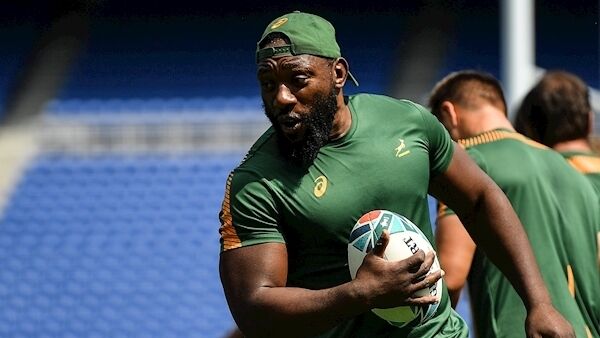
At the same ‘training camp’ that seemed to have an over-zealous need for the players to be in a state of undress, naked players were forced into an icy dam.
If any tried to leave the water they were encouraged to return at the end of a rifle barrel brandished by several special forces soldiers. Good times.
The embarrassment and shame and total breakdown of trust between most of the squad and coach Rudolf Streauli was, for once, too much to overcome.
The Boks limped home after two heavy defeats in disgrace and Straeuli was fired. He was lucky not to be prosecuted.
And so it goes. In 1999 coach Nick Mallett lost the plot and axed successful captain Gary Teichmann on the eve of the tournament, thus plummeting the entire squad into deep bouts of self-doubt. They still came third but Mallett admitted years later it was his biggest mistake.
Which is why the serene march of Rassie Erasmus’ squad to the Rugby Championship title with the most transformed (racially diverse) Bok RWC squad of all time has been a quiet revelation.
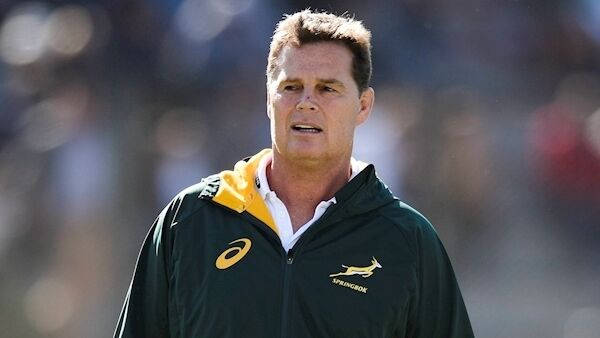
Former Munster boss Erasmus, who took over in March 2018, has overseen a remarkable transformation that is now starting to translate into consistency and silverware.
The Boks won the truncated 2019 Rugby Championship for the first time in its current format after beating Argentina 46-13 in Salta to clinch the title.
That was set up by beating Australia 35-17 at Ellis Park and drawing 16-16 against the All Blacks in Wellington.
The Boks have only lost once in their last eight outings and have gone unbeaten in New Zealand for two years after losing 57-0 in Albany in 2017 under previous coach Allister Coetzee.
In captain Siya Kolisi they have the first black man to lead the Boks at a World Cup and there are nine survivors of the 2015 campaign, two from 2011 and one, Frans Steyn, from the victorious 2007 vintage.
“There is a serious backbone to the side now and you don’t get the feeling that they are going to roll over,” former Bok great Schalk Burger said.
“It’s definitely about work rate.
If you look at the way they played against Argentina (in Salta) everything was accurate. They kicked, chased and were competitive in all facets.
Now you see average kicks becoming good decisions by the work rate that is put in. That comes through a serious culture or mindset change to graft for each other.
“The one reservation I had before this year was about consistency,” Burger said.
“The Boks could always beat any side in the world on their day — but could they do it three weeks in a row?
“Because that’s what you need when you get to the playoffs in a World Cup.
"It’s high pressure and you need to deliver quality no matter what the opposition. The Rugby Championships have shown that they’ve got it.”
The Boks’ opening Pool B game against the All Blacks tomorrow should decide who wins win the pool.
The loser will in all likelihood meet Ireland in the quarter-finals.
A year ago no one would have given the Boks a chance of beating the All Blacks in Yokohama. Now the match is seen as a 50/50 contest.
It shows how quickly the Boks have gone from rabble to contenders, all without controversy.
It’s odd and unprecedented. But heck, it’s a welcome change.
CONNECT WITH US TODAY



Be the first to know the latest news and updates