Letters from the front line: Mike Ross’s autobiography an underrated gem
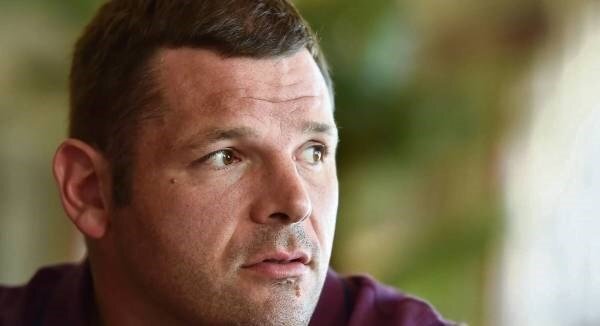
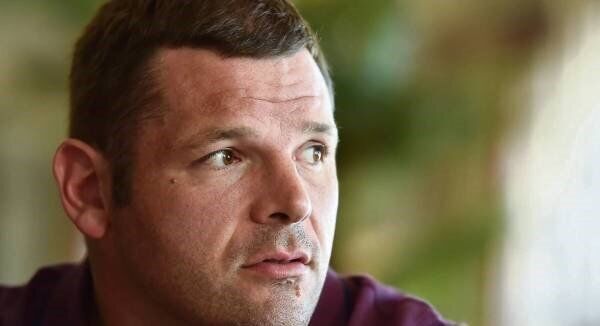
"The professional game is a whole different place to be. It’s post-amateur, post-apocalypse if you like. It’s a place where you can feel amazingly well loved. It’s a place where you can feel utter desolation and find yourself totally alone. It’s every man for himself.Every single man is suited and prepared.Nobody comes unprepared. There’s nothing easy. Ever."— Mike Ross, Dark Arts
Paul O’Connell was always going to write a book, or at least be asked to do one. Brian O’Driscoll, Johnny Sexton, Ronan O’Gara the same. Down the line, Conor Murray will as well.
Mike Ross wasn’t an obvious one. All the above were household names by their mid-twenties. At 30 Mike Ross’s name hadn’t even appeared on an Irish teamsheet, let alone in any conversation over your dinner table or in Kiely’s; any talk of a Ross there would have been confined to O’Carroll-Kelly.
Even six years later when he’d retired with 61 caps he didn’t seem an obvious subject for a book. The likes of O’Connell, O’Gara and O’Driscoll had all been frontmen or lead guitarists. Ross was your quintessential sideman.
But just as someone has to play bass, someone has to help anchor the scrum. And hidden amongst all those arses and grunts, author Liam Hayes could spot a rugby Rocky – Balboa, not Elsom. Who wouldn’t want to do a Stallone and write that story?
He’d first heard about Ross chronicling Bernard Jackman’s last season with Leinster in which Jackman had been effectively deported to Siberia by Michael Cheika, though Jackman was grateful that it wasn’t the cooler; at least in Siberia he had some company.
There was this 30-year-old new guy Leinster had signed the summer before from Harlequins. The ultimate gentle giant and the ultimate pro.
In Leinster’s first game of their European campaign Ross had made a bit of a cock-up – okay, a total cock-up – that had cost them the game and after that Cheika had wanted nothing to do with him and nothing for him to do. The guy was never going to play for Leinster, certainly not under Cheika. He was being treated like a piece of shit. And yet he would come in with reams of data about the opposing scrum and give it to teammates starting ahead of him. He’d show up with a smile on his face and try to raise one on everyone else’s, bringing in cookies his American wife Kimberlee had made, just like his American mother Patricia used to make for him when he was a kid.
Hayes was intrigued. Who does that?! And so when he’d see what Cheika’s outcast would go on to do – win two Heineken Cups, two Six Nations championships, play in two World Cups – he sounded him out about doing a book.

Not everyone gets asked was the pitch from Hayes and though it was never said, the pair of them knew no one else was going to ask either.
As much as Hayes could see Ross had a story, however, he had no idea of just how much of a story there was and how some of Ross’s story was so much like his own. In 1992 Hayes wrote Out of Our Skins, the first great GAA autobiography and to this day remains a classic Irish sports book. In that book Hayes wrote powerfully and movingly about the suicide of his own brother. It was a few sessions into his interviews with Ross that he learned Mike and his family had been similarly devastated. Andrew was their Gerard.
The bond Ross and Hayes formed and their subsequent collaboration has resulted in one of the finest of Irish rugby autobiographies.
Like Ross the player, Ross the book is an underrated gem. A dark horse as well as about the dark arts.

Its first half, in particular, is as revealing and as well-written as any autobiography by a rugby player. Not just for how Andrew’s life and death is recalled with the same sensitivity and skill Hayes displayed when penning that of Gerard’s but also in how Ross’s arduous path – as opposed to pathway; there were none in his days – to the top is documented; in how it takes you into the belly and nuances of the scrum; and around the grounds of the English Premiership where you can almost feel the chilly wind in Welford Road in your bones; to the unforgiving and yet often heart-warming environment that is a professional rugby dressing room, not that unlike that of Sean Boylan’s Meath which Hayes captured so well in a past lifetime.
Mike Ross is Frank Ross’s son. You can’t tell Mike’s story without touching upon Frank’s. Frank went to Midleton College, at the time a low key rugby school, and it cost him. He attended a Munster schoolboys trial and reckons he must have won at least 10 against the head yet heard nothing again from the selectors; instead, two lads he had schooled made it because they had also been schooled at Christians.
Mike went to a hurling school, not a rugby one. St Colman’s College were All-Ireland champions in his time there, with Neil Ronan and Timmy McCarthy among his classmates for a couple of subjects.
But Ross wasn’t a hurler. He wasn’t much of a footballer either; when you were as big a lump as him, you were just lumped into goals. But in rugby he found big was good. They lumped him into the front row where he found he could roam the field a bit as well, at least more than he could on a football field. But just like his father before him, he’d learn you had to have or know a bit of blueblood to wear Munster red. He didn’t even a get a trial with Munster schools. At UCC he did enough to train with the Irish U20s. Three months later wasn’t good enough to make the Munster U20s. Being from Ballyhooly was like being from Ballygobackwards.
“There are better pathways now,” he says in a quiet voice which like his intelligence belies his hulking frame.
“I know for a fact in Leinster that if you’re a player in a club you’re on a spreadsheet somewhere. There are more opportunities, there are more eyes on you. Ten or twenty years ago, your future could be decided by the opinion of one man. You had politics, selection committees, horse-trading. ‘Oh you pick my man and I’ll pick yours.’”
He’d never make it into the Munster senior setup either. He’d get called up alright for the odd session when they were down men in camp with Ireland and was on the bench for a game up in Ravenhill, a day best remembered or forgotten for Barry Murphy “breaking his ankle into a million pieces”.
But he never got on. Instead he had to settle playing with Cork Con. A great club but one that offered no pay cheque.
Instead he was working in a lab in Clonmel. Sounded fascinating on the brochure, in keeping with his degree in microbial biotechnology, but repetitive and tedious in reality. Later that year he was marrying his dream girl Kimberlee but if he could have the dream job as well it was still playing rugby for a living.
“When I had got exposed to the higher levels of the game from time to time, training with Munster, I didn’t think it was beyond me. I was very good in the scrum. Other parts of my game weren’t quite there but a prop should be picked first and foremost for scrummaging.”
“Just as importantly, Frank Ross hadn’t given up on the dream either. Often,” says Mike, “he believed in me more than I believed in myself.”
Frank had got the name of Leo Cullen’s agent from Leo’s father. One of that agent’s clients was Dean Richards. Frank urged Mike not to just call the agent but to call Richards, plead with him if needs be. Give me a chance! He’d never thought to be that assertive with Declan Kidney. Then again at 22 he wasn’t as desperate as he was at 26. Lucky for him, Richards relented.
That was probably the biggest motivation for Ross to write the book: to remind some other kid out there overlooked by a Munster or Leinster that if you’re persistent and good enough there’s a Richards out there.
“Don’t take no for an answer. Okay, maybe take a hundred as an answer – I don’t want encourage people to be self-deluded and keep chasing the impossible – but give yourself every opportunity.
“If you want to play professional rugby, there’s a team that will take you more than likely – if you’re good enough. Trying to get into Munster or Leinster is like going to Manchester United or Liverpool. But there’s no harm in first going to a West Ham or a Burnley. You’re still a footballer. And you can always get better.”
The book is all about the importance of learnings.
At a time when words like that and process, grit and resilience weren’t in circulation, let alone clichés, Ross intuitively had the humility and awareness to grasp and apply them. He recalls his days playing with UCC when he resolved to “never stop being a student of the scrum” and an unashamed data nerd.
One Division Two encounter in particular, against Dungannon in the Mardyke, he describes as “an afternoon of education”. Going up against Allen Clarke and Justin Fitzpatrick who only the previous month had been champions of Europe. Collapsing a five-metre scrum and purple-faced Clarke screaming at him that he was going to get himself killed.
It’s one of the most recurrent, even endearing, sub-themes of the book: just how much Ross learned from and respected his direct opponents.
Clarke and Fitzpatrick. Sale’s Andrew Sheridan, the one opponent who was “beyond me”. Northampton’s Soane ‘Tiny’ Tonga’uiha. France’s Thomas Domingo.
“Well, you had to respect them,” he says. “Because if you didn’t, that’s when you’d become overconfident. And that’s when you’d get sloppy.
“And that’s when they’d shove your head up your hole. So that’s why I’d do all that research. I considered it, ‘Well, if I spend an hour here it might save me a bit of pain at the weekend, so I’m going to do it.’ Because your successes and failures in rugby are very public. Especially at the top level.”
There’s a lovely scene in the book where after Ireland’s championship victory in Paris in 2014 Ross goes into the French dressing room, sits down alongside Domingo, hands him a beer, and in his best French says, “Today, you, Thomas. Tomorrow – me!” Because it was true. In earlier battles against Clermont, it was Ross who had failed in public; now in Paris, it had been Domingo who had been replaced at halftime.
“I had been him quite often,” says Ross now.
“Especially playing against him. He doesn’t speak much English and I can’t speak much French but I think if I saw him today, it would be ‘How are you going, man?!’ A hug or two even.”
Michael Cheika and Matt O’Connor probably won’t get the same greeting, even though he shared the same dressing room as them. He acknowledges their strengths and achievements but literally in his book there’s a way to give feedback.
Be respectful but direct. Be direct but respectful. Like Leo Cullen in his last season. “I’m sorry, Rossy, but there’s nothing for you next year.”
Like Dean Richards. Like Joe Schmidt, the ultimate demanding yet compassionate coach. Cheika and O’Connor went nowhere close to hitting that balance.
“Cheiks is a real competitor. And he’s a very successful businessman. And sometimes he just makes a call on things and it’s set in stone; he won’t revisit his initial judgment. But if the evidence changes, my opinion changes. That’s the way I work.”
Just as there was a way he felt his coach could have treated him that time, he still felt there was a way for him as a pro to respond.
“I’d been conscious of people who hadn’t responded the right way,” he says. “And it’s not appreciated.”
And so he’d bring in Kim’s cookies, and he’d double down compiling data about opposing scrums for his teammates to know. Even his father wondered if he was being naïve, sharing that with players ahead of him.
But he saw it in a different light.
Still did, even after all he’d won and a young buck like Tadhg Furlong was coming up, ready to overtake him.
“It’s no good to me if I’m playing in a final and I go down after 15 minutes and my replacement isn’t up to scratch because I haven’t helped them. I don’t get my medal. They help me get my medal. So I help them.”
He loves that quote of Lombardi’s. About a man’s finest hour being on the battlefield exhausted, even injured, but victorious, have given everything of himself to the cause and his colleagues.
Nearly 10 years on from leaving Harlequins and he’ll still call old comrades like Ollie Kohn, Ceri Jones and Jim Evans at least once a month. He equates training and playing with a professional rugby team as being in an army: a band of brothers.
Yet ultimately they’re not brothers. As close as he was to so many of them, virtually none of them prior to this book knew about his real brother, Andrew.
“It’s not something you bring up in casual conversation,” he says. “You know yourself, it makes people uncomfortable. I remember Jack McGrath lost a brother under similar circumstances and obviously I told him then. ‘Look, it gets better. It’s tough now. It does get better.’”
When Ross learned a year ago about the existence and then the contents of Andrew’s letter, he felt: you poor, confused boy, our boy. To think he thought he wasn’t smart enough when his writing in that letter clearly showed he was bright. To think he thought he wasn’t good-looking when he was a smashing, strapping lad. There’s more awareness and support now, he recognises. But still not enough, he realises too.
“I think it’s worse today for kids. Because you have Instagram and people presenting these immaculate, curated versions of their lives. No one puts up on social media, ‘Oh, a terrible dose of the shits today’ or ‘My girlfriend just dumped me.’ Everyone looks like they’re having the crack all the time. There’s a fear of missing out – and there’s a fear of being left out too.
“I was reading a book there called The Coddling of the American Mind and it showed how the amount of kids there with self-described mental illness is skyrocketing. Now you can say it’s because they’re more able to self-diagnose their depression because they can research it on the internet but the experts have also correlated it to the internet; that if you have two hours or more screen time a day you’re more likely to be depressed.
“The authors were essentially saying kids are becoming more mentally fragile because they’re becoming more protective. And the point is that humans are ultra-social animals. It’s our nature to have face-to-face contact, like you and I are having right now. But if I’m interacting with you while looking at this [his phone], something is missing, something is off.”
If he had to learn the hard way that life had to go on after Andrew, he’s found life after rugby a lot easier.
It helped that he had been in the real world before, though it’s not like his involvement in the game is finished.
He’s a scrum coach to Malahide, UCD and the Irish women’s rugby team. He’s learned from Greg Feek and Joe Schmidt that it’s not how much you know but how well you can impart it, while explaining the scrum to a Gaelic footballer like his ghostwriter Hayes “as if he were five years old” has helped too. And so in selling the national women’s scrum on the merits of pushing in a particular way to increase the surface area, he’ll ask which is the more painful to be stood upon by: a tennis shoe or a stiletto? They say the latter every time, which is why they push a certain way every time.
The day job now is a commercial director for a software company involved in data security. Or, explaining it to a five-year-old again, “if you send an email to the wrong person, we allow you to get it back.”
He came across the job meeting a recruitment agent his business mentor Michael Ryan put him in touch with. They were looking for someone good with tech, data. In Leinster and Irish camps, Ross was a tech as well as a data nerd, someone who built his own computers and could fix yours.
“If someone had a technical issue, they’d usually come to me,” he says, though conceding he once wiped Sean O’Brien’s phone when the backup was corrupted. “Sean didn’t appreciate that.”
But his current employers appreciate him. A tech wiz working for Wizuda has a nice ring to it.
Still a nerd for data. Just the triumphs and failures aren’t as public as they once were.