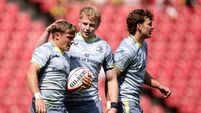
Dominic Crotty: Awful contest produced a deserving winner

Ireland played a horrible game of rugby last Saturday in Dublin and deservedly lost against Wales in a match whose quality fizzled out well before the relief of the final whistle.

Former Ireland and Munster full-back Dominic Crotty casts his eye over Ireland's clash with Wales last weekend in the 2008 RBS 6 Nations

Ireland played a horrible game of rugby last Saturday in Dublin and deservedly lost against Wales in a match whose quality fizzled out well before the relief of the final whistle.

The air of expectation that had surrounded the game beforehand would have been better spent elsewhere as this was a poor contest whose victor rose only slightly above the average and essentially won by default.

For Ireland, after the promise of the previous two games, this is an enormously disappointing display.

For Wales, it’s been a deserved Triple Crown. They’ve had to really dig in at times during their games and, while mixing the good with the bad, have easily been the best of the four home nations.

They play with skill and are always probing the opposition defense; they have a spark about them also that sets them apart, a willingness to try different things and to push the limits of their skills under pressure. For this, they should be lauded and also thanked for showing the way in what has been a fairly mundane Six Nations in terms of quality and adventure this year.

Ireland started brightly and played with a lot of power up front, taking the game to their Welsh counterparts and making big inroads off the fringes led by Denis Leamy, John Hayes and Jamie Heaslip. The play was quick with the speed of recycled ball hinting at good things to come; the forwards were hunting in packs and small interplays between backs and forwards were keeping the Welsh on their toes.

Soon, however it became clear that punching close off the fringes was really the only game plan that Ireland had arrived to Croke Park with. Possession rarely traveled outside a 10 metre radius from the ruck, more than a single pass between players was a rarity and kicking, mostly without a hope of reclaiming the ball, was a staple of the diet.

The realisation struck that Ireland, with a front five that is one of the most mobile around, a powerful and quick backrow, a speedy scrum-half, arguably the world’s best out-half and outside center and some of Europe’s youngest and most exciting backs on show were going to play 10-man rugby? Against a team that played for 60 minutes with 14 men on the pitch? At home?

After the excellent Shane Horgan was denied a try - by an incredible defensive tackle from Mike Philips (to succeed in bringing down a 16-stone winger in full flight 5 meters from the line is some feat) with the aid of Shane Williams - the game seemed to turn Wales’ way.

Ireland generally tackled and defended well but they had to catch the Welsh first and Wales didn’t make it easy for them – constantly changing the point of the attack, but nearly always getting the ball out of dense traffic into the more open spaces.

Even though they sometimes ran up blind alleys or spilled ball, you could see that this probing had begun to make inroads into the Irish defensive structure and more importantly, the Irish psyche. It was time for Ireland to respond in kind, to up the ante and take the ball in hand at the Welsh but they kicked most of the possession away.

Sure, some of the kicking was pinpoint accurate, but most of the possession was given away far too cheaply and ensured Ireland either played defence or defensively-minded for a lot of the game. With no momentum or go-forward ball from the pack it was always going to be a moment of individual magic that could save Ireland.

Instead it was Williams who provided that individuality when he struck with his try in the second half, a mix of great running by him and poor technique in the tackle from Andrew Trimble. That was pretty much it as far as the game was concerned, the silly penalty given away for rucking a guy in the back who was nowhere near the ball gave Ireland the coup de grace and only highlighted the frustrations of the day.

At least there was the bright spark of Paul O’Connell coming back to the fold. Though I’m sure he was puffing pretty hard at times, he gave real effort around the park and defensively made a big contribution. Rob Kearney showed he’s a viable option for full-back as well as a winger.

The lineout improved also, maybe because it was simplified in the blustery conditions. Everyone contributed some good things, for instance there was some excellent counter-attacking from the back three, but the overall effort lacked ambition. The sad thing is that there were signs that when Ireland did attack with a bit more ambition, much of it from turnover ball or counterattacking from Welsh kicks, they were able to give Wales a lot more trouble.

Though it’s easy to say this from the extreme comfort of observing and not playing, I’m surprised, with so much experience throughout the team and especially in key decision-making positions, that these signs were either not seen or not acted upon.

All that’s left is a dead rubber next week, if any game against England can ever be described as ‘dead’.

As depressing as this week’s performance was, the players will pick themselves up as best they can.

When they do their analysis, one thing the players will hopefully take from this week’s video nasty is to realize that they come from teams where improvisation is the norm and the straight jacket of structure has never and probably will never suit them.

More in this section

Sport

Newsletter

Sign up to our daily sports bulletin, delivered straight to your inbox at 5pm. Subscribers also receive an exclusive email from our sports desk editors every Friday evening looking forward to the weekend's sporting action.

Cookie Policy Privacy Policy Brand Safety FAQ Help Contact Us Terms and Conditions

© Examiner Echo Group Limited