The man and the maths that saved Connacht
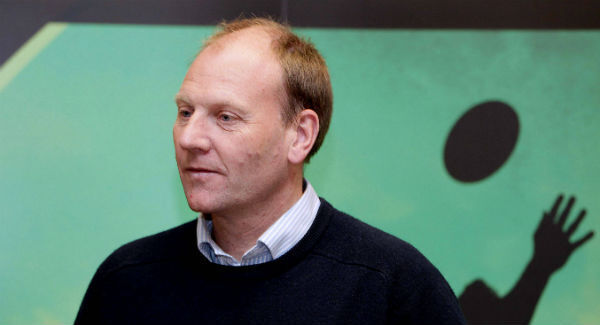
obody in Connacht had ever heard of Morgan Buckley when he arrived at the Sportsground late in 2008, with the future of the provinceâs professional side in his hands.
But chief executive Gerry Kelly and others in the loop knew that this was the biggest threat ever to the Connacht professional team.
Itâs presumed by most supporters that the closest Connacht came to being disbanded was in 2003 but, in fact, the biggest threat came six years later. On that occasion, a march to the IRFU headquarters or any other kind of protest would probably not have saved the provinceâs professional team.
The endless cycle of losing matches and losing money had taken as much toll on those in Connacht as it had on the IRFU. The union kept funding Connacht but couldnât see any return from what seemed to be a bottomless pit.
Connachtâs contention was that it wasnât being funded enough for it to go out and make money. Supporters wouldnât come to see a team that was not winning and in order for them to win, funding was needed to invest in players. It was a vicious circle but as the economic downturn hit, both parties had endured enough. Something needed to be done, once and for all.
Both the IRFU and Connacht went into the procedure with the genuine intention of finding a solution, but there were some within the union hoping that this would be the process which would finally see the demise of Connacht, while there were several people running the game in the province who could not see themselves surviving a forensic investigation.
The examination went on for several months. Players, coaches, staff and officers were interviewed; accounts were scrutinised, minutes of meetings examined, stakeholders interviewed, facilities audited, while the IRFU input was also thoroughly checked. Every aspect of Connacht was looked at.
The lengthy report detailed all of this but, essentially, it came down to two things. Connacht financially, in terms of return on investment, was a disaster, and in most other business environments would be closed. However, as regards rugby potential, there was a glimmer of hope. A potential gem had been spotted and the man who played God with Connacht, Morgan Buckley, recommended that this be given a chance and that life be breathed into it.
Buckley is from Cork and still lives in Kinsale.
He now works for World Rugby as its development general manager, travelling all over the world developing and implementing rugby programmes in 130 member unions.
But, for over a decade and a half, before he took up his current position in 2010, Buckley was one of the most influential people in Irish sport.
Operating under the radar with a low profile, he carried out extensive work for the Irish Sports Council, delving into as many as 70 sports, while the IRFU made extensive use of his talents in all four provinces and nationally in the domestic and professional games.
Buckley graduated as a physiotherapist from Trinity College before moving to New Zealand, where he did a Masters in sports management in the early 1990s and then worked in their domestic sports industry for several years. He worked with Steve Tew, the current New Zealand rugby chief executive when Tew was in the sports council there. Buckleyâs work with a sports management company included projects in Australia in the lead up to the 2000 Olympics, but in 1996, he came back to Ireland and helped John Treacy with the strategy which led to the formation of the Irish Sports Council.
He was project manager of the sports strategy group that conducted the first ever full review of sports in Ireland and looked at the whole long-term plan for sport in the country. A key part of that was the establishment of a Department of Sport, headed by a full minister at the cabinet table. This was to prove critical for Irish rugby, among others, in light of the investment and development plans that were subsequently launched.
Buckley did a lot of work with the International Rugby Board, as World Rugby was then known, after returning to Ireland. He developed restructuring plans in Canada and the United States, while extensive work in Argentina led to a restructuring of rugby in that country, where he project-managed their subsequent entry into the Rugby Championship.
In Ireland, Buckley worked with all of the Olympic sports, particularly sailing, rowing, boxing and athletics, and when the IRFU came calling in 2008, asking him to examine Connacht, it was one of the final jobs he took on before taking up his current position with World Rugby.
Buckley knew Irish rugby inside out by that stage, having started his first project in the mid-1990s while the IRFU tried to prepare for professionalism.
The IRFU were sufficiently well-resourced to run the game while it was amateur, but this needed to change rapidly with the advent of the professional era. There were very few employees, there was a huge volunteer culture and it was poorly set up to embrace the professional game. Ireland lagged behind other countries.
A benchmarking exercise, initially used in New Zealand, was applied to Irelandâs national team, examining the win rate.
âI think it was about 28%. Against the top countries, it was about 15%. By that, it meant that Ireland won only 28% of matches played. People knew that it was low but they were shocked when they realised how far off the pace they were,â said Buckley.
âThere were some very big decisions taken. In â99, Argentina beat Ireland and we were having one of our strategic planning meetings the day after that. It was like being at a funeral, it was the first time Ireland hadnât qualified for a World Cup [quarter-final] and they were all going, âwe canât let that happen againâ. Basically, it was agreed that more resources needed to be put into a high-performance system.â
The work of Dr Liam Hennessy, the IRFUâs national fitness director, was crucial. He could see the need to limit the number of games each player took part in, for proper pre-season training regimes, and for the alignment of the demands of playing for the provinces and the national team. Basically, all sides needed to sing off the same hymn sheet.
âIn those days, Irish playersâ strength, fitness and conditioning was miles off the pace,â added Buckley.
âWe had rugby talent but building people who were fit for purpose needed to be kicked up a gear, and it did under Dr Liamâs direction. The win rate goes up from something like 28% in the mid-90s, starts creeping up to 40, 50, 60 and 70% for the 2003 World Cup in Australia. After Argentina, they realised that if they didnât invest, they wouldnât remain competitive.
âThey had to put in place a system that brought players back. A lot of the players in â99 were playing rugby in the UK and in France. There was hardly any contracting of players. So they had to go to contracting and set up a professional games system here. That cost a huge amount of money and in that period immediately after â99, up to 2003, they laid down the real foundations for a professional game model.â
That was, of course, when the first threat to disband Connacht came into the public domain, as the IRFU examined the best structure to take the game forward.
âMy view, working closely with the IRFU, was that whenever a big decision had to be made, they all took the right decision. They werenât always the fastest at making those big decisions, which in many ways was a real strength. They based their decisions on hard analysis and an understanding of what business they were in; what were the key ingredients.
âThey realised that our model was closest to Australia. They had to compete with other sports â in those days, there were 28,000/30,000 players in the country. They had to build a domestic game model because they couldnât import players, and continue to resource it. In those days, the expenditure from the clubs in the All-Ireland League was significant.â
The IRFU realised that they needed to spend serious money developing their venues if they were to generate the cash needed to fund the professional game â not just redeveloping Lansdowne Road but also the provincial grounds.
âThere was a continual drain on the resources. That led to the first strategic plan and in the middle of that planning process, there was a funding crisis. They looked carefully at the resources available and thought, how they were going to keep five big ships afloat? They had the national team, and they had the four provincial teams.
âIn those days, the provincial teams werenât generating the revenues needed to keep their head above water. They had to be subsidised, to the tune of probably 100% to start with, then 80%, 70% and so on. The Leinsters, Ulsters and Munsters began to contribute 10, 20 and 40%. But Connacht were always in the 80 if not 90% bracket, because they were not generating the revenue to keep themselves going, while costs were rising.â
Buckley was project manager on the IRFU strategic plan which was produced in 2003, with the Connacht march taking place while it was being prepared.
The Celtic Tiger, the success by Ireland under Eddie OâSullivan, and Munster finally achieving Heineken Cup glory, all combined to bring about a glory period, before Leinster found their own path to glory and tapped into the vast cash resources available in Dublin.
But Connacht continued to struggle and by 2008, with the recession starting to kick in, Ulster also struggling financially, and the IRFU facing a huge bill for the redevelopment of Lansdowne Road (not to mention an uphill battle to sell long-term ticket packages) the union took a fresh look at Connacht to see if it continuing with the project was worthwhile.
âConnachtâs business model was struggling because their average home crowd was between 2,000 and 3,000, Leinster were getting between 8,000 and 12,000 at their games, while Munster were always going to get 10,000 and in the big matches it spiked. Connacht benchmarked lowest attendance rate, lowest everything and 90% funding model. So clearly there was something not right, something unsustainable.
âI had also worked with Scottish rugby to look at where they stood. With Murrayfield, they had a debt of ÂŁ22m on their balance sheet. They initially had four professional teams in mind, then they went to three. Then they took the huge decision to close the Borders down and then they went to two. The people in Irish rugby looked across the pond and said thatâs not viable for running a competitive international team. Two professional teams is too low a base to run a professional game. Three is struggling, two is really off the charts. Players needed to be playing a minimum of 20 games and a maximum of 24 to be competitive.â
Buckley spent several months looking at every aspect of Connacht and compiled a detailed analysis of the situation, benchmarking everything.
âWe put all of the facts on the table so any decision would be based on facts. The big issue was that there was huge emotion from the previous march. There was also a realisation from Connacht that they had gone beyond marching because they knew themselves what the business model looked like.
âThe review took about two to three months at the end of 2008. I submitted a report just coming up to Christmas. The key picture that emerged from it was that the IRFUâs number one aim is the success of the national team and to have a sustainable national team programme, you need to have the base of 120 to 130 professional players, maybe more.
âAt any given time, 25 to 30% of those players are injured in the pro game. At any given time, each team is allowed six international players max, non-Irish qualified players who are absolutely vital to the success. But four by six is 24 players. And then with your 25% out injured, if you have 100 players and 24 foreign, thatâs 76 to choose from.
âSo if you have only got 100 players, which effectively is three squads of 30, your Irish team base comes down to 50 fit players from which to run your international programme. Add another few people that arenât on form and then you are heading into Scotland territory, of trying to run a game with two teams. Very simply, if you go from four to three, at any given time, you are going to have in the order of 50 to 60 players that your national coach can select from. There is very little room for error to have a squad. That assumes those 50 players are on form, and it also assumes that we have got depth with those players and the right players are available.
âWhen you do the maths, Ireland needed four squads of 30 in the professional game, because that gives you the wriggle room to play at the level.
âThe next element of the equation was that Connacht had a brilliant academy programme. Nigel Carolan was doing outstanding work. They were ahead of the game in terms of integrating schools and clubs. What he was doing, and we can now see the result of it, was outstanding. You close that down, you then take out all of that out of the pipeline. Itâs not just a national team programme, itâs the academies that go with it.
âYou had a very effective academy programme, taking in homegrown players and converting them. Since then, it has come into its own and so has Nigel with the Irish U20s. You could see the value with the winning of the Pro12. If you havenât got an academy, you canât have a professional team playing week in week out, and then the national team falters.
âThe rugby argument is saying we need four strong provinces and four strong academies to feed the national objective. When you did the maths with the professional coaches, the CEO, the national coach, they are going, wow, take a whole team and the job is precarious, numbers wise. You damage the overall rugby model.
âIf you start sliding down, Scotland and Italy will overcome you. And then you have trouble with Namibia and Georgia giving Ireland scares in the World Cup. You could see that come World Cup time, a weakened Irish team would have been easier to knock off. These are threads. You pull that thread and next thing Ireland take a hit against a tier two country who we have never lost to in a World Cup.
âYou look at the Argentina model, they now have 12 high-performance centres. They are the country that is accelerating player development better than anyone and that is why they did astonishingly well against Ireland in the last World Cup.
âIn terms of the recommendation to the IRFU I made, it was based on a rugby point of view purely,â added Buckley.
The potential lying within the Connacht academy and the need to keep a professional playing roster of around 120-130 players were the key reasons for continuing to fund the province.
But the report also outlined that Connacht needed to be funded accordingly, if it was to achieve these objectives. So, those few people in the IRFU who were hoping for a recommendation for closure, were now being told they needed to put their hands deeper into their pockets.
Connacht were also being told that they needed to get their act together and move from a committee-led organisation towards a streamlined business board model. âThe report highlighted the need for massive improvement in the way Connacht was governed, run and operated. It highlighted the need for a professional games board (PGB), for proper decision-making and professional marketing, and that the facilities in Galway werenât fit for purpose. They needed a minimum 4,000 capacity to generate the revenues required. Connacht couldnât rely on an 80â20 model from the IRFU. The report made a recommendation to improve the model, the governance and decision-making.
âThere was a mix of best practice rugby, best practice governance, best practice in business, all of that. All parties would have had a lot of discussion on this. The IRFU made the decision that they would invest but there had to be improvement. I suppose all of that came together in May of this year.
âThe IRFU are good people who make good rugby decisions and they realised that the rugby decision was the primary one â that the business one had to be made work. The saving grace was the raw material, the potential and ingredients. But it needed a massive shifting in gear.
âI tried to keep it objective. It was purely âthese are the facts, this is the situation and this is the recommendation I haveâ. Results were dismal in the Pro12. I highlighted the consequences of closing it down but you couldnât predict the success.
âThe report also said there was no guarantee of success but laid bare the consequences of not investing in Connacht, and offered a doomsday scenario.
âThat was where the IRFU had to take a punt. Who could have predicted that Pat Lam would come along? From being bottom of the league, you would have been a mad man to predict the success. It just shows what can happen if the raw ingredients are there. Nigel and his lads run a bloody good show.
âOnce they made the decision, both parties moved quickly. The IRFU accepted the report and that they had to keep it going. But they accepted that the implementation and turnaround was equally important.â
Buckley joined the IRB shortly after that but he has watched the way Connacht and the IRFU have developed and believes a lot can be learned from the way the game has developed in this country.
Buckley managed to watch the Pro12 final on television, having just got home from working in Zimbabwe.
âI had just got in the door in time to see the match. I was watching it and cheering, it was fantastic. But I didnât create that success, it was Pat Lam and the players.â
However, it was his recommendation to breathe life into the rugby in Connacht which got them there. But what would have happened if it wasnât the rugby potential which swayed the argument?
âIf you were taking the situation on an accounting decision, you would have closed it down.â
- Connacht â The Team That Refused To Die is written by former Connacht manager and Galway-based journalist John Fallon of Media West (Ireland), who has been covering the fortunes of the team for over 32 years for a variety of print, broadcast and online media. The 224-page hardback book, which retails for âŹ19.99, is produced in conjunction with Inpho Sports Photography. The book is available at book.inpho.ie, and in bookshops and other outlets.