Victory over Ireland would be sweeter than most for Warren Gatland
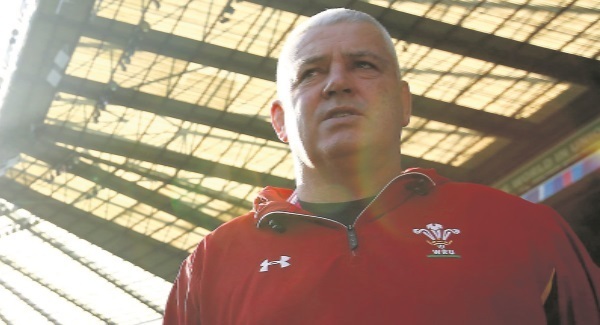
The IRFU axeing of Warren Gatland as head coach may have been the making of the Kiwi. It ensured he would never lack for any gravel in his gut, says Peter Jackson. Victory in Dublin is sweeter than most for the Wales supremo.
Victory over Ireland would be sweeter than most for Warren Gatland

WHAT transpired at a Dublin hotel one Monday night in late November 2001 has long since passed into history, how a firing squad from the Union’s high command summoned Warren Gatland to a room within a punt of the old Lansdowne Road

It was reputedly all over in eight minutes.

Gatland is now in his eighth year as head coach for Wales and the symmetry will not be lost on him — one year for every minute of the time it took his former employers to decide he was no longer up to the job of running their team.

Stripped of anyone in their ranks with a hot line to Nostradamus, they had no way of knowing that the man they had just fired would go on to win a staggering stack of English Premierships, European Cups, Six Nations titles, Grand Slams, and a victorious Lions series.

At 52, the durable Kiwi hasn’t finished yet and there is every chance he will give the IRFU another reminder of what they missed on this the opening weekend of the Six Nations.

Whether Gatland likes it or not, Wales run out at the Aviva Stadium tomorrow clear favourites to start stripping Ireland of their European crown.

An away win would tear a gaping hole in Irish prospects of a third successive title, an achievement unique not merely during the relatively short lifespan of the Six Nations but since the original Five began bashing each other about more than a century ago.

Joe Schmidt may have presided over unprecedented success but Gatland would doubtless argue that he would have managed something similar had they only shown him a new contract and more money instead of the door that night at the old Berkeley Court Hotel.

Should his Wales prove smart enough to loosen the scaffolding around an Irish team under reconstruction, there will be no shortage of noise from the ‘I-told-you-so’ brigade, not least those who voiced their dismay in letters to newspapers at the time.

Hadn’t Gatland ambushed an English Grand Slam in his last match as Ireland coach only a few weeks before?

His supporters seized the ammunition and took aim at the IRFU.

“This must rank as the daftest moment in modern Irish sporting history,’’ wrote one, Padraig Grant, from Wexford.

Another, from a ‘disgusted’ Paul Butler in Swords, asked: “What is it with the Irish people? Do we despise success? What was Warren Gatland’s sin?

“Was it beating France for two years running? Beating England brilliantly this year (2001). Or, ultimate folly, was it building an Irish team we can proud of?”

They had their points, no question, but neither could be accused of letting the facts get in the way of the story. During the finale to that year’s tournament, delayed until the following autumn by the UK’s foot and mouth epidemic, Ireland under Gatland had surrendered their own Grand Slam ambition with an embarrassing collapse at Murrayfield a fortnight before the England match.

Rather than turn the England win into a reprieve for Gatland and risk losing his ambitious assistant, Eddie O’Sullivan, they made the New Zealander pay for the Scottish debacle.

If the immediate consequences appeared calamitous, nothing could have been farther from the truth. Gatland has never made any secret of his belief that the IRFU had done him a massive favour, no matter how sardonic the tone of his voice.

“Maybe it was the best thing that ever happened,” as he’s said more than once. “Because if I’d stayed in Ireland I wouldn’t have had the opportunity to coach Wasps.” That put him in the same coaching League of Improbability as Brian Clough. Just as ‘Old Big ‘Ed’ had transformed two unfashionable provincial clubs into champions of England and, in one case, champions of Europe, so Gatland managed the similar transformation of a small London club who used to play on a postage stamp of a ground near Wembley.

There have been two major motivational forces in Gatland’s rugby life. The first came from the hunger that never left him as a player, of all those years and all those benches as a redundant substitute hooker to the best there has ever been, Sean Fitzpatrick — the hunger of being an All Black but never a Test All Black.

Ireland getting rid of him when they did can be seen in retrospect as the making of Gatland the coach. It ensured he would never lack for gravel in his gut by providing lorry loads of the stuff to see him through every eventuality.

It would be stretching a point to say he has never missed a trick to remind Ireland of what they lost but that sense of rejection has always been there. It was there for Gatland’s reincarnation as an international coach in the red of Wales eight years ago against Ireland at, of all places, Croke Park. It will be there again this weekend just as it will always be there, unspoken but no less eloquent for that. Every successful football coach, irrespective of code, needs a cause and Ireland gave Gatland his at the turn of the century.

Without it, he would not be where he is today, the longest-running Test coach in an arena where impatience for success has made his kind almost as swiftly disposable as their soccer counterparts. Nobody can be more impatient than the Welsh and yet Gatland has lasted in the only country on the rugby planet where the mood of the multitude is forever swinging from one extremity to the other.

For those fans, Wales are either the best team in the world or the worst, sometimes in the same season. In October 2007, for instance, Fiji knocked them out at the pool stage of the World Cup, exposing Welsh rugby to further public ridicule a few months after the humiliation of finishing bottom of the Six Nations.

They sacked Gareth Jenkins as head coach in the car park of the team’s hotel near Nantes the next morning and promptly made Gatland an offer he could scarcely refuse.

He surrounded himself with two of his allies from Wasps, Shaun Edwards and Rob Howley, and proceeded to win a Grand Slam at the first attempt.

12 months later they failed to prevent Declan Kidney doing the same for Ireland. Gatland has never been averse to dabbling in a little verbal subterfuge, hence his acclamation by the Scottish Lion Gavin Hastings as “the biggest wind-up merchant in the game, the nearest thing we have to an Alex Ferguson”. A few of his comments calculated at destabilising the opposition have proved counter-effective, notably one attack aimed at lighting Dylan Hartley’s notoriously short-fuse only for the volatile hooker to play a blinder in a thumping England win.

In the approach to the last leg of the Irish Slam in Cardiff in March 2009, Gatland let fly on a theme which back-fired spectacularly.

England were not the team the Welsh players hated but Ireland, an accusation made all the stranger given that Gatland would have to work with some of those ‘hated’ Irish players during the Lions tour of South Africa at the end of that season.

He had to make an apology to Paul O’Connell post-match without volunteering any explanation for saying it in the first place. Whether its genesis was to be found in the events of Monday, November 26, 2001, only Gatland knows.

There can be no denying he has achieved a longevity in a hazardous occupation which makes him international rugby’s closest equivalent to Arsene Wenger, football’s longest-surviving one club manager since Ferguson decided to retire and give the rest a break.

In that sense, Gatland has withstood the most severe test of all — time itself, out-lasting the longest lasting one-country coaches — Clive Woodward, Graham Henry, and Bernard Laporte.

Unlike the first of those two, he has not won a World Cup although, unlike all three, he has been afforded the luxury of a season’s sabbatical to pick a Lions squad.

Nobody will be the least bit surprised if he is given another next season as head coach for the series in New Zealand. In that respect, putting another one over the Irish will get him off to a flyer.

x

More in this section

Sport

Newsletter

Sign up to our daily sports bulletin, delivered straight to your inbox at 5pm. Subscribers also receive an exclusive email from our sports desk editors every Friday evening looking forward to the weekend's sporting action.

Cookie Policy Privacy Policy Brand Safety FAQ Help Contact Us Terms and Conditions

© Examiner Echo Group Limited