Finding balance to stay in top condition
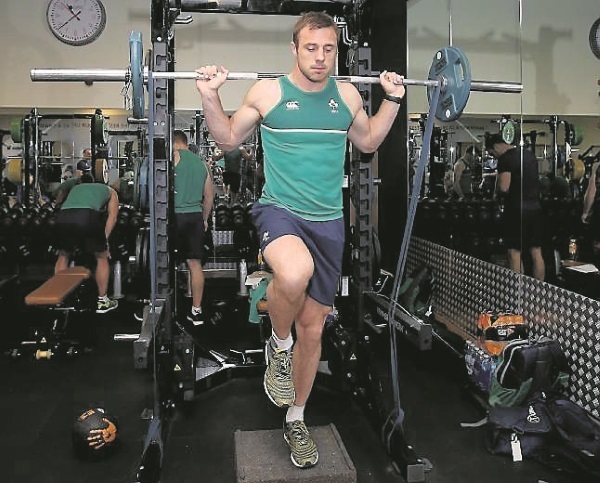
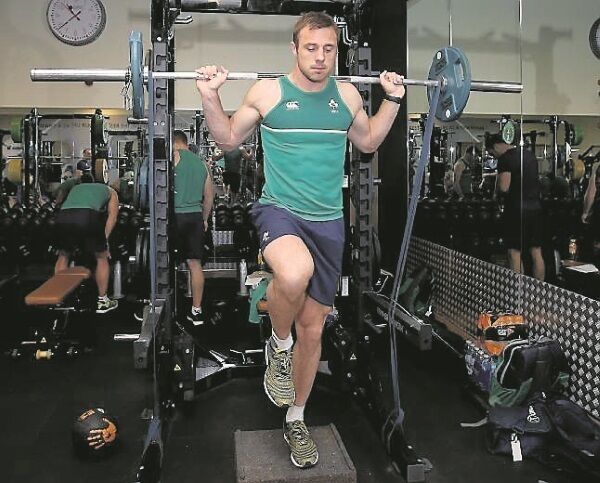
Photographs this week showed the Irish players being put through their paces in a punishing gym session ahead of Sunday’s crucial clash against Italy but Coughlan explained that such an approach is the norm in elite level sport.
“They’re not doing heavy training, they’re doing a nice bit of maintenance work to remind the body neurally of what’s required, of what works optimally.
“These guys have years of conditioning, so they only need that maintenance on game week to maintain their standards.”
Coughlan says the players’ bodies respond to the training stimulus.
“The balance between getting a team to taper down and to peak up is very tricky. It’s not a case of cutting everything, ‘a load of rest and they’ll be fine’.
“It’s all based on science: You want to taper off, particularly with multiple games over multiple weeks at a World Cup, because freshness is key.
“How do you attain freshness while maintaining some bit of progression?
“That’s the balance — you want to taper them off from the 10 or 11 weeks of training camp, but still have them recognise what a training stimulus feels like.
“The body of a player in training camp will adapt to the stimulus, whether it’s high reps or short explosive exercises.
“When you’re recovering from a previous game and you want a bit of a hit to be able to build up again for a game three days later, that means you must remind the body of the training stimulus.”
Coughlan also pointed out that the players can lift far heavier weights.
“First, I’d say the reps (repetitions) are quite low. Second, I’d have no issue with them lifting apparently heavy weights because they’re capable of lifting heavier weights, but they’re just stimulating the mechanisms in the body, reminding it. There’s huge research to support a favourable reaction from the body to that kind of stimulus hit.
“When I trained Mayo there was always a gym session on game week — quite heavy weights for about 15 minutes.
“And that was very individualised, none of them would do the same programme, but I’d be a strong advocate generally of a burst of heavy lifting, long recovery, to catalyse the body’s neural systems.”
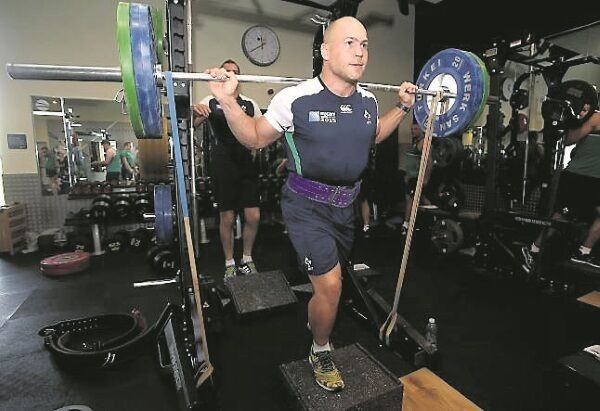
Breaking down the other pictures above, Coughlan pointed out that they don’t tell the full story.
“It’s also interesting to look at who’s doing what — guys who played a full 80 minutes or not — because it’s all individualised anyway.
“A guy who played 80 minutes might do three reps, a sub who played 30 minutes five reps, and an unused sub (Richardt Strauss) nine reps. I wouldn’t be surprised if it was down to that detail, knowing the calibre of the trainers involved.
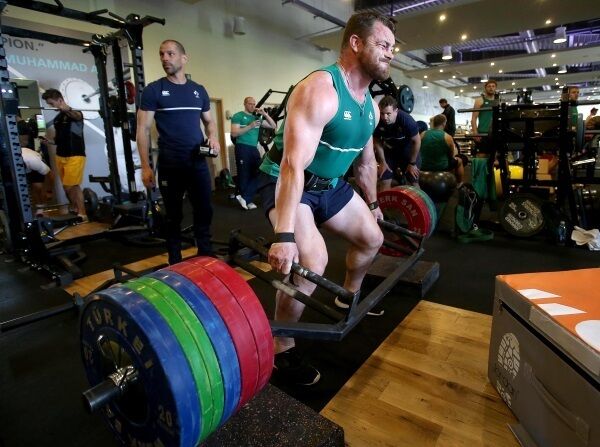
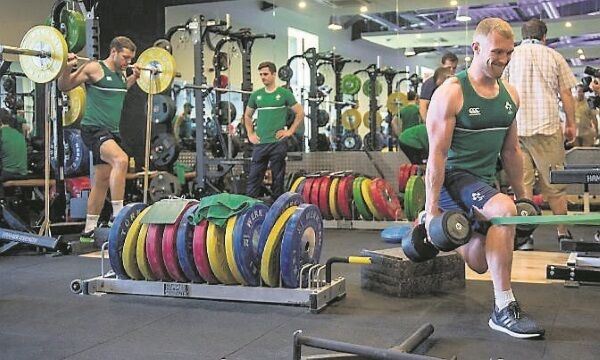
“You’d also expect to see those bounds and jumps and lunges (Paul O’Connell and Sean O’Brien) — that makes total sense, because those one-legged movements could work from a rehabilitation perspective (as in the Tommy Bowe image). There’s a big issue now in sport with what’s called the PAP concept — Post-Activation Potentiation. If you activate a muscle in an isolated way, tire it, then it behaves better if you work it in a dynamic way.
“A player doing a lunge (like Keith Earls), for instance, may be activating one side — but that could help him to go off and do his sprints: it’s like sending a message, ‘wake up that big muscle so I can do those runs’. By the way, they may do a similar session in a day or two again, but the weights may be reduced even more.”


CONNECT WITH US TODAY



Be the first to know the latest news and updates