Clive Woodward reveals how to win a World Cup
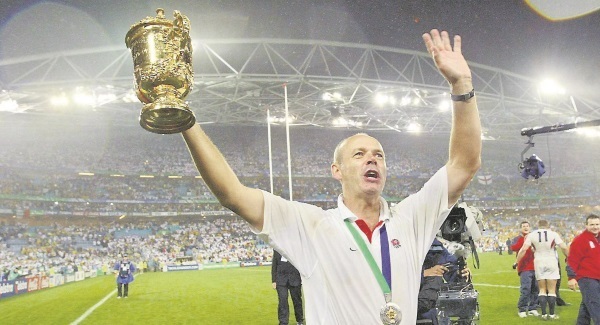
FROM the outside, it is difficult to see what links Clive Woodward, an
Israeli military expert and a psychologist from the Royal Ballet. But in truth, the fact is they all played a hand in Englandâs road to becoming Rugby World Cup champions in 2003.
As teams around the world now prepare for their own assault on the Webb Ellis Cup, an insight into the workings of Woodwardâs team reveals just quite how much preparation will be necessary for those wanting to lift the famous trophy.
Today, much has been made of the countriesâ decision to put their players through gruelling training camps in the likes of Denver and Qatar but Woodwardâs advocation of the mental side of the game demonstrates how a different obstacle is on the horizon. One the former England boss called in help to overcome.
âI actually donât think I am very good at thinking of new ideas on thought preparation,â said Woodward. âBut what I am quite good at is listening to other people and saying âthatâs good, thatâll work.â
âI was trying to find everything that I thought our main competitors, New Zealand, South Africa and Australia werenât doing. How are we trying to get an edge?
âWe brought in various people, mainly just to work with me, I never exposed the team to these people. I brought them in just to make sure what we were doing was cutting edge in every aspect.â
Bringing in the individuals to keep England at the forefront of world rugby was by no means an easy challenge for Woodward and that is perhaps shown by the range of characters who joined the set-up.
Take Yehuda Shinar, whose background with the Israeli military provide the management team with a whole new approach on how the squad should be reacting in pressurised situations.
âI heard about this guy and I literally got on a plane the next day to Tel Aviv to see him,â Woodward said.
âI spent a week with Yehuda Shinar and he is a brilliant guy. What came out of that whole meeting was how the big defining thing in a military aspect was how a solider thinks correctly in pressurised situations.
âWe coined this word â âTCUPâ. Thinking Correctly Under Pressure. You look at the match situation. Did they make the right decision? Could they respond to it?
âYou certainly started to find out which players could perform under pressure. We started to leave players out who were very talented, but did I totally trust them to perform under pressure? The answer was no.â

hinar was not the only one invited in to help England on their quest for glory. Britt Tajet-Foxell, a sports psychologist for the Royal Ballet was another, as was Humphrey Walters, who specialises as an expert in leadership and teamwork.
Often these individuals would not meet the squad, instead acting as a soundboard for the management to bounce ideas off, but their input and ideas were clear for all to see. Even if the public was not aware of it at the time.
âWalters went around the world on a yacht race and he came up with some amazing things,â said Woodward. âJust for example, he helped with what we now call marginal gains. Doing 100 things 1% better.
âThere was one idea he came up with which was so flipping obvious it will drive you nuts. We did all this analysis and said how we were playing well in the first 10 minutes of the game, but the 10 minutes after half-time we werenât as good. And he just goes, âwhatâs happening at half-time?â
âSo we started to look for the first time, what do we do at half-time? He said âwhy donât you completely change your strip at half-time?â And I said âdonât be daft, we have never done that ever in our whole lives. Why would we do that?â
âHe replied saying âwe have got to get our mindset back to the beginning of the game. Think of when you start the game in rugby. You come out of the changing room, bang! National anthems, fireworks! Look how you come out for the second-half. Looking dirty, you wander onto the pitch, the referee goes and out you go.â
âSo we completely changed this. And I remember Johnno [Martin Johnson] looking at me and going âweâre not doing that, thatâs the most ridiculous thing to do.â So we tried it and, of course, probably because it meant the players got two shirts instead of one, they all thought it was a good idea in the end.
âWe came in. We completely stripped off, it took them about a minute. There was towels for them to towel themselves down and they put new kit on.
âI remember the first time we did it was in France and the commentator goes, âwow, look at England.â The French team were wandering onto the pitch and we came out bang, bang, bang.
âDid it make a difference? I havenât clue. But we started to think about this and we were doing things other teams werenât doing.â
While those marginal gains may have helped England achieve their ambition of winning the World Cup in 2003, there is no getting away from the incredible pressure the squad was under.
It is the same pressure the likes of England and Ireland will be under this year, weighed down by the knowledge that their country expects them to perform. In Woodwardâs mind, there is only one way to combat it â prepare for the worst.
âThis pressure is there and itâs not going to go away. I remember in 2003 we had South Africa in our pool,â said Woodward.
âLiterally months beforehand we had a meeting, how are we going to handle it if we lose that game? It doesnât mean weâve lost the World Cup because itâs a pool game, but how are we going to handle it?
âHow are we going to handle it individually, collectively and with the media? And so you document all this. So if it were to happen â which it didnât â you can handle all the negatives. I would probably say I spent more time with the team in what we called the war room â the coaching room â just discussing things. We had some really interesting conversations. I think one of the secrets to the England team was the knowledge of the players, it was fantastic.â