Anthony Foley: Planning key for Leinster
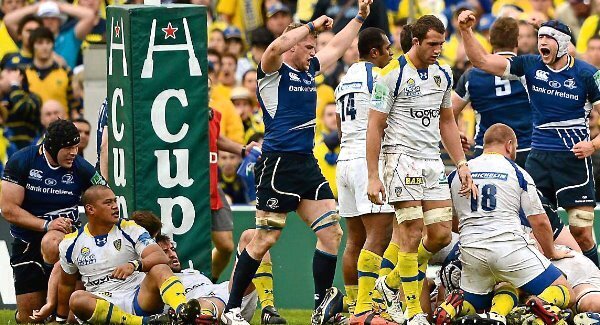
Few people know more about all that than Anthony Foley. Seven times Munster have been detailed to face Gallic opposition on the continent at the European Cup’s penultimate stage and ‘Axel’ has been on call for all but one of them.
Four visits as a player yielded two victories and a pair of agonising close calls and he was assistant to Rob Penney this last two seasons when the province fell just short of Clermont Auvergne and Toulon in Montpellier and Marseille.
“We got used to them,” he says of the frequency of those engagements, the smile on his face testament to seminal victories over Toulouse in 2000 and Castres two years on, and to other days when they lost nothing of themselves in defeat.
As in so many other ways, then, Munster were the trailblazers in an Irish context and the province’s current head coach is clear and concise when asked what it is that Leinster must do as they face champions Toulon in Marseille tomorrow.
“You try to control all the variables. You get your chef, you make sure you’ve got a good hotel. You make sure you’ve got your travel arrangements right, you make sure you have no excuses. You get over there in good time and get relaxed.
“The one thing you are guaranteed is that it is going to be a cracking atmosphere. As a competitor you are going to get up for that, regardless. It doesn’t matter who you are. Once you have that, you need a good, solid game plan.”
This where the uncontrollables kick in, of course. Leinster tomorrow afternoon will likely try to inject some tempo into the game. Toulon, you would imagine, would prefer to slow it down and play the semi on their terms.
Foley’s take is that teams should not try to do too much. Fancy rugby rarely wins contests of such import. Doing the small things right is key, as Munster learned to their cost in 2010 when they failed at the basics against Biarritz in San Sebastian.
“It will probably be lovely and sunny over there,” said a wistful Foley. “Twenty degrees, bands playing in a lovely stadium. Great atmosphere. I expect a cracking game and just that simplicity is something that suited us. Don’t do too much. Use your goal kicker, get three points and put pressure on them.
“When we were successful over there we got the opposition chasing us rather than us chasing them. Toulon are no different from the last number of years in that if they get ahead, they will slow the game down and play it at a pace that is good for them. The only way you change that is by getting ahead of them and driving them.”
He speaks from experience.
Fifteen years ago, for example, when Ronan O’Gara and Jason Holland hit Toulouse with two quick tries after the interval at ‘Le Stadium’, the effect was to force their hosts into a game of chase which they didn’t win.
“You give yourself an opportunity by forcing the game and forcing them to chase you. Now, that means a good, accurate place-kicker, no mistakes, good discipline. Again, the small things. Get them right and you’re not a million miles away.”
Leinster used that same blueprint three years ago when they wiped out a six-point half-time deficit against Clermont Auvergne with a pre-planned move that saw Cian Healy charge over for a converted try.
When Jonathan Sexton tacked on a penalty moments later, the narrative had swung in the Irish side’s favour and, though Clermont pounded their line down the stretch, the visiting defence just about held out to claim victory.
Kevin McLaughlin was part of that epic rearguard and, though Leinster won three Heineken Cup finals in that era, there are many who would argue that the win that day in the Chaban-Delmas was that side’s greatest achievement.
“It was certainly up there as one of our biggest, if not our biggest win,” said McLaughlin. “What signifies how big a win was the sight of Joe Schmidt beside the corner flag and nearly on the pitch for the last three minutes, which I’ve never seen him do before.
“And then seeing him sprinting on to the pitch at the final whistle as well. This is a guy who normally keeps his emotions in check. It was against his former team so he had spent weeks prepping us for it. It was a huge occasion for the club, especially as we went on to win the tournament. These are the kind of games you have to win to win these tournaments.”
Like Foley, McLaughlin has experienced dejection as well as renewal in France in the spring. In 2010, he started for Leinster against Toulouse on a day when they never led and thus never enjoyed the whip hand in front of a passionate home crowd.
His recipe for success is not unlike Foley’s.
“You’ve got to be very accurate. You have to go in with a game plan and stick to it. Things like heat and different conditions come into it as well as factors at this time of year. You have to have that perfect game plan and deliver it. We have spent two weeks analysing Toulon and realising that there are opportunities there. Clermont a few years ago, there was an element of luck in that win, with Wesley Fofana dropping the ball at the end, so you need that too.”
What is mostly forgotten about that day in Bordeaux is that Leinster were far from exemplary. When Schmidt, Leo Cullen and Shane Jennings spoke afterwards there was a clear sense of disappointment with how they played.
“We still beat them and an element of that was just belief,” says McLaughlin who is close to returning from injury. “We had been there before and won in France. That does count for a lot. And a lot of guys who will play on Sunday have done that before. Coming in as underdogs is an advantage to us in some ways. Toulon may not see us coming and we’ve got to shock them: play to the absolute best of our ability and shock them early on. Get the tempo up and don’t be afraid to play our game.”
Leinster’s form may not give much reason for optimism, but Munster have shown in the past that lack of form and, on one occasion, even games need not stand in the way of folkloric performances against France’s finest.
In 2001, the foot and mouth outbreak saw the province go 12 weeks without a game prior to their semi-final against Stade Francais and the resultant 16-15 loss was one of the hardest defeats that side ever had to take.
“It’s the ultimate test, in a lot of ways,” says McLaughlin of this French test, “but it is extremely exciting as well. You are playing in front of 30-40,000 people, the conditions will be perfect and you are playing the reigning champions and the best team in Europe. It just doesn’t get any bigger. You wouldn’t want to be anywhere else.”