Stuart Lancaster and Joe Schmidt: The iron hands in the velvet gloves
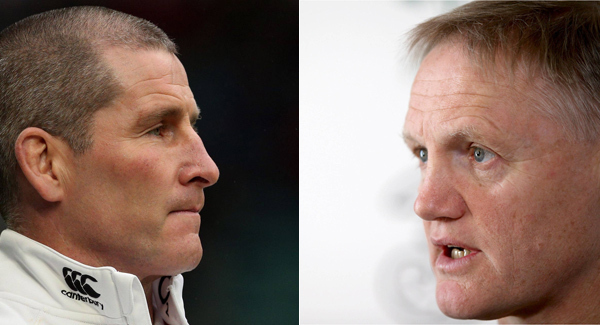
They say the characteristics of a team reflect that of its coach, and in the case of Joe Schmidt and Stuart Lancaster, there’s more than a ring of truth to that.
I can’t say I know either coach to any degree but nonetheless have been greatly impressed by both. Of the two, Lancaster faced the bigger challenge when handed the reins of the national side.
He took over in a caretaker capacity after England’s disastrous World Cup campaign of 2011, when the incumbent, an iconic figure in the world game in World Cup-winning captain Martin Johnson, deemed it necessary to step down from the role after the fallout from England’s exit at the quarter-final stage.
It wasn’t so much that England lost to a French team — in disarray at the time — that forced Johnson’s decision, but the damage done from a never- ending sequence of, off the field, misdemeanours that tarnished the image of the national squad.
Remember the allegations of dwarf throwing in Queenstown, the accusation of harassment by a hotel chambermaid in Dunedin against a trio of England players and Munu Tuilagi’s ill-advised prank when he jumped off a ferry in Auckland harbour in the days following their tournament exit.
That must have been the last straw for Johnson, a much misunderstood individual and someone I admire greatly. He is a huge loss to English rugby and was let down by a few idiots.
The Irish players also enjoyed some down time in their opening week in Queenstown but it never made the papers.
Apparently some photos of the players having a few pints on a night out were about to be published by a paper on the morning after the key pool match against Australia, but Ireland had the temerity to beat the Wallabies and take the sting out of the story. Good on them.
There has always been different rules applied to an English team on tour, regardless of the sport, but when you have a connection to the royal family as Johnson’s squad had, with Mike Tindall married to Zara Phillips, the eldest granddaughter of Queen Elizabeth II, you have to be aware that your every move is being scrutinised.
Two English tabloids sent photographers whose sole purpose was to track Tindall’s every move throughout New Zealand.
You could argue that the only way was up for Lancaster when he was parachuted into the role. The sole reason for his temporary appointment was because he was on the coaching staff at the RFU at the time and was only offered a holding position for the 2012 Six Nations to allow the RFU trawl the world for a marquee name.
Lancaster harboured no great long-term ambitions but immediately set about changing the culture within the squad and regaining the trust and respect of the English rugby public.
One of the first things he did was remove the squad from the palatial Pennyhill Park Hotel in the beautiful Surrey surrounds and decamp to the less fashionable setting of Leeds rugby club.
He felt a need to remind all in the England set-up of who they represented and identified the need to rediscover a bit of humility.
I was introduced to the man for the first time by Sky Sports commentator Stuart Barnes when both were in Musgrave Park for the recent Saxons game, and in that brief encounter the warmth and sincerity that comes across every time you see Lancaster interviewed was instantly recognisable.
In the end, the RFU were so impressed with the man, they abandoned their search for an overseas coach.
The problem for Lancaster now is that, recognising the excellent job he has done in rebuilding the image of the national side, that is no longer enough. On the eve of hosting a World Cup, the English want a Six Nations championship to launch their bid towards regaining the Webb Ellis trophy next October.
Under his stewardship, England have finished runners up in three championships since 2012, losing out on the last two occasions on points differential to Wales and Ireland. Second is no longer good enough.
Lancaster has built a squad with massive depth in quality amongst the forwards. If everyone is available up front, he has the capacity to field the best forward unit and support off the bench of any country at the World Cup. His problems have revolved around who should wear jerseys No 10, 12 and 13.
Two of those conundrums appear to have been solved with the emergence of George Ford and Jonathan Joseph over the last few months but, as a unit, the England three-quarters are far from the finished article.
Despite the fact that Lancaster has come out on top in his three Six Nations head-to-heads against Ireland to date, he is under more pressure to deliver a victory in Dublin next Sunday than Schmidt.
The opening win over Wales set the bar for England but they took a noticeable step backwards against Italy.
Dare we say it but England have become likeable under Lancaster and I even found myself rooting for them against Wales, despite a close affinity to Warren Gatland. Blame Lancaster for that.
That brings us nicely to Schmidt, a man hailed as best in class in the international game at present. There is no doubt in my mind that without the New Zealander at the helm, Ireland would have lost a number of those extremely tight encounters that the team has closed out in recent times.
The games against France last season, South Africa and Australia in November and France again last time out all went to the wire.
The difference on all those occasions was that Ireland had the belief, technical expertise, mental and aerobic capacity to close the deal. Schmidt’s hand was all over three of those attributes.
The soft-spoken, self-effacing persona you see on television is far removed from the highly focused tactical genius that drives operations behind closed doors.
Schmidt knows exactly what he wants from a player, is ruthless in his search for perfection and has no hesitation in cutting someone adrift if they fail to conform to the requirements of the collective.
Better still, he has the communication skills and technical coaching nous to demonstrate exactly what he expects from a player in any given situation. Deliver on that, and you will be picked. If you fail on that front, he will find somebody else to do the job.
The net result is that every player and team he puts out have a clear vision and blueprint of how to go about beating the opposition.
Of course, it won’t always work, as games at this level often come down to a mistake or a missed kick, but at least Schmidt has instilled a belief in every Irish side taking the field, regardless of whether or not star names are missing, that they have the capacity to beat any opposition. That hasn’t always been the case.
More often than not, he has been spot on when it comes to selection which is every bit as important as devising the game plan required to win. He chose a midfield combination of Jared Payne and Robbie Henshaw against South Africa when nobody saw it coming.
He started Ian Keatley against Italy when the general expectation was that Ian Madigan would start and Jordi Murphy over the inform Tommy O’Donnell when Jamie Heaslip was injured for that game.
A key decision this weekend revolves around the absence of Heaslip once again, with calls for the inclusion of Iain Henderson over Murphy to bulk up the back row to match the physical presence England have in that area.
Whatever Schmidt decides when the team is announced on Friday, the media and general public will accept it and move on. Schmidt has earned that right. Question is, will the all-round package be sufficient to beat England this time out?
CONNECT WITH US TODAY



Be the first to know the latest news and updates