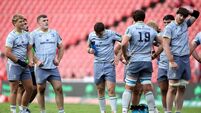
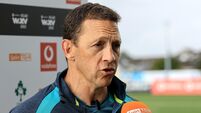
Feek’s scrum programme pushing forward
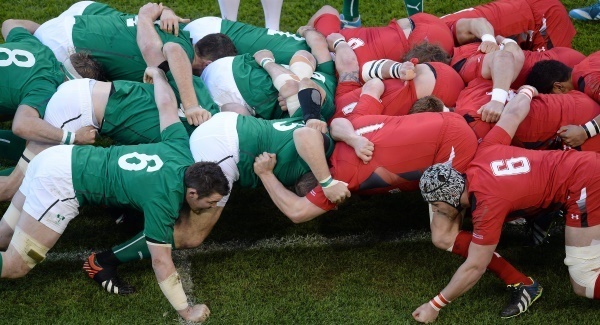
Renowned for his astute technical approach — he likens forwards perfecting their scrummaging to golfers tinkering with their swing — the long-time All Blacks forwards coach says he gets his greatest kicks out of giving greenhorn props the tools to become big players on the international stage.
Cron’s joined-up thinking ensures he has an input throughout New Zealand’s elite structures, not just at the top table. In appointing Greg Feek — one of those who learned his trade on Cron’s watch while with Canterbury Crusaders — as full-time national scrum coach and to aid the National Scrum Development Programme (NSDP), Ireland look to be borrowing from the model of the best rugby team on the planet.
Or are they?
Last October, IRFU director of rugby Eddie Wigglesworth admitted their plan, first hatched in 2012, to bring in a high performance scrum coach had been shelved as they instead turned to a number of indigenous coaches to fulfil the remit.
“We decided to take a totally different tack as to how we would do that, because bringing in one guy and putting all your eggs in one basket we decided, well, that’s stupid,” said Wigglesworth. “One individual overseeing Irish scrummaging meant we were importing a culture, and we feel we have a very strong scrummaging culture in Ireland going way back.
“There are three or four scrum coaches out there, like Cron and Enrique Rodriguez, but it is far better to have a menu of these guys who Colin [McEntee, IRFU high performance manager] can bring in to do sessions rather than one guy trying to do a national programme while driving around the four provinces. That’s not going to make a difference.”
It therefore looks likely that Feek’s role with the NSDP — into which he has already had an input as Leinster scrum coach — will be cooperative rather than top-down, although former Irish international hooker Bernard Jackman, the future head coach at Grenoble, believes a unified approach could yield dividends. “It makes perfect sense that the scrum coach for your national team would be the one who is teaching the other scrum educators in Ireland what he believes is important; you’ll then have a nice follow-through from underage to senior levels,” he explains.
“Greg Feek came through a similar system in New Zealand, under Cron’s tutelage. If you look at [Super 15 teams] the Crusaders, the Highlanders and Blues, they all have a similar scrum policy, which comes from the NZRFU. That aids the All Blacks, because you’re not trying to retrain guys when they come into the national setup; they all have the same profile and the same way of doing things.
“Feek would have seen how Cron ran the New Zealand scrum development programme, and now he has the ideal opportunity to do that on a national level in Ireland.”
Front five players — and particularly front rows — are later developers than most. Mike Ross was still lining out in the All-Ireland League aged 23 with no signs of a professional career on the horizon, but developed into such a valuable commodity at tighthead prop that Ireland spent a couple of seasons flogging him for 80 minutes, praying he wouldn’t get injured.
Thankfully, off the back of a winning Six Nations campaign where the scrum performed well, Ireland are now in a position of relative strength at prop. Martin Moore, Jack McGrath, Dave Kilcoyne and James Cronin are now challenging Ross and Cian Healy while John Ryan, Denis Buckley and Stephen Archer are among those in the mix too.
Ensuring they and other aspiring props in Ireland are on the same page technically will surely be a big part of Feek’s remit. The IRFU yesterday stated he will “work with the provincial and underage scrum coaches to identify and develop scrum talent” while focusing on “improving players’ general understanding of scrum mechanics and technique”. Jackman admits the provinces will have their own take on the scrum but it is at underage level where Feek’s input will be key.
“It’s not just props, it’s teaching our development coaches the best practice for locks and back rows too, because it’s an eight-man process,” he says.
The spreading of Feek’s expertise around the four provinces — he has worked full-time with Leinster since 2010, helping out Ireland only on a consultancy or part-time basis — will be invaluable, it’s also about time the national side appointed a full-time scrum coach. Last October, forwards coach John Plumtree identified the need to “have our own people involved, rather than going to the provinces” and Jackman agrees Ireland’s management team was a little light up until now.
“Until Greg came in, we were probably short a coach. Joe Schmidt does so much coaching himself, which is unusual, and then you’d Les Kiss on defence and John Plumtree in the forwards, whereas a lot of other international teams would have a bigger staff. I think there was a gap there; it’s very positive that the IRFU are supporting Joe and giving him the opportunity to add to his support staff.
“Greg has been double-jobbing to a certain extent up until now, but with a World Cup coming up, there’s just one job and one focus — to ensure the Irish scrum is consistently delivering.”
“First and foremost, the scrum coach will sit down with the scrum leader or leaders. That often tends to be a prop, mostly a tighthead, so in Ireland’s case Mike Ross would work very closely with Greg.
“They would design a template of the options Ireland would have on their own ball, what Ireland need to do tactically and technically to create the different types of ball you get off a scrum. That’s 70% of what they do; the other 30% is keeping an eye on the opposition.
“Greg would be looking out for their collective power and individual strengths, but it’s not just him doing the analysis. They would generally watch the footage together, bounce ideas off each other and come to an agreement as to the best plan of action.
“It’s important to get player buy-in here; modern players want ownership of the gameplan and the different fundamentals that go into it, whether it’s counter-attack, lineout or scrum. Really good coaches facilitate that and will steer the conversation towards the way they believe things should be done. But if the players have a real desire to do something different, you try to give them the tools to use that as well — you’re more likely to get an effective result if the players believe in the plan.”
CONNECT WITH US TODAY



Be the first to know the latest news and updates