O’Connell happy to get back to basics
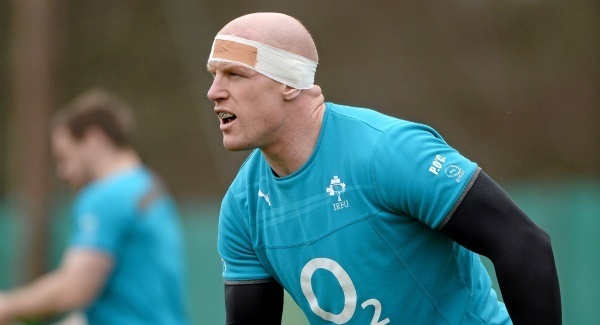
Time is a-ticking for the Munster lock but he spoke in certainties yesterday. Time is limited, but he has his pathway mapped out this next few years. As he said before, the 2015 World Cup is within his compass. Maybe even more.
With his extra years comes a gravitas. When he dissects what Ireland could have done better at Twickenham two weeks ago and what they will need to do tomorrow against Italy at the Aviva, you listen.
London first.
“There is probably one lineout I would have mauled towards the end of the game. There were a few real clever plays called by Johnny [Sexton] whereby certainly one of them was a plan to either score a try or draw a penalty. I felt we had done what was required to draw the penalty but unfortunately it didn’t come.”
Had he the opportunity again, he would have called the maul but these are flick-of-a-coin moments in a game of intensity and brute force. To maul or not to maul: who can say what was right? Actions are more clear-cut than decisions.
O’Connell reckons every player in the Ireland squad could look back at that 13-10 defeat on DVD in a different room and by the end every man would emerge with a sheet of paper listing the same five things they did wrong.
That clarity of purpose is to be cherished.
“We have a certain number of plays, not a whole lot of plays, but we all know where we are supposed to go and when we are supposed to go there. We all know what lines we are supposed to run.
“When something breaks down, even when something breaks down out wide, it is easy for me to identify, or a front row to identify, because we have that sort of knowledge of what each other are doing.”
It sounds surprisingly basic. Schmidt has a reputation as something of a tactical guru yet listen to O’Connell and it seems as though the Kiwi’s greatest gift to this team is his ability to strip away unnecessary layers.
“The best structures I have played in are not that elaborate,” said the 34-year-old lock. It is a tough game, a tiring game, and the less you have to think under pressure, the better it is.
“It is about actions being automatic come game day and the more automatic they are, the more you can do them as part of your subconscious, more aggressively and with more intensity.”
Schmidt has aided that process by making just one enforced change for this round four appointment. Players, combinations and moves have been ingrained this last two months now and O’Connell made plain his implicit trust in the coach again yesterday.
That will be reciprocated tomorrow afternoon when Ireland will have to balance the need to adhere to basics and treat Italy with the respect they deserve, alongside the knowledge that every point on the scoreboard could be crucial seven days later.
Few people know the ins and outs of such a scenario like O’Connell who has faced many a similar situation in the 13 years he has been playing Heineken Cup, with all that tournament’s permutations, yet it is anything but an exact science.
“I remember playing under Anthony Foley in games and I’d have been shocked when he elected not to kick toward the posts and went to the corner. At times, staying in the other team’s half of the pitch, five, six, seven metres from their line can do as much damage as taking the three points.
“But if you are going to elect to do that, you need to be pretty confident you’re going to do damage. That’s a decision you have to make and you’ve got to stand by and back it. But in international rugby the three points is very important as well.”
CONNECT WITH US TODAY



Be the first to know the latest news and updates