Deal or no deal? Contract talks a delicate dance
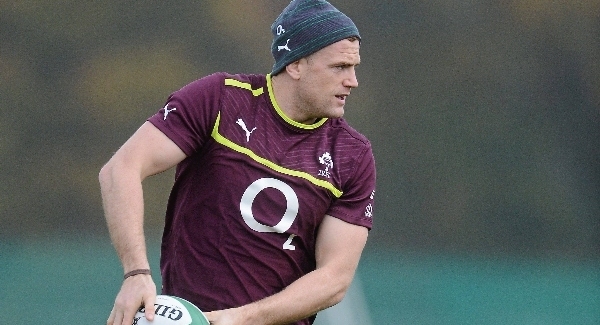
The recent back and forth about Jamie Heaslip and Seán O’Brien’s professional rugby futures led us to consider an obvious question. How exactly are these contracts negotiated?

Deal or no deal? Contract talks a delicate dance

It was a little surprising to find that some of the agents who negotiate professional rugby contracts were perfectly willing to talk about that process.

It wasn’t surprising at all to learn that it was under the condition of anonymity, though. With that in mind, we threw out the traditional set of questions.

Who? The agents see a crucial difference in the identities of the people who sit across the table from them when a player’s future is up for discussion.

The central contracts system has served the IRFU — and Irish rugby generally — very well but it leaves the provincial bosses negotiating “with one hand tied behind their back”, as one agent puts it, because Lansdowne Road has the last word on player contracts.

“The provincial guys have evolved in their views, certainly,” said another agent.

“I don’t know if the views of key people in the IRFU have changed as much, though, and I would think that the extent to which the views of the union have changed is very limited.”

That agent expanded on the limitations of dealing with provinces rather than with the IRFU centrally: “The wisdom in Munster and Leinster is almost redundant, or neutered, because ultimately they don’t have control over their own destinies. They can bring very little influence to the table, which is a pity because the people in the provinces bring a very good understanding to the table of what needs to be done and how things should be done.

“It’s a pity that it’s the case that they don’t have more power to negotiate, in the short to medium-term anyway.”

A different agent points to the fact that provincial executives can be better informed than their IRFU counterparts: “People are better informed now on both sides of the table generally but someone in Munster or Leinster can get in touch with someone in Stade Francais or Leicester and even if they’re not getting the exact figures in terms of pay, they have a better idea of what’s going on in the market than would have been the case 10 years ago.”

That agent echoed his colleague, however, on the provincial executives being hamstrung by lack of independence: “It’s a negative on this side of the table — you know the CEOs have one arm tied behind their back.

“But in general terms it’s hard to argue that the union have done badly here when you compare them, say, to Wales and Scotland, which are in a mess.

“The stronger the clubs get in Europe, though, the weaker the unions get. It’ll be exactly like soccer, where Manchester United decide whether Wayne Rooney plays for England or not because they (United) are the ones paying his wages. You could certainly see a situation where the clubs dictate terms.”

What? The basic material of the contract is relatively mundane, say the agents. There aren’t morality clauses or special sections forbidding adventure sports. “It’s generally not problematic,” says one player representative of the sheet of paper itself.

“It’s certainly not radically different to what pertains in other sports. Punters wouldn’t be surprised by it: there aren’t odd clauses or anything.”

Still, surely there’s an element of Jerry Maguire-style posturing at some point? A bit of “show me the money”?

“Over 90% of the time the negotiations are straightforward,” says another agent.

“Player A is on X amount with this province, and Player B, in the same position, is on about the same money with another province.

“When you get out of the elite list of players, the rest are pretty straightforward: arguing for a few grand extra isn’t a deal-breaker.

“The Jerry Maguire stuff happens when a player is beginning to make it after being signed, initially, to a bad contract, or in the case of a player who’s badly wanted by another club.

“That’s when the clouds come, and what happens then is this: if you know you’re not bluffing, does the other side know that? Which is true in all negotiations, obviously.”

Where? Contrary to what you might believe, contract negotiations don’t take place in a particular office in Lansdowne Road, or in a smoke-filled hotel room. Coffee and biscuits aren’t a prerequisite.

“It’s like business itself,” said one agent. “It happens all the time, in all sorts of places. In the car, after games... everywhere.”

Another pointed out that different player representatives have different approaches.

“You’ve to be careful of generalising,” he said. “Every agent has his own way of negotiating: I might prefer a cup of coffee and a chat, while another agent might prefer to have a formal sitdown in an office. But it’s probably true to say there’re fewer office meetings than you’d think.”

When? This, according to the agents canvassed, is one of the key issues.

When they complain about a lack of flexibility, the timing of contract negotiations is what comes up again and again, though one of them, at least, feels that’s improved in recent years.

“One of the breakthroughs in the last few years is that the four provinces and the union have changed,” he said.

“There was a time when contracts were left go very late — you could start discussing a contract in March or April which was up in June, which was too late altogether.

“In the last few years, though, that’s improved, and those kinds of discussions tend to begin the previous November rather than a month or two before the contract ends.

“That doesn’t mean the agent can’t be approached a long time before the end of that contract, because that can happen, but at least it doesn’t go as late as it used to.”

He added: “One thing rugby could learn from is the flexibility in soccer, where you see a player who’s got another couple of years on his contract, but suddenly there’s an announcement that he’s signed an extension long before his original contract runs out.

“In rugby, take James Hart, with Grenoble. They extended his contract to take cognisance of how well he was doing, which shows flexibility.

“In the main, though, issues arise with elite players. The rest of them... dare I say it, you could do it.”

Steady on.

How... friendly? That depends, too — sometimes on the level of preparedness on both sides of the table.

“It’d be wrong to say ‘it’s all friendly 100% of the time’ just as it’d be wrong to say ‘its completely confrontational 100% of the time’,” says one agent.

“You could have a situation when an offer is made by the other side which is a joke and which reveals that no homework has been done — which doesn’t recognise certain developments in the player, for instance.

“By the same token, you can have someone on the other side of the table who doesn’t do their homework either, and throws out a figure which is a complete bluff as a starting point. And that can all lead to the negotiation taking longer than it should. But I’d say it’s usually cordial rather than the other way around.”

Another agent has a colder view of the IRFU’s attitude to its players.

“It’s reasonably professional though I think there’s still some way to go in making the athlete central to what the organisation is trying to achieve,” he says.

“There can be a lack of flexibility or initiative in changing the approach or adapting that approach — they would perceive that any adaptability they might display as being a sign of weakness rather than a sign of strength.”

And yet the same man points out that that doesn’t mean relations between both sides are strained.

“No, that’s not to say it’s not friendly. It is, perfectly friendly and courteous, but it’s also completely blinkered and out of tune with what goes on in other professional sports.”

Would an observer be surprised, then, by the attitude shown by the IRFU and the provinces towards its players? “It’s absolutely cold,” says the same agent.

“Absolutely. But that’s how it should be, by the way. That isn’t the problem area.

“The issue is that they don’t know how to value their assets — that they don’t see their players as key assets. That’s a failing and until that changes, there will continue to be problems.”

Whose fault? The agents point out that there are issues on their side as well.

One of them points to the numbers: there are just too many player representatives, he says, while some players fall into the classic trap: further a family member negotiating their contracts: “The issue there is that those family members don’t know the value in the market as well as an agent: they’ll call certain friends, who’ll call certain other friends, but when they’re sitting in front of people negotiating, they’re in a position of weakness.”

Then there’s the time-honoured ploy of negotiating through the papers.

“Using the media isn’t good for anybody,” says the same agent.

“It doesn’t do players any good to be in the paper every day when it comes to negotiation time — even though some of them enjoy seeing their name in the paper.”

Worth remembering all round, perhaps.

More in this section

Sport

Newsletter

Latest news from the world of sport, along with the best in opinion from our outstanding team of sports writers. and reporters

Cookie Policy Privacy Policy Brand Safety FAQ Help Contact Us Terms and Conditions

© Examiner Echo Group Limited