SIMON LEWIS: Kidney needs answers quickly
Throughout this championship, Kidney has been forced to consider his own future in the role he has occupied since 2008 even though he has rebuffed persistent questioning regarding his desire to seek a new contract when the current deal expires on Ireland’s return from the USA and Canada.
He has done so with a dignity and a grace that many men might not have been able to sustain through a trying period which has seen injuries reach intolerable levels and disappointing performances from players who should be executing their craft to a higher standard.
Kidney is not without blame amidst the often chaotic backdrop of the 2013 tournament and to many his position seems untenable. However, the 2009 Grand Slam-winning coach must now come up with the answers to those unanswered questions and hope his employers, the IRFU, reach a similar conclusion.
In the wake of Saturday’s defeat in Rome, the first in 13 years of Six Nations rugby, Kidney came as close to offering an insight into his thoughts on the subject as he has done in this final season of a contract extension he and his assistants Les Kiss, Gert Smal and Mark Tainton signed in July 2011.
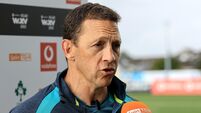
“I would have to sit down and think about whether I want a new contract,” Kidney said in his post-match media conference. “These guys are a pleasure to work with, but beyond that I would have to sit back and think about it.”
Was that the first sign from Kidney that he now feels his tenure has run its course? Maybe, but after the press conference, when he faced a smaller group of Irish newspaper journalists, he cut a more assertive figure when asked if this injury-plagued championship would be a fair yardstick for the IRFU to base their assessment of his future employment prospects.
“I know what I can bring to it, I know what I brought to it over the years, I know that I’ve been in holes before like this and I know how to get out of them, but I think now is the time to sit back and reflect and let’s take a look at things.”
Things clearly need shaking up to get Ireland to deliver on its talents and in that quote Kidney has clearly backed himself as the man to implement the changes to get an emerging and exciting young team playing to its full potential by the time the World Cup in England comes around in 2015.
The balancing act between fostering bright young talent and dispensing with proven experience, though, has arguably been one of Kidney’s failings this season.
Paddy Jackson is growing with confidence since he was anointed Jonny Sexton’s back-up and Ronan O’Gara was ruthlessly axed but would Ireland have been better served if that particular experiment was played out during the summer and into next autumn, when world ranking, as it was last November, and Six Nations kudos was not on the line?
A more experienced bench against Italy might also have provided the necessary know-how to get Ireland through the most troublesome of situations and avoid the penalties that cost them the game.
Although all those who entered the fray in Rome will benefit from the experience, it did not turn the game in Ireland’s favour, which is surely the modus operandi of replacements.
If all of this benefits Ireland at the World Cup in two and a half years and a semi-final or even final is reached then this will be seen as a necessary growing pain for a young squad. With a full deck, there is enough talent in a fully-fit squad to believe that is within Ireland’s reach. Three narrow defeats in this championship with such a high rate of attrition also suggests better execution would have delivered a better immediate return.
If the IRFU implements its strategy in four-year cycles from one World Cup to the next, it faces a massive decision this summer about who is to complete the pathway to 2015. Young stars like Jackson, Luke Marshall, Craig Gilroy and David Kilcoyne will bear the fruit of this experience. Perhaps the IRFU should give Kidney the benefit of guiding them there.
CONNECT WITH US TODAY



Be the first to know the latest news and updates