Queens ready to claim crown
Six Nations

Queens ready to claim crown

You’re more than welcome on board as they are simply glad of the company after years of being locked up in the house, the poor relation kept out of sight and mind. That’s a long time when you consider the first Irish women’s rugby international away to Scotland was all the way back in 1993, and they’ve barely seen daylight since.

Indeed you can easily tell as much when the coach asks when the article will be running and thanks you for your time, as opposed to the other way around.

Philip Doyle is that coach and was there for that 10-0 defeat in Edinburgh on St Valentine’s Day, 20 years ago. His recollections are as few as they are simplistic. The hosts were big, towering over their slender visitors; the standard was pretty awful; and the crowd was tiny, which might be an exaggeration.

“It was more a matter of getting the match out of the way,” he says. “I wasn’t in the coaching staff, but my wife was involved. They just wanted to start the wheel in motion.”

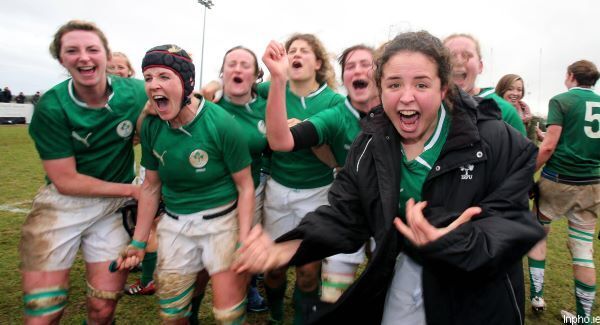
Why you’re here now? The fact that two weeks ago Ireland beat England in the sort of upset that lines out with the best of them in a country that makes a name out of such sporting days. But to take it on its own would be to deny the rags-to-riches back story everyone loves, especially when they find out about the former when basking in the latter.

On the surface, it’s all nice and tidy. Doyle took over 10 years ago, cutting the story into even slices but behind the scenes it’s been a mess for much of its existence. Back in 1998 for the World Cup, the team paid their own way to Amsterdam and slept on floors. Naturally they had to buy their own jerseys, which came in men’s sizes. And of course training weekends were funded by the players. Granted, there have been moments where they gave it a real go and were pluckier than they should have been, but too often success was measured by the margin of the beating they took.

“I took over in 2003,” adds Doyle. “The women’s team hadn’t scored a try for two-and-a-half years, so my simple and sole goal was to teach the girls how to score. That’s how bad it was. Those were the baby steps. People now talk about our first ever win against England but back then, I can’t remember what the English budgets were, but they were in the millions for the entire women’s set-up across the board. They are all funded through their lottery and that was seriously funding them. Meanwhile we were totally, 100%, out on our own. We weren’t under the umbrella of the IRFU back then so we were self-funded and going about the place looking for sponsorship.

“I think our budget for the entire first year was in the region of €8,000 for the national team. That was for hotels and flights. But it wasn’t hard to get them to pay their own way. It was amazing. The honour of representing your country made it worth it for the girls. They knew they were pawns and knew if they didn’t do it themselves, the women’s game would never take off. So much benefit for now has to go to past internationals that have worn the jersey and put an awful lot into the game and helped get it where we are now.”

Was it frustrating? Damn right it was. Doyle freely admits initially they weren’t good enough for the international game but the only way to raise the bar was to tough it out at international level. Then, in 2008, the IRFU came on board and that ploughed up the playing field. “The financial benefit is the obvious one. But the technical support and knowhow and systems that have been put in place have transformed us. What really has come together in the last two-and-a-half years, Ross Callaghan our conditioning coach has come on board and he’s changed the girls physically. That’s been such a benefit as well as the technical improvements from the coaches from the IRFU that work with me.”

It all led to Ashbourne two weeks ago but let’s paint this with some context first. In the 17 years of the Women’s Six Nations, England had won 12 Grand Slams, 13 Championships and 15 Triple Crowns. They’d lost one game in the last six seasons of the competition, and won six Grand Slams in seven years while Ireland had never finished better than third. They’ve been to the last three World Cup finals. In fact Doyle’s first time playing them was a 51-0 defeat in Twickenham.

“But beating England has been on the radar for about three years now. Not that I was expecting it, but we knew we were closing the gap. This year I was very quietly confident because of the conditioning but I told no one. But we were 25-0 up, they had to ball and we defended 29 phases to keep them scoreless. Unreal. So now, if we could win a Triple Crown, it would mean everything to me. It’s something I’ve been wanting for a long, long time. It would mean everything to me, to the team, to the sport here. But feet are firmly back on the ground and there’s a game to be won first.”

When he took over, they were light years from it. But now they’re just 80 minutes.

Picture: IRISH PRIDE: Larissa Muldoon celebrates with her team-mates after Ireland’s shock victory over England in the Six Nations at Ashbourne earlier this month. Picture: Inpho/Dan Sheridan

x

More in this section

Sport

Newsletter

Latest news from the world of sport, along with the best in opinion from our outstanding team of sports writers. and reporters

Cookie Policy Privacy Policy Brand Safety FAQ Help Contact Us Terms and Conditions

© Examiner Echo Group Limited