Ireland must restore cutting edge if they hope to pass Test
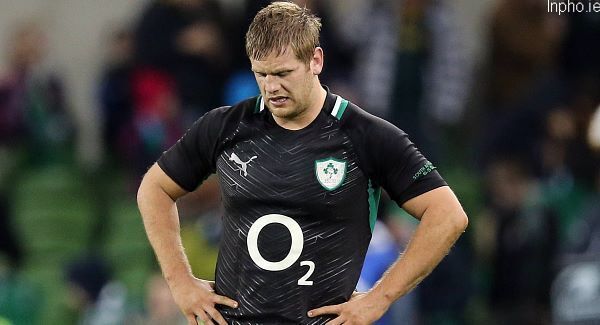
After the previous Test outing, that 60-0 thumping by New Zealand in Hamilton at the end of June, anything would have been an improvement but having returned to scoreless ways for the second half of Saturday’s game with South Africa, Ireland have to rediscover their cutting edge with a bit of target practice against Fiji next weekend in Limerick.
Smothered by the Springboks at the breakdown, crippled by slow ball and hampered by a misfiring lineout, Declan Kidney’s side failed to gather any attacking momentum and went try-less for the second Test in a row. Ireland have crossed the white line just twice in their last five, all of which have been defeats and have only cut loose twice, both against inferior opposition in last season’s Six Nations against Scotland (four tries) and Italy (five).
With a cock-a-hoop Argentina side, fresh from the defeat of Grand Slam champions Wales in Cardiff at the weekend, relishing a visit to their old enemy in Dublin on November 24 in what may well be a decisive fixture in terms of next month’s pool draw for the 2015 World Cup, Ireland badly need to reacquaint themselves with the arts of constructing try-scoring opportunities and then executing them.
Against the Springboks they did not come close. Their first-half dominance gave them a 12-3 lead, built on the foundation of terrible South African discipline and the goal-kicking of Jonny Sexton, who slotted his first four penalties.
Ireland’s back play in that opening period, meanwhile, lacked the necessary composure to trouble the listless Boks, themselves in some bother after three defeats in their last four and down to 14 men when JP Pietersen got himself sin-binned in the 32nd minute for his impersonation of an Exocet missile on Chris Henry.
The lack of firepower in the home side, missing both Brian O’Driscoll and Rob Kearney through injury, came back to haunt Kidney when having failed to breach the tourists’ defence during their numerical advantage, Sexton saw his fifth attempt at goal, a minute before the break, fade wide just in front of the uprights.
What the South Africans lack in creativity they more than make up for in power and having received a critical blast from coach Heyneke Meyer at the break, they went back to basics.
It took just two minutes for the cracks to appear in the home side’s defence, and when Jamie Heaslip’s first bash at the captaincy was undermined by a yellow card, the Springboks needed no further invitation to take advantage.
Ruan Pienaar pounced for a try under the posts and by the time Heaslip returned, Pat Lambie added a conversion and a penalty leaving Ireland trailing 13-12.
They had failed to score during Pietersen’s absence — albeit shortened when he reappeared at the start of the second half, at least 90 seconds before his 10 minutes in the sin bin had expired — while South Africa had piled on a point for every minute Heaslip was on the naughty step.
These are the differences between a top-four side in the world and one on the next rung down. Ireland’s last 10 games have seen seven defeats, a draw with France that should have been a victory and those Six Nation wins over Scotland and Italy.
Not only do Ireland need their cutting edge restored, simply winning again will be a welcome blast from the past. Six defeats in a row, including the non-Test loss to the Barbarians last May at Gloucester, is Ireland’s worst run of results since 1997-’98.
Kidney insisted last Saturday night he was not concerned that Ireland had forgotten how to win games.
“I think just the experience of understanding Test matches, they take approximately five twists in every game, and for fellas to learn from that experience, that what we were doing in the first-half today, say, wouldn’t necessarily apply in the second half, and that we have to come out with the smarts to make sure that it doesn’t happen. But that’s not through lack of effort, that’s through experience,” the Ireland coach said.
“So they definitely haven’t forgotten how to win, they’re still confident in what they’re trying to do; it’s just a frustration. And I know they’re going to click. We have had ourselves in some situations like that, all right, and they’ve gone against but you just have to stay the pace with it, because then you know it will turn.
“It’s a learning process, it’s a tough one but like I’ve said before, I’ve been down this road before and I know how it twists, but they have to twist it themselves.”
The visit of the spirited but woefully under-resourced Fiji to Thomond Park this Saturday should at least snap that losing streak but beating Los Pumas back at the Aviva in 12 days is a taller order. The learning process will simply have to intensify.
IRELAND: S Zebo; T Bowe, K Earls, G D’Arcy (R O’Gara, 75), A Trimble (F McFadden, 59); J Sexton, C Murray (E Reddan, 62); C Healy (D Kilcoyne, 42-45), R Strauss (S Cronin, 4-11 & 75), M Ross (M Bent, 71); D Ryan (D O’Callaghan, 63-68), M McCarthy (D O’Callaghan, 71); P O’Mahony (I Henderson, 71), C Henry, J Heaslip – captain Yellow card: Heaslip 43
SOUTH AFRICA: Z Kirchner; JP Pietersen, J Taute, J de Villiers — captain, F Hougaard; P Lambie, R Pienaar; CJ van der Linde (H van der Merwe, 71), A Strauss, J du Plessis (P Cilliers, 57); E Etzebeth (F van der Merwe, 71), J Kruger; F Louw, W Alberts (M Coetzee, 65), D Vermeulen.
Yellow card: Pietersen 32 Replacements not used: S Brits, M Steyn, J de Jongh, L Mvovo.
Referee: Wayne Barnes (England)