Referees must get card calls right
This has become a bugbear of mine, especially in relation to penalties conceded by the defensive team in their 22.
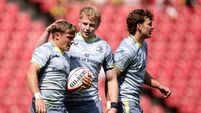
Leinster created a lot of problems for themselves on Sunday at The Rec through poor execution but they were the first to acknowledge as much after the game. Bath were extremely fortunate, however, to keep their line intact and did so on a number of occasions by committing blatant fouls under the nose of French referee Jerome Garces.
On 60 minutes, a brilliant piece of quick thinking by Jonny Sexton opened up a try-scoring opportunity for Isa Nacewa with a perfectly executed crossfield kick from a penalty. Nacewa collected a favourable bounce and was just held up short of the line by the cover defence. When he went to post the ball for the quick recycle, Stephen Donald came in over the top, completely off his feet and delayed the release, with Leinster in prime position to score.
Leinster were awarded a penalty but how the New Zealander stayed on the field is a complete mystery. It was as clear a professional foul as you will see but Garces abdicated his primary duty. Against 14 men, Leinster would certainly have scored the try that somehow eluded them all afternoon.
Compare the dithering French officials to the action taken by Alain Rolland, when he binned two Leicester players, Manu Tuilagi and George Chuter, for two separate incidents in the same phase of play. I’ve never seen that before but Rolland had no hesitation. Unsurprisingly Clermont Auvergne scored a crucial try in that 10-minute period.
Jim Mallinder was very critical of Irish referee John Lacey when he binned Tom Wood for collapsing a maul in Northampton’s defeat in Castres, claiming that Paul O’Connell did the exact same thing in Thomond Park and Munster weren’t even penalised. Look at the difference that could have made to the outcome in Limerick — and indeed the entire shape of the pool — if O’Connell was yellow carded or even penalised at that late stage of the game. Nigel Owens did Munster’s cause no harm that day but will have that in the back of his mind the next time he referees them.
Professional fouls in the defensive zone should be yellow cards — full stop. The least we should expect is some level of consistency. The Heineken Cup is becoming so competitive that the margin between victory and defeat in the vast majority of games is wafer thin, thus the need for greater consistency across the board, especially in relation to the issuing of yellow cards. ERC’s head of referee’s Donal Courtney must address this.
Meanwhile Munster, Leinster and Ulster are all in pole position to top their respective pools over the festive break, even if Ulster’s status is likely to be somewhat flattering given that they will have completed their series of games against Aironi. Clermont or Leicester and look better placed to emerge on top of Pool Four. Despite losing to Ulster at Ravenhill in their opening game, Clermont are going all out for a first Heineken Cup win in their centenary season. Much will depend on how they cope with a demanding trip to Welford Road on Saturday after a commanding win over the Tigers last Sunday.
Munster continue to defy the odds, thanks in no small measure to the remarkable consistency of Ronan O’Gara and Paul O’Connell. Named the Heineken Cup’s most influential player over the first 15 years of the tournament at a celebratory function in Paris back in May 2010, O’Gara’s influence has, if anything, become even more pronounced.
He has seen off so many great No 10’s over the course of the last decade — Jonny Wilkinson the latest to leave the international stage — it is remarkable how he continues to rise to the challenge in the twilight of a great career. With the unfortunate injury to Dan Carter at the World Cup, rookie Welsh out-half Rhys Priestland made most pundits’ team of the tournament after his rapid rise to fame.
Since then, he has largely confined Stephen Jones to bench duty for club and country and one felt, given his elevated status after events in New Zealand, that O’Gara was relishing their clash last Saturday. As he scrutinised Priestland prior to kick off, you just pictured the quotes bubble: “Let’s see how you react when the pressure comes on”.
With Priestland missing a number of kicks including one vital penalty in the second half, I spotted a little smile on the face of O’Gara. The last time I noticed a reaction like that was when Mirco Bergamasco missed the conversion of that late Italian try in Rome last February, offering Ireland a lifeline. Remember what happened next?
The problem for Munster is that they cannot expect a masterclass from their Big O’s all the time. They are no longer a side that can function unless everyone is 100% tuned in. They are vulnerable in that respect on Sunday and a home defeat to the Scarlets would be disastrous, given what they’ve achieved on the road so far this season.
With George North likely to be available, the Scarlets will go for broke. They have the talent but are comparatively lightweight in the front five. Munster exploited that in the second half in Parc y Scarlets and will look to repeat the dose again.
Midfield is still a problem area and after promising much when introduced off the bench against Castres early in the second half, Will Chambers has failed to grasp the opportunity handed to him by Tony McGahan in starting the last three games. His off-loading is far too loose and he did debutant Simon Zebo no favours in the opening minutes last Saturday with a shocking pass that ultimately led to the opening try from the hosts. He will have to do better than that.
Scarlet are only two points behind Munster going into this game and the complexion of the pool would change dramatically if they win on Sunday. The early kick-off (12.45pm) is also likely to impact on the atmosphere so Munster had better set the agenda on the field to get the crowd revved up.
Reputation is something that takes a long time to build and can be a friend to a side in transition. Munster are benefiting from that now as there is a perception outside the country that they are better than they actually are. That helps buy time during the rebuilding process but the key is to get the opposition to buy into history.
Recent performances have helped and if Munster can manage to keep the fires stoked for another 80 minutes on Sunday, they should be in a position to wrap up the pool with a game to spare when Castres call in January.
CONNECT WITH US TODAY



Be the first to know the latest news and updates