The French revolution
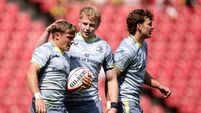
New coach, new captain, new attitude. It seems the French are already preparing for World Cup 2011, but Marc Mievremont begs to differ. Simon Lewis reports
THEY SAY the mark of a man is how he deals with defeat rather than victory. Well, if that is the case, the examples of Ireland and France offer very different perspectives on the theme.
Ireland’s early exit from the World Cup last October was greeted with much wailing and the gnashing of teeth, followed by a great deal of soul searching, debate, the Genesis report and, er, not very much else.
The French, while reaching the semi-finals, had just as much cause to enter hand-wringing mode, losing as they did to an inferior yet more effective England side, and on home turf.
Yet while the Irish did everything and nothing — recalling the French phrase “Plus c’est la meme chose, plus ça change” which translates as “The more things change, the more things stay the same” — the French Rugby Federation did nothing…and everything.
Head coach Bernard Laporte left as he had promised he would and took up the position of Secretary of State for Sports in President Nicolas Sarkozy’s new government, taking controversy with him as rebellious fellow ministers exacted revenge for the disappointing World Cup performance by unearthing a tax scandal on their new colleague.
All of which left the FRF to appoint Laporte’s successor from within and stage a quiet revolution.
Marc Lievremont may not have been everybody’s choice to lead the France national team into a new era, particularly given the calibre of candidates running against him. But where the 38-year-old’s inexperience as coach paled in comparison with the likes of success stories at club level Fabien Galthie, Philippe Saint-Andre and Guy Noves, none could provide the continuity offered in the appointment of Lievremont.
Continuity may seem a strange ambition given the immediate past failure of the national team, but with Fabien Pelous calling it quits immediately after the World Cup defeat, and former captains Raphael Ibanez, Pieter De Villiers and Serge Betsen soon to follow the lock into international retirement, the new coach would be responsible for introducing a new backbone to Les Bleus. So who better than Lievremont, who along with assistant coaches Emile N’tamack and Didier Retiere, was in charge of the French Under-21 World Cup winners in 2006.
Seen as a visionary at Dax, whom he got promoted into the Top 14 for this season, Lievremont comes with as much potential as his former charges, although on taking the job he insisted there would not be massive changes to the squad that reached the semi-finals.
“We want there to be continuity,” Lievremont said. “If we want coherence in our play, there must be continuity within our group of players.
“We are following a large number of players. We have just finished the early rounds of the Heineken Cup and there are plenty of players who have interested us in both the French and foreign clubs. It will be useless bombarding the squad with 20 uncapped players without experience at the highest level.
“In this 2008 Six Nations we are not just looking for victory at any price.”
French supporters will be delighted to infer from Lievremont that a return to more stylish ways is on the agenda. While hardly committed worker bees on a scale of Brian Ashton’s England, Lievremont’s France promises a return to the old days of attacking, expansive rugby not necessarily seen during Laporte’s tenure.
Looking back, his appointment should not be a surprise, given that Laporte was young and inexperienced at only 35 on his appointment in 1999.
Lievremont, capped 23 times by his country, has played with or against a lot of players currently in the France squad, so can boast the inside track on many of his players.
Foremost among them is the 31-year-old Castres lock Lionel Nallet, who won 32 caps when used only sparingly by Laporte but now goes into the Six Nations as Lievremont’s captain.
Nallet was a dispirited bit-part player at last year’s World Cup and, by his own admission, wasn’t good enough to be an international player five years ago.
He had an encouraging start to his international career, marking his France debut alongside Abdelatif Benazzi with a try against Romania in May 2000. There followed seven straight call ups before a dip in form saw him exiled by Laporte from national team duty until the 2003 Test match against the All Blacks.
His return was short-lived, however, as hopes of taking part in the 2003 World Cup in Australia were soon dashed.
“Purely and simply, I wasn’t good enough,” Nallet admitted. “I arrived from Bourgoin where I made the first team straight away. I therefore thought that would be good enough at international level, which was not true, naturally.
“When I was dropped (for the 2003 World Cup squad), it was a turning point. I started to get serious about it. In 2004 I moved to Castres where I started to work a lot harder on my physical fitness.”
The dedication paid off and in 2005 Laporte called him back into the squad for a test against Australia before going on to be a member of the squad for the 2006 and 2007 Six Nations.
But there was time for one more disappointment at the 2007 World Cup when Nallet was sidelined in favour of Pelous and Jerome Thion while Sebastien Chabal was handed the impact role in the second row when required.
Despite his bit-part role in the tournament, where he started against Namibia and Georgia, had a half against Ireland and featured in the third-place playoff defeat against Argentina, Nallet finished with three tries.
Although he wasn’t selected for the dramatic quarter-final win against New Zealand or the semi-final defeat to England, he was still voted best international player of the 2006-2007 season by his peers.
Nallet will be 35 when the next World Cup in 2011 comes around, but Lievremont insists the Castres forward is the man for the moment as they prepare to defend their Six Nations crown in February.
“We are building for the future,” said Lievremont. “We are not certain that Nallet will still be present in 2011, but he is the best in his position now, so he will play.”
The new coach said “He knew that he had to make great efforts. For many seasons he was considered to be an old-fashioned lock forward, too static. In that sense he is a great example.”
One player who could never be described as static is back row forward Thierry Dusautoir, a 26-year-old for whom the World Cup was a coming of age.
Now the man dubbed the ‘Dark Destroyer’ is ready to make a mark and show Betsen’s retirement will not leave France short of a brutal, marauding presence at the back of the scrum.
Initially omitted from the original 30-man squad for the World Cup, Dusautoir had barely enough time to sulk before he was called up as a replacement for the injured Elvis Vermeulen.
Fast forward to the epic victory over New Zealand in the quarter-finals and one wonders how the Toulouse star was left out. Lievremont has no doubts after some outstanding displays for Toulouse this season, and has marvelled at the Ivory Coast-born player’s amazing work rate. In that memorable win over the All Blacks in Cardiff he made 38 of his team’s 299 tackles, a French individual record for a single Test match.
He is well placed in the defensive system and is happy putting his body on the line. His athleticism and dynamic qualities also make him a menace going forward, and his try at the start of the second half provided the impetus for France’s amazing recovery against the All Blacks.
In the nicest possible way, France’s defence coach David Ellis, an Englishman, refers to Dusautoir as ‘a monster’.
“There is no emotion on his face,” the Yorkshire man said. “It is difficult to get two words out of him. He sits there calmly and takes it all in. He has no respect for reputations.”
Just another example, then, of French rugby’s quiet revolution.
Grand Slam, 2002, 04, champions 2006, 07.
Champions, quelle surprise, losing just once, on their visit to Twickenham.
Feb 3 v Scotland (away)
Feb 10 v Ireland
Feb 23 v England
Mar 9 v Italy
Mar 15 v Wales (away)
Marc Lievremont, (right)
Lionel Nallet
Stade de France
80,000
Julien Brugnault (Dax), Lionel Faure (Sale), Jean-Baptiste Poux (Toulouse), Dimitri Szarzewski (Stade Français), William Servat (Toulouse), Loic Jacquet (Clermont), Lionel Nallet (Castres, capt), Arnaud Mela (Albi), Elvis Vermeulen (Clermont), Julien Bonnaire (Clermont), Thierry Dusautoir (Toulouse), Fulgence Ouedraogo (Montpellier)
Morgan Parra (Bourgoin), Jean-Baptiste Elissalde (Toulouse), David Skrela (Stade Français), Francois Trinh-Duc (Montpellier), Florian Fritz (Toulouse), Damien Traille (Biarritz), Vincent Clerc (Toulouse), Cedric Heymans (Toulouse), Julien Malzieu (Clermont), Aurelien Rougerie (Clermont)
New coach, new start. Lievremont replaces Laporte and will surely introduce some new faces for the long road to World Cup 2011 as well as aiming to return some much-needed flair.
World Cup disappointment on home soil has been compounded by a compressed Top 14 campaign and often lacklustre Heineken Cup performances that have allowed the English clubs to dominate the group stages.
first-choice centre Yannick Jauzion has a broken hand
Julien Malzieu — the speedy Clermont wing with the physique of a loosie
Aurélien Rougerie, Heineken Cup leading try scorer.
Damien Traille, suffering as much as any in a struggling Biarritz side.
If they were a cloud: Cirrus — capable of reaching the highest altitudes but thin and wispy and only appearing in fair weather.
Grand Slam: 3/1 fav; Championship: 5/4 fav; Wooden Spoon: 50/1
As ever France start this tournament as slight favourites based more on history than form. Defeat to Argentina (twice) and England at the World Cup was a product of a bizarre selection policy by former coach Bernard Laporte which severely undermined the confidence within the squad. New coach Marc Lievremont faces a baptism of fire, and with a limited coaching pedigree will be under close scrutiny.
His decision to include so many young and inexperienced players in the opening match day 22 for Scotland with a view to blooding players for the next World Cup will prove brave or foolhardy. Four years is a long time in sport.
With three home games, the odds are very much in favour of another French triumph. Much will depend on how they negotiate a potential banana skin in their opening game in Edinburgh. Thereafter home games against Ireland and England tilt the balance in their favour as long as Lievremont doesn’t repeat Laporte’s selection folly.
If they beat Scotland in the opening game they could win the championship.

CONNECT WITH US TODAY



Be the first to know the latest news and updates