Keeping the ball rolling
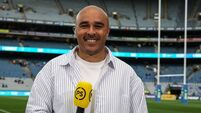
THERE’S a tortured pun waiting to be unleashed somewhere when you consider the chief executive of the European Rugby Cup once looked after sick animals. Derek McGrath started his working life as a veterinary surgeon before taking charge of the ERC back in 2000, when three people in a Dublin office ran the organisation. Now there are 15 on the staff, which isn’t a surprise when you consider the workload.
“At the beginning we had to put the important structures of the tournament in place, in terms of regulation and procedures across six to eight countries,” says McGrath.
“Over that time we’ve taken other functions in-house, such as commercial operations. We run the tournament in terms of logistics. All the perimeter boards and commercial operations in terms of broadcasting and sponsorship arrangements — those are all administered in-house.”
The pay-off is a hugely successful tournament, one of the acknowledged highlights of the sporting year. McGrath is conscious of the perils of success, however.
“There is a danger of complacency, that’s something we’ve always been aware of. Every year I’ve been involved the tournament has exceeded expectations, and it’s the type of product which delivers something for everybody — the fan at home, the fan at the game, the club member, the player, the coach and the media. The challenge for us is to make sure we continue to deliver for everybody — while recognising that something like this is always going to move ahead. We have to balance the meritocratic view with the inclusive view. That’s the big challenge for us, working across club and country in every market we’re in.
“We benchmark ourselves against other sports. Rugby in general has the benefit of watching other sports which have been professional for a much longer time so we can see issues they’ve had and that helps us to fast-track our way through a lot of those issues.
“For instance, you have some clubs which are very sophisticated, organised or professional which want to push on to the next level at a faster pace than those which are trying to cope. Football is a global game, for instance, while rugby is more a niche sport: we need to protect the values which set us apart. We need to maintain the uniqueness and ‘less is more’ approach, which is what brings families to watch rugby in new numbers — and makes them go home feeling they want to watch more.”
IT ISN’T always sweetness and light for the ERC. The French clubs grumble periodically about getting a bigger share of the television money, while some people — Laurence Dallaglio in particular — question the guaranteed access of the Irish provinces to the Heineken Cup.
“They’re good examples of what we deal with on a daily basis,” says McGrath, “Those are issues which cut across the playing, commercial and disciplinary fields. Our model isn’t unlike the EU itself, where you have net contributors and net recipients. Within that the Celtic countries are net recipients even though — not unlike Ireland in the EU — they’re beginning to tip across to becoming contributors. But there are countries like Italy and Scotland which are below the benchmark we want countries to reach. However, everyone realises that unless we have each other, we can’t have the product. Some may say ‘we’re fed up delivering benefit to everyone else’, but they accept the basic concept, you need two to play a game.”
McGrath doesn’t think the tournament has realised its full potential.
“I don’t accept that we’ve reached the top of what we can do. The Heineken Cup final every year is something we work hard to sell. It’s been successful, but it’s also hard work, because if we get the wrong teams in the wrong venue in the wrong country, it’s a challenge. Take that in isolation and you can see there’s still a lot of work to do before we reach the level of the Challenge Cup Final in rugby league, which has a full house no matter where it’s on.
“Our aim is to establish this as a different event to any other rugby event, and we work hard on that with our sponsors and broadcasters, to make sure every time you come and see it, it’s different. There are different challenges: in France we’re trying to establish the tournament as more elite than a very strong domestic championship, and that’s tough. In England it’s different, the English clubs have developed the Premiership in the same timeframe as the Heineken Cup, but they’ve embraced the tournament because they see it as something of benefit. Obviously there’s a different dynamic in the Celtic countries with the Magners League.
“So clearly there’s a different positioning for our product in every market, and there’s a long way to go.”
Within the Irish market there was some dissatisfaction with the decision to go with Sky rather than RTÉ when it came to TV coverage. McGrath is straightforward in his response.
“The television situation (in Ireland) is something that’s mentioned from time to time, but we dealt with that at the time. We make no apology for the fact that we need to generate sufficient return for all our countries so that teams get sufficient funds to prepare players.
“Some people think terrestrial TV is good, satellite is bad, but we don’t share that view. Terrestrial gives very broad coverage and a lot of eyeballs, but satellite offers a lot of editorial time around the events, it explains the events, and it brings in games to the Irish market which Irish fans wouldn’t normally see.
“Satellite television is vital for us in explaining why this is a different tournament, and the coverage of the tournament is huge.”
No matter how it’s covered, however, Irish enthusiasm for the tournament has obviously been a huge boost.
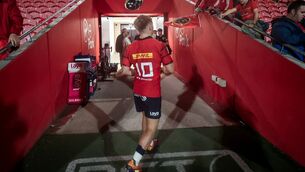
“Munster have been synonymous with the success of the H Cup, that’s recognised across Europe,” says McGrath.
“Their fans and brand — Munster Inc, if you like — have been hugely important in the development of the tournament because on and off the field there’s colour, there’s commitment and that hasn’t been matched anywhere yet by another club. I meet people still who were in the Millennium Stadium for their European Cup win — people with no connection to Munster or Biarritz — who regard it as one of the greatest sporting moments of their lives.
“Leinster probably has more potential in the relationship of fan and club than any other club in Europe — it has the demographics, the population, the team and what’s missing, compared to Munster, perhaps, is that it has an identity it hasn’t matched yet. But we were in Toulouse two years ago with 6,000 Leinster fans. There’s a core of new supporters for Leinster, that’s very positive. The Ravenhill crowd has been another success, and even though Ulster abroad isn’t quite as powerful there’s a committed following.”
McGrath can’t speak highly enough of the ERC relationship with tournament sponsors Heineken. “It’s been tremendous. Our current contract ends in 2009, which means they’ll have been with us for 14 years. That’s a stand-alone relationship: they’re a very good company to work with, and they’re very committed to rugby.”
The notion of a World Club Cup between the Heineken Cup winners and Super 14 champions is a different matter. “We’d love to consider that and we’ve spoken to SANZAR about it, but there are wider agendas, such as the season structure. Until that’s resolved this can’t be put on the table.
“What we know about any possible game like that is that you’d need a window of about two weeks to allow the travelling team — or teams if you go for a neutral venue — to acclimatise in order to provide a meaningful game. In other sports which have a similar event the travelling team always loses, so there’d been no benefit in that.
“We’d want something to work in the longer term, and you’d have to ask if it’ll add value to our product. For instance, in this year’s Heineken Cup you’ll have 200 players (see panel) who lined out in the World Cup, which shows that it’s becoming a global event. We need to focus on that a bit more, perhaps. A Super 14 v Heineken Cup game would be something to consider in the future.
“We have to remember there’s already an overlap between club and country, and as one of the bodies involved we need to remember that we have a responsibility not to kill the goose that lays the golden egg.”
A fine analogy from the former vet. So, who’ll pick up the silverware next year? “Leicester look good, Biarritz, Stade Francais have a good mix. I think one of the Irish teams can do very well. But am I going to pick a winner? No!”
CONNECT WITH US TODAY



Be the first to know the latest news and updates