'Usually in a National, you’re fighting for your life. It’s not enjoyable. This was very enjoyable' - 50 years on, Pitman still savours his greatest defeat
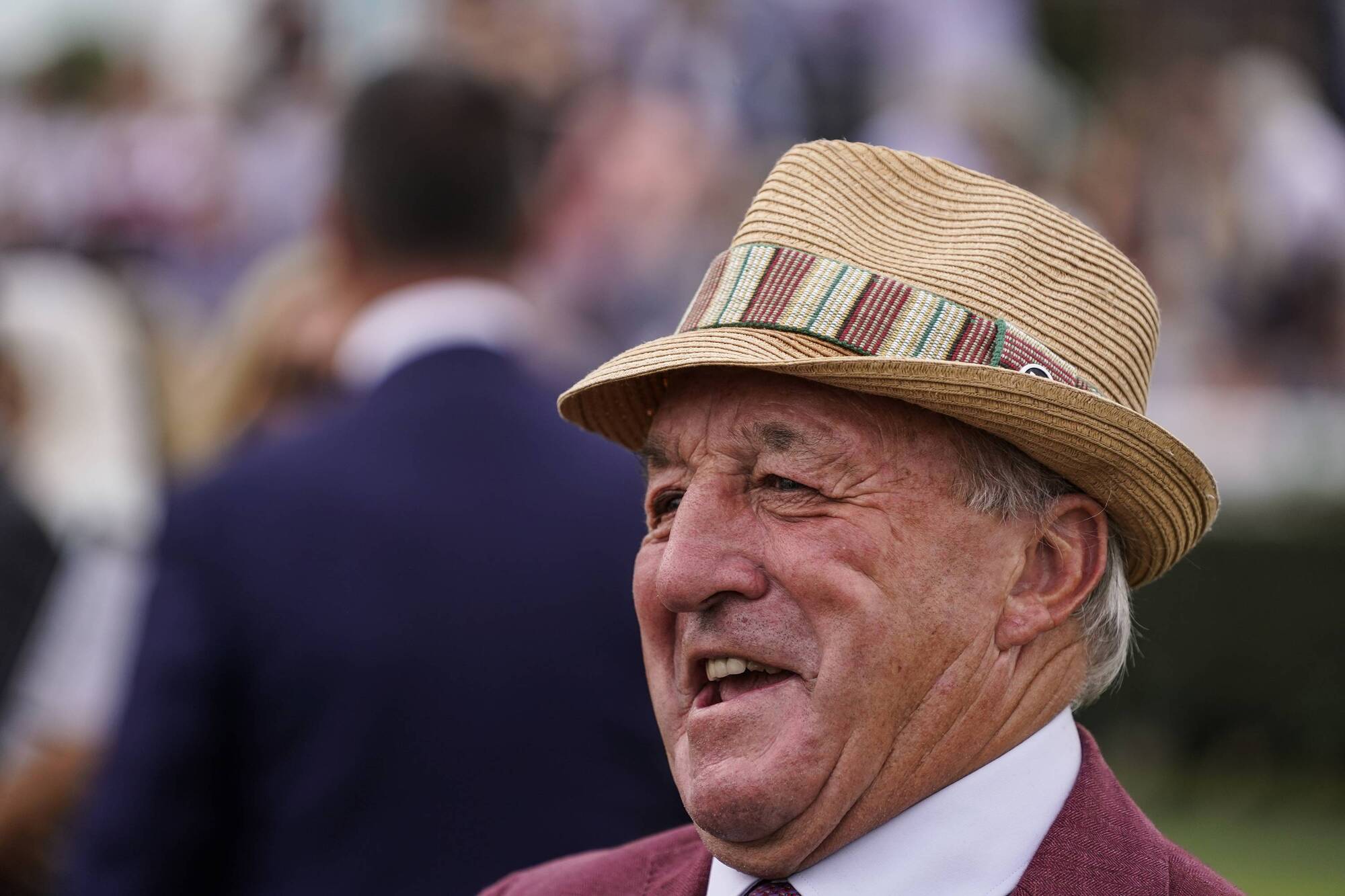
FOND MEMORIES: Richard Pitman poses at Newbury Racecourse on July 20, 2018 in Newbury, United Kingdom. Pic: Alan Crowhurst/Getty Images
For many, Richard Pitman was the enthusiastic and knowledgeable voice of our generation, through 37 years as a BBC racing broadcaster.
Hearing those Gloucestershire tones on the other end of line, transports this caller back to the late ‘70s and early ‘80s, when provided racing coverage from England as a staple before moving on to everything from GAA to rallying and whatever you like yourself in between.
I had no idea then, that Pitman was an ex-rider. There were countless quality horses during his years with Fred Winter, most notably Pendil, Lanzarote and Crisp, and a slew of Grade 1 victories on the CV, the most lustrous of which was the Champion Hurdle, on Lanzarote in 1974.
Yet it is his role in gallant defeat in the previous season’s Grand National at Aintree for which the now 80-year-old remains best known, a truth he has accepted with great humour over the years.
He is still at it, on Twitter, answering queries about the gut-wrenching loss of the strapping Australian beast, known as the Black Kangaroo – Crisp. Sent to Britain, having won all there was to win in his native land, he was a Champion Chase winner over two miles and carrying top weight, led the field a merry dance for most of the four-and-a-quarter miles before being reeled in two strides from the line by Red Rum, who was carrying two stone less and would go on to the greatest Grand National horse of all time as a triple winner.
The prevailing emotion on this, the 50th anniversary, remains one the same. He bemoans going for his whip too early after the last, without the benefit of the rail to help keep his partner balanced. It’s a regret but it isn’t the overwhelming feeling. When he looks back on that day, it is primarily with joy.
“It was amazing to be a part of that,” he says now. “Okay, I made a bollocks at the end but apart from that, I gave Crisp a good ride and he gave me a good ride, which is so exciting. It just really pulls your tubes.
“And I can still relive it now. I was not a tunnel-vision man like McCoy, Dunwoody, Ruby, Francome, Scudamore – the real champions. They were tunnel vision. I wanted to win every time I went out and I did my best but I knew my limitations and the moment I got over my devastation? Before the horse had actually been grabbed by his lad, I thought, ‘Well Jesus Christ. To attack those fences and leave a quality field trailing.’
“He was never running away with me at all, he had a lovely stride pattern. I’ve had a lot of criticism and a lot of that would have been that he was running away with me but he wasn’t. He was very relaxed in front. It was his speed, into, over and away from a jump, going around tight inside, over the Canal Turn etc, all these lengths being saved add up. So he wasn’t running away with me. I was in a comfortable rhythm and a rhythm is so important for a horse.
“I had ridden in four or five Nationals before that and been second in 1969 (on Steel Bridge, to the Eddie Harty-ridden Highland Wedding). I knew the hurly-burly, shouting, noise of horses. Jockeys talk a lot in a race and when a horse hits a fence hard, they make a noise. Jockeys hitting the floor, 40 runners on a cavalry charge. So it was unusual to be going out on my own in the second circuit but it was calming. I knew what I was doing, the horse was loving his jumping. To be here on my own, attacking the fences, having a clear sight of them. It was just a magical thing. Usually in a National, you’re fighting for your life. It’s not enjoyable. This was very enjoyable.”
Pitman, whose mother was from Drumcollogher and is related to a number of Noonans and Sheehans around the Limerick-Cork border, was born not far from the national hunt mecca of Cheltenham. He had gone four years without a winner after turning professional but realised that the calibre of conveyance was critical to carving out any sort of career. He knew Winter would attract that sort of equine talent so when the word was out that the former champion jockey would be drawing the curtain down on his stellar career to begin training, he approached him for a job, being one of only three people in the yard when the first horses arrived.
They were firmly established by 1973, when many wondered at the wisdom of giving a speed horse such a test. Surely, the sensible thing to do was to try to hold him up? But they had tried that in the Gold Cup the year before and he had sulked, coming home in fifth.
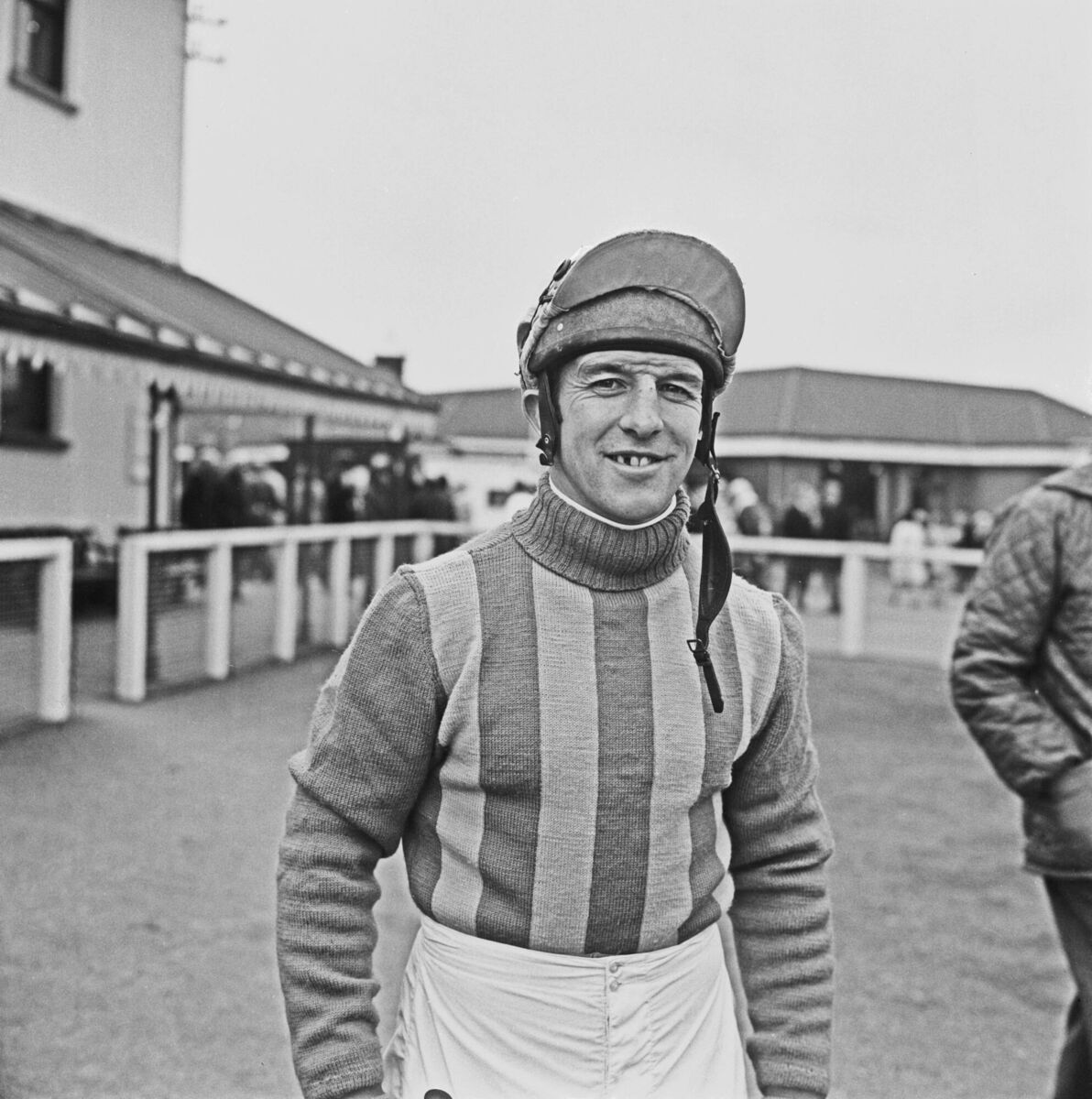
He had won the Champion Chase “without seeing another horse” and when he saw a jump “he wanted to eat it.”
Winter was concerned that with his habit of accelerating towards a fence, alacrity through the air and ability to gallop away immediately on landing, there was a danger he would jump into the back of another horse held up. So the plan was hatched to dictate from the front while conserving energy where possible. And it almost worked to a tee.
“I listened carefully to Michael O’Hehir saying, ‘Dick Pitman and Crisp are 25 lengths clear. Red Rum and Fletcher are coming out of the pack but Fletcher is kicking him.’ I thought, ‘That’ll do me.’”
The first time Pitman felt that stamina might start to become an issue was approaching the penultimate obstacle, when he heard Red Rum for the first time.
“But I’m still clear. He jumped the last fine and we’ve just got to make it home, 494 yards that I remember very well. I picked up my stick because I knew he was tired. You can see in pictures, his ears. Red Rum’s were back in a fighting position. Crisp’s were down in the bottom-of-the-barrel position.
“I’m convinced I lost a couple of lengths by veering left-handed and I was only beaten half a length. Also, the race is shorter now by 90 yards and had it been then, I’d have won by ten lengths!
“I’ve talked about this race so much but you know, I don’t think I said this to anyone. Up the run in I thought, ‘God, hang on. God, please hang on.”
A slight tangent now. Some time later, Pitman was asked by Deborah Cassidi to compose a poem for her anthology, Prince Phillip, Desmond Tutu, Margaret Thatcher, John Le Carré, John Conteh, Tony Blair and Jeffrey Archer were just some of the other contributors.
So Pitman used the propensity of the human to call for celestial aid in times of need, basing it on a Grand National jockey’s entreaties for a clear run, for gaps to open, for horses not to fall in front of him or for loose horses not to wipe him out, even though he might not have touched base with God since the same time 12 months before.
“That wasn’t very nice, was it?” This time, God smiled on someone else.
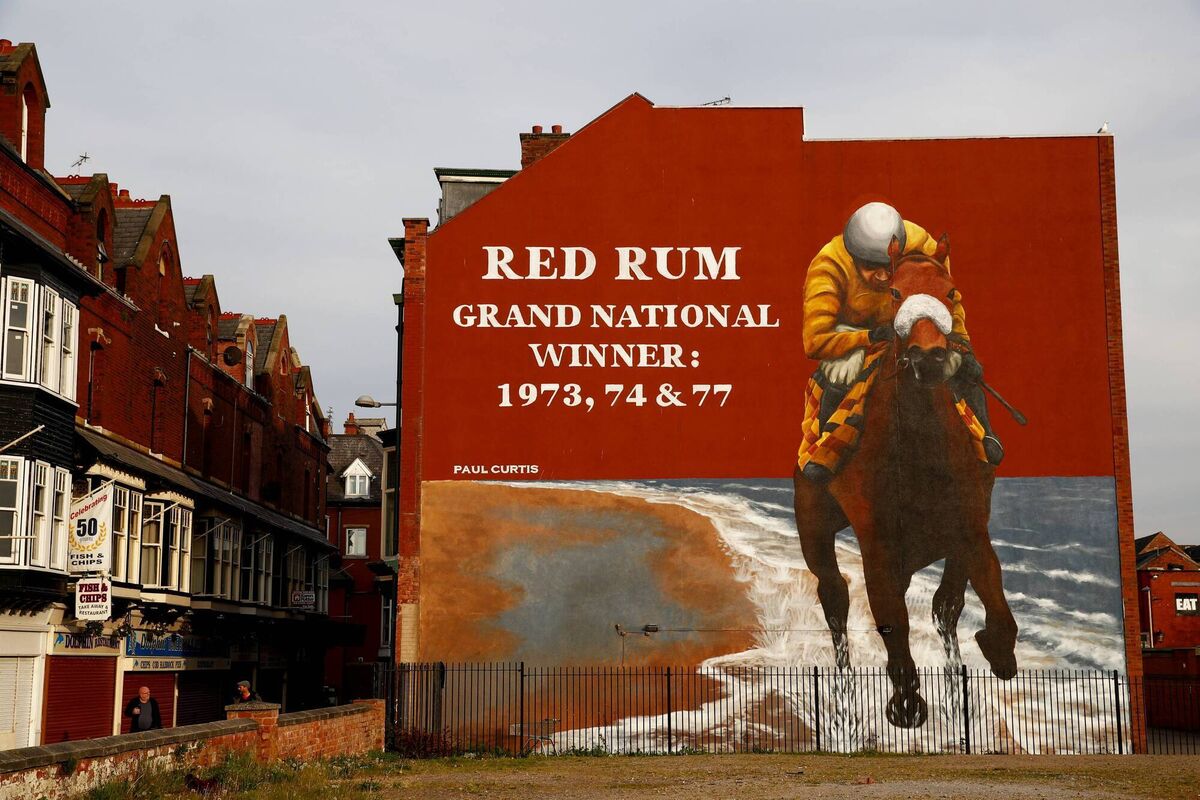
“I held my hands up. I gave the horse as good a ride (as anyone) and my worst critic, Graham Thorner, who’s my neighbour and was a real whip merchant said, ‘Until you went for your stick halfway up the run-in, you gave that horse the perfect ride,’ and I’m happy with that.
“But there the happiness ends because, it wasn’t so much that I hit him. He was a 700-kilo horse or something like that. He was enormous and he was tired so what I should have done was kept hold of his head, keep him balanced and got round The Elbow to the running rail. I was holding him together when he was tired and the moment I let go of one rein to give him a whack, he fell away. It was a stupid error. And people are still doing it today. But I did it in the most glaring, obvious place, in front of millions of viewers.
“I knew what I’d done wrong but you can’t go back, you can’t ride it again. What’s the point in getting in floods of tears?”
Over the following years, Pitman covered many momentous Nationals. This is also the 30th anniversary of “the Grand National that never was,” as Lee McKenzie coined the voided race on radio commentary. And it is the 40th anniversary of Jenny Pitman, his ex-wife, becoming the first woman to train the winner of the great race with Corbiere.
“I was very pleased for her in ’83. I was delighted because I knew what she put into it. To be the first woman to win it, it was a momentous thing. She was a brilliant trainer, brilliant, brilliant trainer.
“Aldaniti winning it with Bob Champion in ’81 was one of the best ones apart from that. I used to see him in hospital (when Champion had cancer). He was gonna die. So to go and do it was marvellous. But had that horse coughed in the morning and Spartan Missile had won? What a story that is! Ridden by 54-year-old John Thorne, who owned the stallion and the mare! The whole thing throw up fairy stories, doesn’t it?”
He also got to school Red Rum for the cameras, when his good friend, the legendary trainer, ‘Ginger’ McCain was in customary form.
“He legged me up and he said, ‘You’ve seen his arse in ’73, now you can look through his ears!’”
Pitman lost the sight of an eye when kicked in the face by a young horse 30 years ago and in 2012, donated a kidney to a beneficiary he has never met, having seen the benefits of a transplant friend. Remarkably, he rode his last race, at Aintree, less than three months later.
“My last race was in 2012 in Aintree, the Legends’ Race on the flat. Mick Kinane and all those champions in it! The doctor was going to stop me the day before. I’d got sponsorship, been riding out for three months with Jamie Snowden in Lambourn. I said, ‘Doc, please, there’s so much riding on this. I’ll go round the back.’ He said, ‘Yeah, all jockeys say that.’ Anyway, he said I could but I had to be careful.
“As we were ready to go out, the stewards called us into the room and said, ‘Now boys, I want you to be aware that there is a blind geriatric in the race this year. If he’s in trouble and wants some room, let him through. And they all said, ‘Fuck him!’ That’s camaraderie for you.
“It was ten weeks to the day after the operation to take the kidney out that I rode in that race. It was a push but it was doable.”
And he’s still doing it, jumping over a few replica fences for an insert to appear in ITV’s coverage on Saturday, even though he has officially retired from leaving the ground now, giving up hunting in the last few years. But Crisp and Red Rum had to be marked.
Once a Grand National jockey, always a Grand National jockey.