Leopardstown Racecourse CEO Tim Husbands: Focusing on the customer key to success
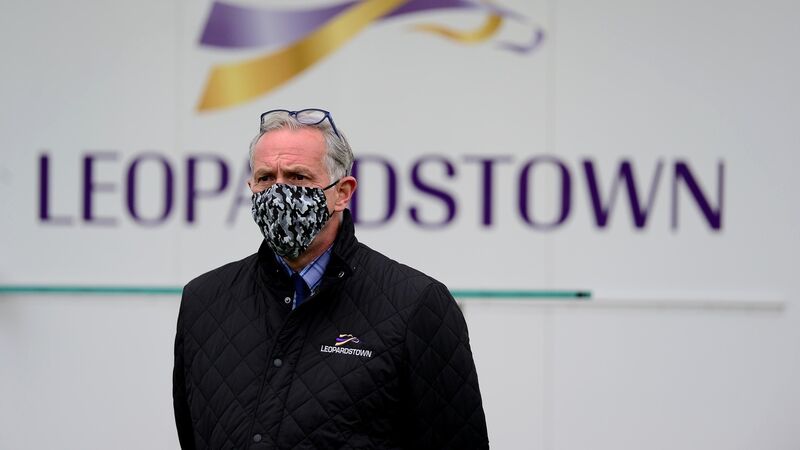
Leopardstown Racecourse CEO Tim Husbands: Focusing on the customer key to success

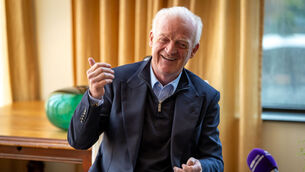
New Leopardstown CEO Tim Husbands — going forward post-Covid 19 will present great challenges. Picture: Healy Racing


A hundred years after the Titanic sank, Peter Robinson and Martin McGuinness are standing at the spot from where it launched, smiling through gritted teeth.

The then First and Deputy First Ministers of the Northern Ireland Executive have locked horns at press events in the past but at today’s happy occasion they’ve dialled down the personal tensions to a lowly seven out of ten. Both are gripping a pair of oversized scissors and playfully cutting a large blue ribbon.

‘Sheriffing’ them discreetly in the background is the tall, lean figure of Tim Husbands, MBE. The Nottingham native is head of ‘Titanic Belfast’ and acting midwife at the birth of the peace processes’ flagship project. Four short years later it would be voted the world’s leading tourist attraction of 2016.

Fast forward another four years and the sheriff from Nottingham has moved on to his next challenge as CEO of Leopardstown Racecourse and its bundle of supplementary businesses. He’d taken up the role just before last year’s Dublin Racing Festival (DRF) and was bursting with that new job energy and eagerly generating lots of fresh new job ideas.

Speaking from his home in Westmeath he’s still, like the rest of the world, trying to make sense of what happened next in 2020. “I started in January,” he says, “a month before the DRF, which was a challenge in itself, and then the wheels came off. I remember making a presentation to my new team at Leopardstown on what the future might look like in terms of racing and the commercial elements. Then three weeks later I was saying, “oops, sorry guys, we’ll have to revisit this in 12 months time.”

Despite his early plans colliding with a Covid-19 shaped iceberg, Husbands radiates an enthusiasm that suggests that all that energy is all still there, tightly compressed, bursting to pop when the restart button is eventually pressed. In the meantime, he is keenly aware of the crucial importance of Irish racecourses at the moment in supporting an industry crawling across the edge of an economic razor blade.

“The challenge is different now, its just to hold race meetings and not only for their own benefit, but because they are part of the service chain that supports the horse racing industry,” he explains.

“If we are not holding race meetings then every part of the industry is hit. The food chain only works if every part of it holds together. If any element of it, us, sponsors, the industry, the trainers — all of it falls apart if we have nowhere to race. No horses, no trainers, no business either. The reason we are still racing over the last nine months is that together with HRI and IHRB we have shown very unified presence in how we deal with the challenge and how we can present a very safe racing experience.”

Although a racing fan for most of his life, Husbands is not an ‘insider’ appointment. His selection for such a high-profile role is consistent with current semi-state recruitment policy: find talented change-makers from beyond the immediate gene pool and set them loose on rusty institutions. The ‘newbie’ will need to draw on all the consensus building skills he sharpened in his Belfast days to succeed in an industry which usually turns new ideas on the arc of a vast ocean liner rather than a speed boat. He’s decided to go all in on what he knows best. The customer.

The customer

Husbands can’t quite last a full 60 seconds without saying the word ‘customer’ and it would be a another rare minute if his interest in all sports wasn’t mentioned either.

“I’m from Nottingham, a Forest man for my sins, of which there are many. I grew up passionate about any sport you like, still am,” he says. “My Dad used to bring me to the (City) ground on his shoulders and we’d sneak in when they opened the gates to let people out at half-time. I’m one of four brothers so everything was competitive. My parents used to take me to point-to-points and to the hunt on Boxing Day. I preferred that than going to the track. You can get close enough to touch, hear, even smell the excitement of the race meeting.

With a degree in the history of art he cut his professional teeth in customer facing roles for the Rank Cinema organisation among others before his long and winding road took him to Belfast in 1994 to help open the Waterfront Hall. He eventually became the head of venues and events for the whole city and sounds particularly pleased when he recounts how his official status North of the border was upgraded from ‘blow-in’ to ‘adopted Irishman.’

“I went to Belfast before the peace (Good Friday Agreement) but you had that sense of momentum,” he recalls. “That’s why the Waterfront was so important. It had the support of the political parties from all sides. Of course, there were hiccups along the way, but I feel when we opened in 1997 it was really important to the city and the region in addressing the cross-community challenges.”

Titanic Belfast’s Vice-Chairman Conal Harvey (left) and Chief Executive Tim Husbands celebrate as it is named Europe’s Leading Visitor Attraction.

By the time he found his way to the Titanic Quarter in 2011 peace had bedded in and he moved on to his next challenge – changing the mindset in the commercial practices of his adopted city.

“The questions now were: how do interface with the customer, what are the services and expectations, is what you are doing engaging the customer?” he continues. “I was pleased with the brand we built, but more pleased with the sense of customer service and engagement that hadn’t been there before. I think this sense of engagement at Leopardstown, with the industry is something that, post-Covid-19, will need to be repositioned. It’s really important that we try to find new audiences and new racegoers.”

The budget for the Titanic project was almost a one hundred million pounds and the venue attracts more than a million visitors in a (normal) year. He was awarded his MBE for services to business and the economy an honour that holds immense pride for him and his family. He also sits on the boards of FĂĄilte Ireland and of the Stadium Redevelopment team at Windsor Park, so with such an illustrious CV, is he worried that running a racecourse will be enough to keep him interested, especially in an industry where traditional customer expectations were a lukewarm cup of tea from a polystyrene cup and a couple of cheap toblerones on the way home? The suggestion is swiftly dismissed.

“No. It’s definitely not a step change — it’s a different industry with different requirements and different stakeholders to engage with. We are just completing a €20m investment which for Leopardstown is very significant and particularly for HRI at this time. When we get the public back in, they are going to be so impressed by the standard of the facilities. You get a sense of it from the TV coverage, but it’s only when you are there that you can gauge the difference.”

He strongly believes that improving the customer experience of horse racing is a challenge that requires joined up thinking across all racecourses.

“It needs to be addressed as a totality, different racecourses will attract different audiences, but it has to be seen as a totality,” he asserts. “There is competition as to what you spend your money on. You can go watch rugby or Gaelic or just stay at home and watch it on TV. You have to create an experience that will encourage people to have a look at us as an elite sport – not elitist mind, but as a very special sport. It’s different. You can get close to the horses, you can see the trainers, talk to them and that’s just not possible in any other sports. This is unique for our industry and we need to encourage it.”

Where does he plan to start?

“I’d go back to the very basics of ‘welcome.’ We have great racecourses, we do it well, but I think there is more that we can do in terms of it being an experience. If people come racing, they generally enjoy themselves, but the experience starts when they purchase their ticket on-line and we have to make that as easy and comfortable as possible and that when the arrive here that they know their way around and feel safe. It has to be a special event for them.”

The Dublin Racing Festival 2021

There will be no paying customers at next weekend’s Dublin Racing Festival for Tim Husbands and his team to fuss over and make feel welcome. All that new job energy must wait in the bottle a little longer.

Despite these frustrations he knows how fundamentally important this meeting has become to Irish horse racing over the last few years and just because nobody will be coming to his party the determination to put on a good show is undiminished.

With no business metrics such as attendance figures, spending levels and customer satisfaction to measure, the key success of DRF this year will be that it goes off safely and securely and that home viewers get a high-quality experience of the racing.

“With no public, no owners, just one sponsor a day, all we can do is rely on the quality of the horses which will be second to none, we have the top horses, because of the quality of the staff, jockeys and trainers,” he says.

“This festival has been incredibly helpful to the industry, it’s become well respected over the course of three years, successful in its own right.

“It’s been thought of as a stepping-stone to Cheltenham, and while it is helpful, when you talk to trainers now it’s being increasingly mentioned in the same breath as Cheltenham. In the Irish calendar its incredibly important.”

That importance can be seen in the statistic that a quarter of winning or placed horses at Cheltenham last year, running in comparable races won or placed at the DRF six weeks earlier. Hopefully by the time Punchestown comes around in April horses will be travelling from Britain to augment the quality of the card but, either way, this might be the finest jump meeting we’ll see in Ireland this year.

Surprisingly, for a lifelong Nottingham Forest fan, Brian Clough who gifted his city two European Cups is not the first name on Tim Husbands mind when he lists his favourite Forest heroes. “My all-time idol was Stuart Pierce. I loved the passion about that man.”

So, he didn’t model his management style on the man who once famously ‘clipped the ears’ of a couple of fans during a pitch invasion then?

“Model my management style on Cloughie? Not quite, no.”

So, you’ve never punched a customer, Tim? “No,” he replies. “Not yet anyway.” It will probably never happen.

More in this section

Sport

Newsletter

Latest news from the world of sport, along with the best in opinion from our outstanding team of sports writers. and reporters

Cookie Policy Privacy Policy Brand Safety FAQ Help Contact Us Terms and Conditions

© Examiner Echo Group Limited